
Day Will Turn to Night: Astronomers Officially Confirm Date of the Longest Solar Eclipse of the Century
Rare celestial event expected to captivate skywatchers and scientists worldwide
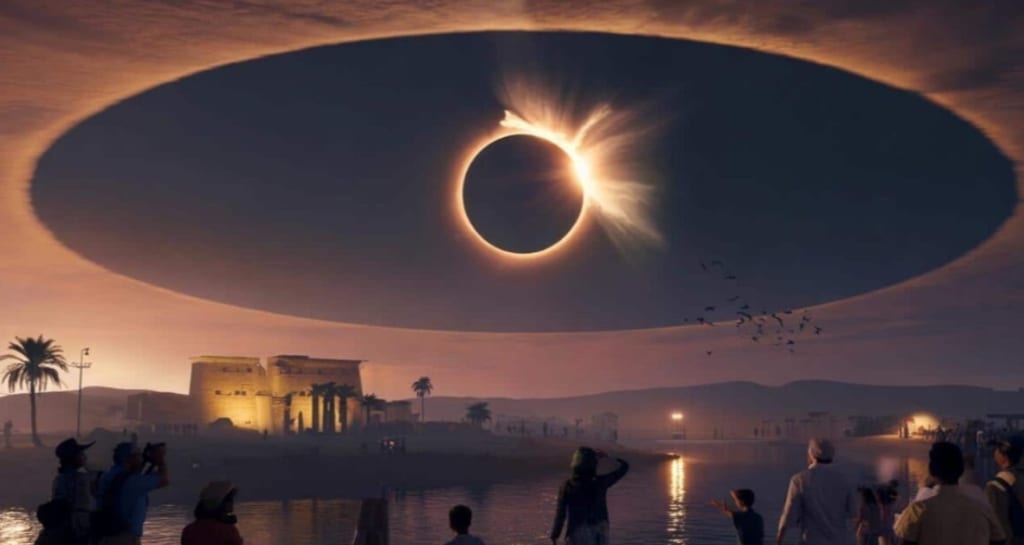
Astronomers have officially confirmed the date of what is expected to be the longest solar eclipse of the century, an extraordinary celestial event that will temporarily turn day into night across parts of the world. The rare phenomenon is already generating excitement among scientists, space enthusiasts, and the general public.
Solar eclipses occur when the Moon passes directly between the Earth and the Sun, casting a shadow that blocks sunlight for observers along a specific path. While eclipses happen several times each decade, extremely long-duration eclipses are much rarer.
What Makes This Eclipse So Special
The upcoming eclipse is expected to last significantly longer than typical total solar eclipses. Most total solar eclipses last between two and four minutes at maximum coverage. However, this event is predicted to last much longer in certain viewing zones, making it historically significant.
The duration depends on several astronomical factors, including:
The distance between the Earth and Moon
The distance between Earth and Sun
The position of observers along the eclipse path
The angle of the Moon’s shadow on Earth
When these factors align perfectly, they create longer periods of total darkness.
Why Day Will Appear to Turn Into Night
During totality — the peak moment of a solar eclipse — the Moon completely blocks the Sun’s bright surface. As a result:
Daylight fades rapidly
The sky darkens dramatically
Stars and planets may become visible
Temperature can temporarily drop
Animals may change behaviour
Observers often describe totality as one of the most powerful natural experiences on Earth.
Where the Eclipse Will Be Visible
The longest duration of totality will only be visible along a narrow path across the Earth. However, partial eclipse views will be visible across a much wider region.
Astronomers encourage people to check official space agency or astronomical society maps to determine local visibility.
Eclipse tourism is expected to increase significantly, with travelers planning to visit regions where totality will be visible for the longest period.
Scientific Importance of Solar Eclipses
Solar eclipses provide rare opportunities for scientific research. During totality, scientists can study parts of the Sun normally hidden by bright light.
Research opportunities include studying:
The Sun’s corona (outer atmosphere)
Solar radiation patterns
Magnetic field interactions
Effects on Earth’s upper atmosphere
Historically, eclipses have led to major scientific discoveries, including insights into gravity and solar physics.
How Astronomers Predict Eclipse Timing
Astronomers can predict eclipses centuries in advance using orbital mechanics and precise space measurements. Modern satellite technology and supercomputing allow scientists to calculate exact timing, location, and duration.
These predictions help governments and space agencies prepare public safety guidance and scientific observation campaigns.
Public Excitement and Cultural Significance
Throughout history, solar eclipses have held deep cultural and spiritual meaning. Ancient civilizations often viewed eclipses as powerful omens or divine events.
Today, eclipses are celebrated as scientific wonders, but they still inspire awe and fascination across cultures.
Modern eclipse events often include:
Public viewing events
Educational science programs
Global live broadcasts
Citizen science participation
Safety: Why Proper Viewing Is Essential
Looking directly at the Sun during an eclipse can cause permanent eye damage. Experts stress that special eclipse viewing glasses or approved solar filters must be used.
Safe viewing methods include:
Certified solar eclipse glasses
Pinhole projection methods
Solar telescope filters
Normal sunglasses do not provide sufficient protection.
Economic and Tourism Impact
Major eclipse events often generate significant tourism revenue. Hotels, transport services, and local businesses in viewing areas typically see increased demand.
Cities within totality paths often prepare by:
Organizing public events
Expanding tourism services
Coordinating safety and crowd management
Climate and Atmospheric Research Opportunities
Scientists also study how eclipses affect Earth’s atmosphere. Sudden darkness can temporarily alter:
Temperature patterns
Wind speeds
Animal and plant behaviour
Atmospheric chemistry
These studies help improve understanding of Earth’s environmental systems.
Preparing for the Event
Experts recommend planning early for the eclipse. Preparation may include:
Checking local visibility forecasts
Purchasing certified viewing equipment
Planning travel early if visiting totality zones
Monitoring weather conditions closer to the date
Weather conditions play a major role in viewing quality.
Why Events Like This Matter
Beyond science, celestial events remind people of Earth’s place in the universe. They connect science, culture, and human curiosity in a way few natural phenomena can.
Solar eclipses often inspire interest in astronomy and science education, particularly among younger generations.
Conclusion
The confirmation of the date for the longest solar eclipse of the century marks an exciting moment for astronomy and public science engagement. As day briefly turns to night across parts of the world, millions of people will have the chance to witness one of nature’s most dramatic and beautiful events.
For scientists, it represents a rare research opportunity. For the public, it offers a reminder of the incredible cosmic mechanics shaping our solar system. As anticipation builds, experts emphasize preparation, safety, and appreciation for this once-in-a-lifetime celestial experience.
About the Creator
Keep reading
More stories from Aarif Lashari and writers in Earth and other communities.
Prince Archie’s Ex-Nanny Lifts Lid on Truth of Working for Prince Harry and Meghan
Public interest has intensified following claims from a former nanny linked to Prince Archie, who has reportedly spoken about her experience working for Prince Harry and Meghan, the Duke and Duchess of Sussex. While details remain subject to interpretation and public discussion, the story has sparked wider conversations about privacy, media scrutiny, and the realities of working in high-profile households.
By Aarif Lashariabout 19 hours ago in Earth
The "Where Do I Put This?" Dilemma: AI Solves Your Plant Placement Problems
You bring home a beautiful new plant, full of hope. You find a spot that looks nice—on a shelf, a side table, in an empty corner. Weeks later, the story tells itself in the leaves: stretching stems, fading color, or crispy edges. The problem is rarely you; it’s almost always the place. "Where do I put this?" is the most fundamental question in plant care, and guessing is the root of most struggles.
By Emma Wallace4 days ago in Earth
Broken Penguin
Introduction Penguins are often seen as happy, playful birds living together in cold places. But not all penguins live an easy life. Some are injured, lost, or separated from their families. These are often called broken penguins—not because they are weak, but because they are hurt by nature, climate change, or human actions. Their stories teach us about survival, pain, and hope.
By shaoor afridi6 days ago in Earth




Comments
There are no comments for this story
Be the first to respond and start the conversation.