


The first time I noticed the birds leaving, I was standing in a parking lot with groceries melting in my hands and a knot in my chest I didn’t know how to name. The sky felt bigger than usual. Emptier. Like something was already missing.
I’d lived in that town for years. Long enough to recognize the sound of the mornings. Long enough to know which trees filled first with noise and which stayed quiet. So when the air suddenly felt thinner, I looked up.
A loose V cut across the sky. Then another. And another.
Migration season.
I remember thinking how unfair it felt that they could just decide to go. No explanations. No apologies. Just instinct and motion. Meanwhile, I was stuck—stuck in a job that drained me, stuck in a relationship that felt more like a habit than love, stuck convincing myself that staying still was the same thing as being stable.
That night, I looked up why birds migrate. I already knew the basics, of course. Weather. Food. Survival. But reading it felt different this time. Less like trivia, more like a mirror.
They don’t leave because they want to. They leave because staying becomes impossible.
That line hit harder than I expected.
I’d been telling myself I was “fine” for months. Maybe years. Fine is such a quiet word. It doesn’t ask questions. It doesn’t demand change. It just sits there, heavy and polite.
The birds didn’t look fine. They looked determined.
There’s a moment before migration when birds get restless. Scientists even have a word for it. Zugunruhe. A migratory unease. They pace. They flutter. They wake at odd hours, driven by something they can’t explain but can’t ignore.
That was me.
I was sleeping badly. Snapping at people I loved. Daydreaming about running away without any real plan. I told myself it was burnout. Or stress. Or just adulthood.
But what if it was something else?
What if it was my own version of migratory restlessness?
I started noticing the birds more after that. How some hesitated at the edge of the flock. How others seemed to take the lead without ceremony. No speeches. No guarantees. Just movement.
I wondered how many of them were afraid.
We talk about migration like it’s graceful. Poetic. But it’s dangerous. Birds die on the journey. Storms hit. Food runs out. Landmarks disappear. And still, they go.
Because staying is worse.
That fall, my life quietly cracked open.
Nothing dramatic. No explosion. Just a series of small truths I could no longer dodge. I didn’t love the work I was doing. I was shrinking myself to keep the peace. I was calling comfort “happiness” because it was easier than admitting I wanted more.
I kept thinking of the birds flying at night, guided by stars they couldn’t fully see.
How do you trust something you can’t prove yet?
There was a morning when I watched the last group leave. The trees went silent afterward, and the quiet felt almost rude. I stood there longer than I needed to, letting the emptiness settle.
And for the first time, I asked myself a question I’d been avoiding.
What season am I in?
Not what I should do. Not what makes sense on paper. But what my body already knew.
I didn’t pack up my life overnight. Migration, I learned, doesn’t happen all at once. Birds prepare. They eat more. They rest when they can. They wait for the right wind.
So I started small.
I said no to things that drained me. I admitted out loud that I was unhappy. I let myself imagine a version of my life that felt lighter, even if I didn’t know how to get there yet.
There were days I felt ridiculous. Who was I to compare myself to birds? Who was I to want change when nothing was “wrong” enough to justify it?
But then I remembered: the birds don’t wait for disaster. They leave before the cold becomes deadly. Before the food disappears completely.
They listen early.
Winter came, and the sky stayed empty for months.
And then, one morning, they were back.
Not the same birds, maybe. But the sound returned. The air felt fuller. The trees remembered what to do.
Migration isn’t just about leaving. It’s about returning changed.
That part doesn’t get talked about enough.
When the birds come back, they’re stronger. Wiser. They’ve seen other skies. Other dangers. Other versions of survival. They don’t apologize for leaving. They don’t overexplain. They just arrive and start again.
I think about that whenever I feel guilty for wanting something different than the life I built before.
Have you ever felt that pull? That low hum inside you that says it might be time to move, even if you don’t know where to?
And if you have, did you listen—or did you tell yourself to be quiet?
I’m still in motion. Still figuring out my route. Some days I doubt myself. Some days I feel the old fear creep in, whispering that staying would be easier.
But then I look up.
The birds don’t ask permission to follow what they were made to do.
Maybe we don’t have to either.
Maybe some of us aren’t broken or ungrateful or restless for no reason.
Maybe we’re just migratory souls, listening for the right wind.
And maybe that ache you’ve been carrying isn’t a flaw at all—but a signal that you were never meant to stay where you are forever.
About the Creator
John Smith
Man is mortal.
Keep reading
More stories from John Smith and writers in Earth and other communities.
Species in Danger
Our planet is full of life. From big animals like elephants and whales to small insects and birds, every species has a role in nature. But today, many species are in danger. Some are disappearing slowly, and others are very close to extinction. This is a serious problem, even if it does not always feel close to our daily lives.
By John Smithabout a month ago in Earth
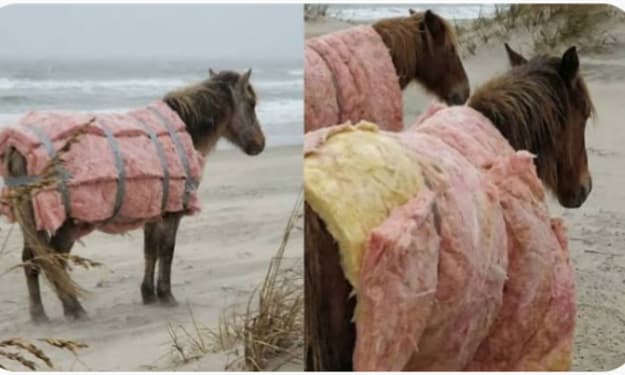
No, North Carolina Wild Horses Were Not Wrapped in Insulation
You might have seen some shocking images circulating online: wild horses on a North Carolina beach supposedly wrapped in pink insulation by volunteers trying to “help” them survive the winter. The photos went viral, sparking outrage, concern, and a flurry of social media shares.
By Sajida Sikandara day ago in Earth
Storm Leonardo Triggers Mass Evacuations Across Spain and Portugal
Storm Leonardo has unleashed severe weather across parts of Spain and Portugal, forcing authorities to evacuate more than 11,000 residents as flooding, powerful winds, and widespread disruption threaten public safety. Emergency services in both countries remain on high alert, warning that risks persist even as conditions show signs of gradual improvement.
By Adil Ali Khan3 days ago in Earth



Comments
There are no comments for this story
Be the first to respond and start the conversation.