
A Planetary Alignment Will Coincide With Mercury Retrograde
A rare celestial overlap sparks excitement among astronomers and astrologers alike
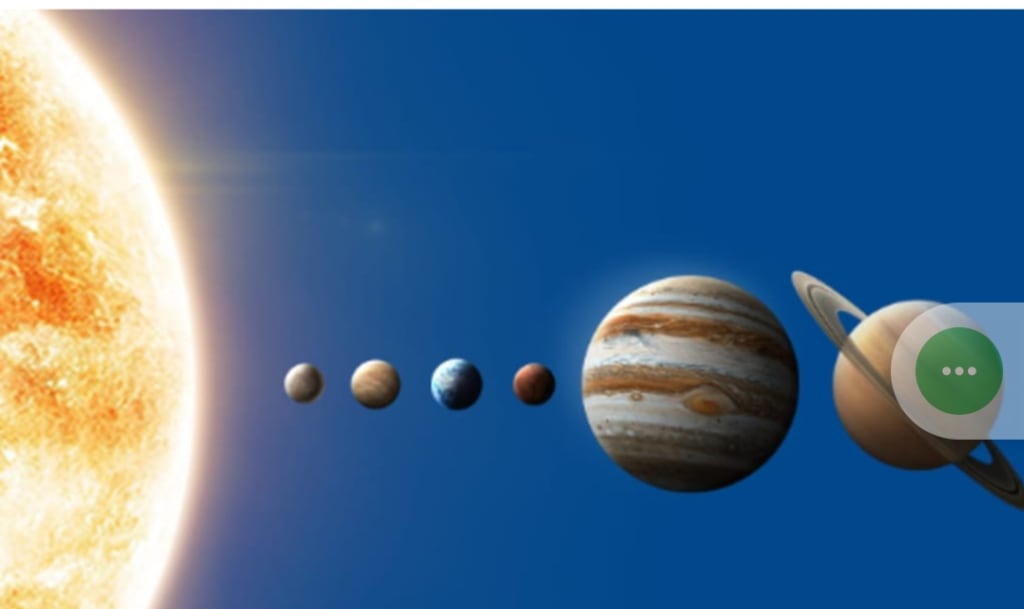
Skywatchers are preparing for a striking celestial event as a planetary alignment is set to coincide with Mercury retrograde — a pairing that has generated buzz across both scientific and astrological communities. While planetary alignments are not uncommon on cosmic timescales, the overlap with Mercury’s apparent backward motion adds a layer of intrigue that has captured global attention.
Whether viewed through the lens of astronomy or astrology, the event offers an opportunity to look up and reflect on the mechanics — and meanings — of our solar system.
What Is a Planetary Alignment?
A planetary alignment occurs when multiple planets appear to line up in the sky from Earth’s perspective. Contrary to popular belief, planets do not form a perfectly straight line in space. Instead, they occupy roughly the same region of the sky along the ecliptic — the apparent path the Sun takes across the sky.
Depending on the specific configuration, observers may see two, three, or even five planets visible at once, sometimes just before sunrise or shortly after sunset.
These alignments are visual phenomena, not gravitational events of significant consequence. Despite dramatic portrayals in fiction, planetary alignments do not trigger earthquakes, tidal surges, or atmospheric disturbances.
Still, they remain visually impressive and scientifically fascinating.
Understanding Mercury Retrograde
Mercury retrograde refers to the optical illusion in which the planet Mercury appears to move backward across the sky relative to the stars. This occurs several times each year due to differences in orbital speed between Earth and Mercury.
Because Mercury orbits closer to the Sun and moves faster than Earth, there are periods when Earth overtakes it in orbit. From our perspective, this creates the appearance of backward motion.
In astronomy, Mercury retrograde is a predictable and well-understood orbital dynamic.
In astrology, however, it has gained a reputation for being associated with communication breakdowns, travel disruptions, and technological mishaps.
Why This Overlap Is Getting Attention
The coincidence of a visible planetary alignment during a Mercury retrograde period blends scientific spectacle with cultural symbolism.
For astronomers, the event represents an observational opportunity — a chance to witness multiple planetary bodies sharing the same stretch of sky.
For astrology enthusiasts, the combination amplifies the symbolic significance of Mercury’s retrograde cycle.
Social media platforms have already seen growing discussions about how the alignment might “intensify” retrograde effects, though scientists emphasize there is no physical mechanism supporting such claims.
Which Planets Are Involved?
While exact configurations vary depending on the date and viewing location, alignments often include bright planets such as:
Venus
Mars
Jupiter
Saturn
Mercury (when visible)
Venus and Jupiter, in particular, are among the brightest objects in the night sky after the Moon.
When several of these planets appear within the same arc of sky, the visual impact can be striking — especially in areas with low light pollution.
Observers may require binoculars or small telescopes to spot dimmer planets, but many alignments are visible to the naked eye under clear conditions.
Viewing Tips for Skywatchers
Those hoping to witness the alignment should check local astronomical forecasts for optimal viewing times.
Generally:
Look shortly after sunset or before sunrise
Find a location away from city lights
Ensure an unobstructed view of the horizon
Use a stargazing app to identify planetary positions
Clear weather conditions are essential. Even thin cloud cover can obscure visibility.
Astronomical societies and observatories often host public viewing events during notable alignments.
Science vs Symbolism
The dual interest in this event highlights the contrast between scientific and symbolic interpretations of celestial phenomena.
Astronomy focuses on measurable orbital mechanics. Planetary alignments and retrograde motion are predictable outcomes of gravitational dynamics and relative motion.
Astrology, by contrast, interprets planetary positions as symbolic influences on human experience.
While there is no scientific evidence linking planetary alignments or retrogrades to personal events, the cultural appeal remains strong.
For many, the sky serves not only as a scientific laboratory but also as a canvas for meaning and reflection.
The Cultural Power of the Night Sky
Throughout history, planetary alignments have inspired myths, prophecies, and artistic expression.
Ancient civilizations carefully tracked celestial movements, often attributing spiritual or political significance to unusual configurations.
Today, even in an age of satellites and space probes, major celestial events continue to spark public imagination.
The overlap of alignment and retrograde offers a reminder that astronomy still holds a unique place in popular culture.
Are There Any Physical Effects?
Scientists emphasize that planetary alignments do not produce measurable effects on Earth.
The gravitational pull of distant planets is negligible compared to that of the Moon or the Sun.
Similarly, Mercury retrograde is purely an observational phenomenon. The planet does not change direction in its orbit; it only appears to do so from Earth’s moving vantage point.
In short, while the sky may look dramatic, life on Earth continues unaffected.
Why Events Like This Matter
Beyond spectacle, celestial events encourage curiosity about science and space exploration.
Planetary alignments provide accessible entry points into understanding orbital mechanics, gravitational physics, and the scale of the solar system.
They also foster a sense of shared global experience. Unlike many natural events confined to specific regions, alignments are visible across vast portions of the planet.
Looking up at the same sky can create a quiet sense of connection.
A Moment to Pause and Observe
In a fast-paced digital world, the anticipation surrounding this alignment offers an opportunity to step outside and observe something timeless.
Whether interpreted scientifically or symbolically, the sight of multiple planets shining together is a reminder of Earth’s place within a vast and dynamic system.
For astronomers, it is an elegant demonstration of orbital geometry. For astrologers, it may represent a period of reflection.
For everyone else, it is simply a reason to look up.
Conclusion
The upcoming planetary alignment coinciding with Mercury retrograde has captured public interest by merging astronomical precision with cultural fascination.
While science assures us that no cosmic disruptions are imminent, the visual beauty of multiple planets sharing the sky remains compelling.
As the alignment unfolds, observers around the world will gather — some with telescopes, others with smartphones — to witness a rare and meaningful convergence.
In the end, the event serves as a reminder that the universe operates on predictable laws, yet still manages to inspire wonder.
About the Creator
Keep reading
More stories from Aarif Lashari and writers in Earth and other communities.
Kidnapping Victims Forced to Send Disturbing Videos to Relative, Say Spanish Police
Spanish police are investigating a disturbing kidnapping case after two men allegedly sent videos to a relative showing one of them bloodied and being threatened with a knife. According to authorities, the footage was intended to pressure the family, raising concerns about organized criminal tactics and the growing use of digital intimidation.
By Aarif Lashariabout 2 hours ago in Earth
Patio Covers Tacoma: A Practical Solution for Damp Weather
At first, I thought patios were mostly for sunny areas, not a place like Tacoma, where the sky is more often gray than not. However, after living through the seasons here, you quickly learn the issue isn't extreme weather; it's the constant dampness. Light rain, mist, cloudy afternoons, and that chilly moisture that lingers even when it’s not raining.
By Backlinks Cart3 days ago in Earth


Comments
There are no comments for this story
Be the first to respond and start the conversation.