
a new year for the trees
a northern winter’s walk for Tu BiShvat

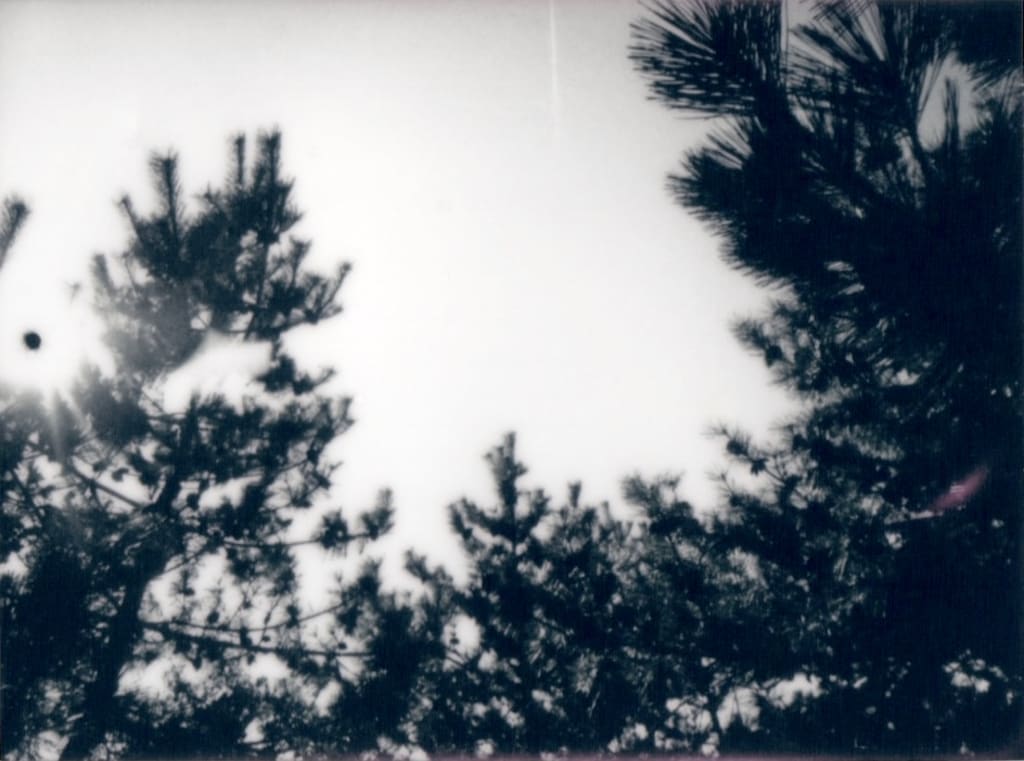
The snow allows me to go where I usually can’t in good conscience.
Someone has already made a path here, so I follow the deep footfalls cast by snow. Still, I don’t touch sand and keep mindful of slick surfaces as I wind the path past the iced over marsh and back up the dunes to the copse of maritime pine stark against the bright white and pale, sleeping grass. A muted green yet green nonetheless among the hibernating things.
I pass the iced over marsh, near slipping towards it as I follow the faint presses of boots on the slowly thawing ice on the snow which has blended into the frozen water.
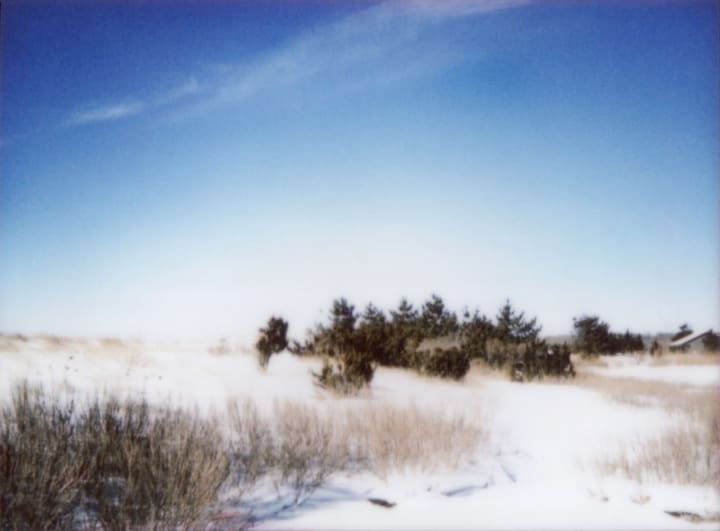
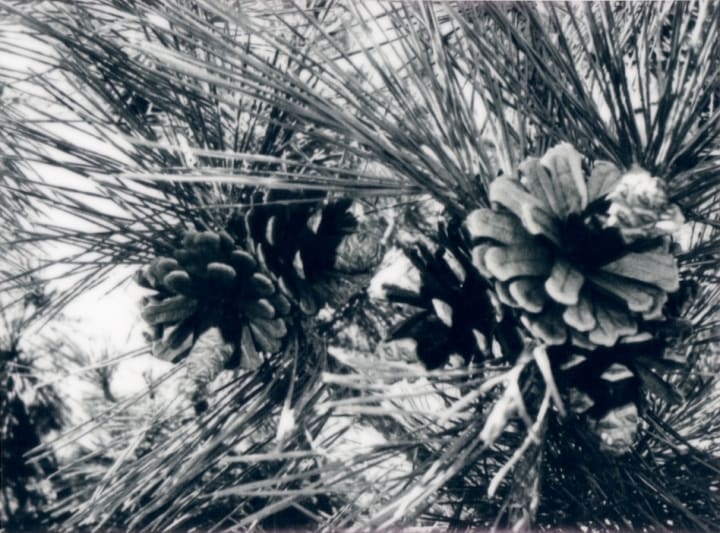
Past the sentinel trees standing watch to their stretch of dune, I stop to admire the pinecone-heavy boughs of the tallest tree beckoning. A pitch pine uncharacteristically tall and straight, out of place among the wind-bent and -twisted siblings. The pinecones are prehistoric, a proto-structure unchanged as the conifers which produce them. How many of these trees are renewed from dead terminal shoot or still young from seed? The life of these trees are kept secret.
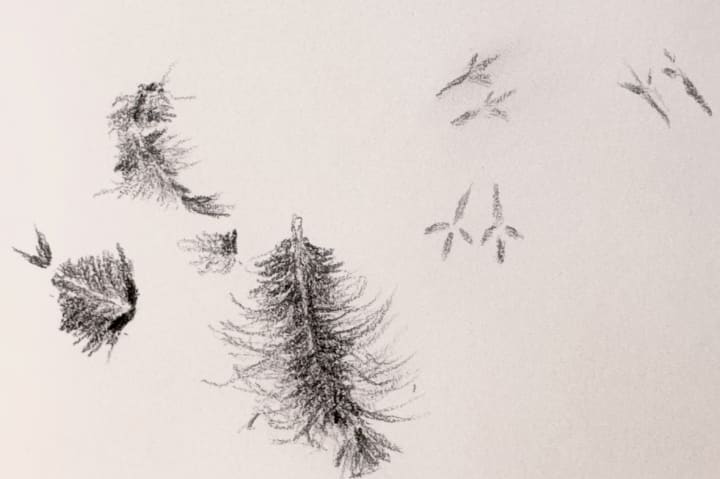
On the ground is contrast of burst of dark feathers (an implication of violence in a quiet place) and delicate tracks gently imprinted of little birds hopping about. Unknown and unnamed to me, still they exist and still I document the evidence of their presence through photograph and graphite. They are not here but they will return when this place is free of me.
The only sounds are me, the wind, and the creaking snow.
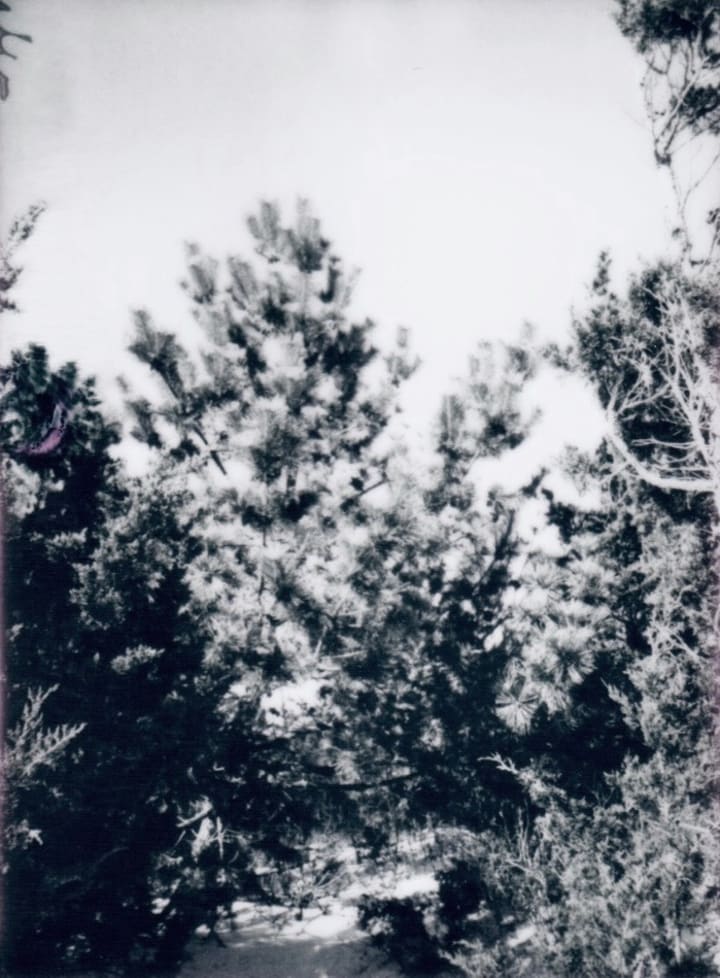
In this copse I am sheltered. The trees are quiet, pine needles dark against bright sky, shadows pale and blue. I am in an older world, sheltered. The maritime pines of here and elsewhere are all familiar, a home. I breathe easy in these seaside copses and forests.
Linking between the Long Island Sound and the maritime chaparrel, pine barrens, coastal sage shrub, and maquis, the threads tie together between haunts and genetic memory. All points in time converge within the liminality of this place as on all beaches. Trees have been here long before us and will remain long after us, bearing silent witness.
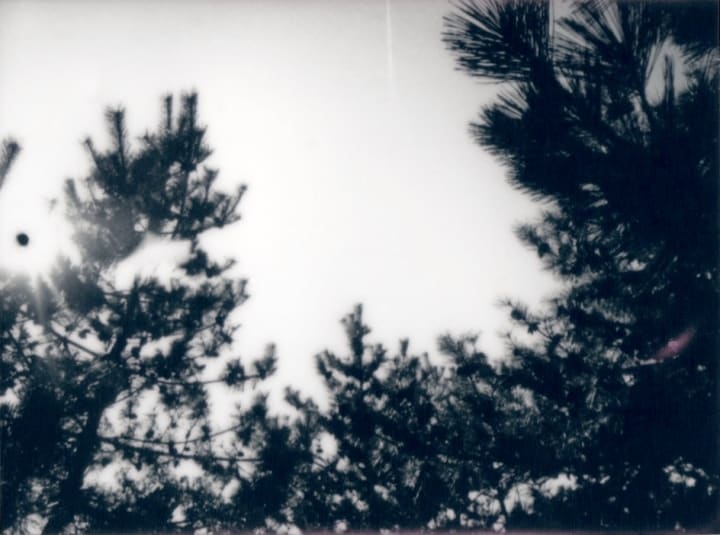
I thank the trees for their presence and move along, back into the path of the wind and off the laid path.
I think of Tu BiShvat and of the trees as I go past half buried shrubs with limbs stuck up past the snow hugging trunk and needles. I pass other conifer groups, as if huddled together in comfort. The trees have been there us, from veneration to deforestation over history. A struggle to counteract the destruction continues but this is how it should be: to keep the work going so we have the chance to return to equilibrium.
———
To learn more about Tu BiShvat, read this entry from Aish. In brief: it is a Jewish holiday not of specific religious meaning but one that celebrates trees in modern times where it’s more akin to arbor day and earth day. In the past, it was more of an agricultural marker for farmers with practical purpose. There is a history of tree veneration in Judaism which had waned but is seeing some revival in the 21st century. It is a minor holiday but it’s one of the favorites. I enjoy taking time to walk among trees, my favorite being maritime forests but any tree is a good tree.
Thank you for reading and, as always, a tip is appreciated but not expected. The ongoing support by way of reading, sharing, commenting is loved.
About the Creator
Chaia Levi
like if Nabokov had a brain injury
artist, writer, photographer. focus on horror and nature. all original content, all made myself — no AI.
bluesky, tiktok, tumblr: @chaialevi
Keep reading
More stories from Chaia Levi and writers in Earth and other communities.
New England Spring
Even in the parking lot, New England politeness shows in the way the few cars present are parked far and away from each other. We give each other space; a choice in how close we wish to get to one another. With the corners and fence taken, I park at the edge in front of the native pines and invasive phragmites. I can hear the wind even as I sit within and change my shoes.
By Chaia Levi10 months ago in Earth
US Winter Storm: At Least 30 Dead as Nearly 200 Million Under Cold Alerts
Deadly Winter Hits the United States A historic winter storm has swept across the United States, leaving at least 30 people dead and nearly 200 million residents under cold-weather alerts. The storm, marked by record-low temperatures, heavy snow, and icy conditions, has affected large portions of the country from the Midwest to the East Coast. Meteorologists describe this event as one of the most severe in recent decades, noting its combination of extreme cold, high winds, and widespread snow coverage. Authorities warn that these conditions pose significant risks to public safety and infrastructure. Understanding the Storm The winter storm is the result of a polar air mass moving southward, colliding with warmer air from southern regions. This interaction has created blizzard conditions, ice accumulation, and dangerously low wind chill temperatures. Cold alerts have been issued for nearly two-thirds of the U.S. population, including major cities such as Chicago, New York, and Dallas. Temperatures have plunged to historic lows in some regions, reaching -30°F (-34°C) in northern states. Fatalities and Human Impact At least 30 confirmed deaths have been attributed to the storm, primarily caused by traffic accidents, hypothermia, and carbon monoxide poisoning from improper heating methods. Emergency services report a surge in calls for assistance, including rescues of stranded motorists and people trapped in their homes. Vulnerable populations, including the elderly, homeless, and low-income families, are particularly at risk. Shelters and warming centers have been opened in major cities, but demand has exceeded capacity in many areas. Transportation and Infrastructure Disruptions The storm has caused widespread disruption to transportation networks, including: Thousands of flight cancellations and delays at major airports Closed highways and roads due to ice and snow Delays in public transit systems in urban areas Power outages affecting millions of homes and businesses Utility companies are working to restore electricity, but extreme cold complicates repair efforts. Residents are advised to limit travel, conserve energy, and prepare for extended outages. Public Health Concerns Severe cold presents serious public health risks. Authorities emphasize the importance of: Staying indoors whenever possible Wearing layers of warm clothing Avoiding prolonged exposure to the cold Checking on neighbors, especially elderly or disabled individuals Medical professionals warn that hypothermia, frostbite, and heart strain from shoveling snow are common causes of winter-related emergencies during such storms. Carbon monoxide poisoning has also been a concern, as some residents use improper heating devices indoors. Community Preparedness and Response Community response has been critical in mitigating the impact of the storm. Local governments and organizations have: Set up emergency warming centers and shelters Deployed road crews for snow and ice removal Coordinated with volunteers and nonprofits to deliver food, blankets, and supplies Issued emergency alerts and advisories through multiple channels Citizens are encouraged to check on neighbors, keep emergency kits ready, and follow official guidance to stay safe. Economic and Social Consequences Beyond immediate safety concerns, the winter storm is expected to have economic repercussions: Retail, hospitality, and service sectors face lost revenue due to closures Supply chains are delayed, affecting deliveries and manufacturing Utility companies will incur extra costs for emergency repairs and overtime Insurance claims for property damage and vehicle accidents are likely to rise The storm also highlights social inequality, as lower-income households are less equipped to cope with prolonged outages or heating costs. The Role of Climate Patterns Meteorologists link extreme winter storms to polar vortex fluctuations, La Niña effects, and broader climate variability. While global warming has generally increased average temperatures, it has also contributed to more extreme and erratic weather patterns, including sudden cold outbreaks in temperate regions. Experts stress the importance of investing in resilient infrastructure, emergency planning, and climate adaptation strategies to minimize future impacts. Key Safety Recommendations for Communities Authorities advise that individuals and communities take proactive measures, including: Maintaining emergency supplies, including food, water, and blankets Avoiding unnecessary travel and staying informed via official channels Checking on vulnerable residents and providing assistance Ensuring proper ventilation when using indoor heating devices Community solidarity can significantly reduce fatalities and hardships during extreme weather events. Looking Ahead While the storm is expected to gradually move eastward, meteorologists caution that dangerous conditions may persist in some areas for several days. Recovery will require coordination between local governments, utility providers, and community organizations. This event also serves as a reminder of the importance of preparedness, highlighting how weather emergencies can quickly affect millions of people, disrupt services, and threaten lives. Conclusion The US winter storm has been deadly and disruptive, claiming lives, overwhelming infrastructure, and affecting nearly 200 million people under cold alerts. Its impact extends beyond immediate safety to economic, social, and public health consequences. Communities that prepare, support vulnerable residents, and follow emergency guidance can mitigate the worst effects. This storm underscores the urgent need for awareness, planning, and resilience in the face of increasingly extreme weather events.
By Aarif Lashari7 days ago in Earth
Ukrainian President Zelenskyy Invites Putin to Kyiv for Talks
Ukrainian President Volodymyr Zelenskyy has publicly invited Russian President Vladimir Putin to Kyiv for direct talks, marking one of the most striking diplomatic gestures since the outbreak of the war between Russia and Ukraine. The invitation, unprecedented in both symbolism and political risk, immediately drew global attention and sparked intense debate among diplomats, analysts, and citizens alike.
By Aarif Lashari4 days ago in Earth


Comments
There are no comments for this story
Be the first to respond and start the conversation.