
The Man Who Returned the Wallet
One honest decision exposed a lifetime of quiet crimes.

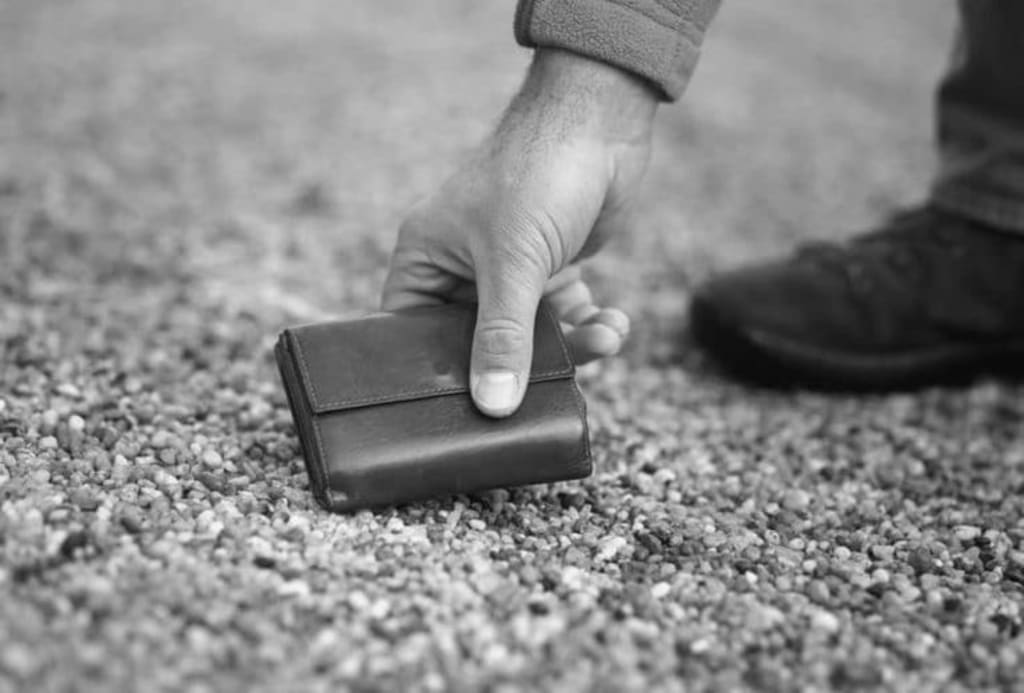
The wallet lay half-hidden under a thin layer of dust near the curb. Amir noticed it as he locked the shutters of his small convenience shop late one evening. At first, he considered leaving it. The city was unforgiving; minding your own business was sometimes the only way to survive. But the wallet’s weight, its slightly worn leather, and the sight of a photograph peeking from a corner made him pause. The photograph showed a young girl, smiling at the camera, her joy striking in its innocence. Something about it pulled Amir toward responsibility.
Inside the wallet were credit cards, a fair amount of cash, and an ID identifying a man he didn’t know. Amir could have ignored it—or taken the cash. Rent was overdue. Sales had been slow for weeks. Survival often required bending rules. And Amir had bent them before. Not dramatically, but consistently. Slight tax manipulations. Small bribes to inspectors. Underweight goods sold without declaration. None of these were headline-making crimes, yet each added up quietly, eroding his sense of integrity. Life had taught him that honesty was a luxury few could afford.
He held the wallet, turning it over in his hands, feeling the weight of the choices it represented. The photograph of the young girl reminded him of his own daughter, laughing freely without any knowledge of life’s compromises. His conscience protested. The temptation to take the money was strong—but the thought of disappointing someone else in a direct, tangible way struck him harder.
After a moment, Amir closed his shop early. He retraced the streets listed on the ID and found the building without difficulty. The apartment looked modest but well-kept, lit with warm light. When he knocked, the door opened to reveal a man in his forties, shoulders tense, eyes wary. Amir explained calmly, holding out the wallet.
The man froze for a moment, then relief washed over his face. He counted the cash quickly, then paused, noticing every card and the ID. “It’s all here,” he said, disbelief in his voice. He offered Amir a reward, but Amir refused. He didn’t trust himself to accept anything without feeling like a fraud. The man insisted, then laughed softly, finally letting Amir leave with a polite bow and repeated thanks.
Walking home, Amir felt something strange: not pride, not relief, but a sudden clarity. One honest act had illuminated the years of quiet dishonesty in his life. The contrast was sharp and uncomfortable. He replayed moments he had dismissed as harmless—misreported bills, slight exaggerations to suppliers, skipped taxes. Each one, when measured against returning a wallet untouched, felt heavier than it should.
That night, Amir couldn’t sleep. Thoughts swirled, but this time they carried awareness rather than avoidance. He realized crime was not always loud or violent. Often, it was about accepting the small, silent compromises that gradually erode character.
The next day, when a supplier offered him an easy shortcut, Amir hesitated. Then, for the first time in years, he refused. It cost him a small profit, but it was the first deliberate choice that aligned with his conscience in a long time. The act of integrity didn’t fix everything, but it shifted a pattern.
Weeks passed. Amir struggled, sometimes slipping into old habits. But returning the wallet had planted a seed. Decisions that would have been automatic now required thought. He began observing the consequences of actions he had once dismissed. He realized the smallest choices often defined who he truly was, more than his achievements, wealth, or outward reputation.
One evening, his daughter noticed the subtle change in him. “You seem… different,” she said, tilting her head curiously. Amir smiled, feeling more exposed than he had intended. “I’m trying to be someone I won’t have to hide from,” he said, quietly, and meant it
Amir never became perfect. He didn’t suddenly renounce every temptation or past mistake. But he began to measure his actions against integrity, small step by small step. The wallet on the street had acted as a mirror, revealing what honesty felt like after years of evasion. Redemption wasn’t a single act—it was a decision repeated consistently.
He understood now that crime isn’t always dramatic, and honesty isn’t always rewarded immediately. Sometimes, redemption begins quietly, with a single choice, on an ordinary street, with a photograph in a wallet.
And sometimes, that choice changes everything.
About the Creator
Sudais Zakwan
Sudais Zakwan – Storyteller of Emotions
Sudais Zakwan is a passionate story writer known for crafting emotionally rich and thought-provoking stories that resonate with readers of all ages. With a unique voice and creative flair.
Keep reading
More stories from Sudais Zakwan and writers in Criminal and other communities.
The Mystery of the Silent Thief
Detective Ravi had seen many cases in his ten years on the force, but the theft at the Grand Market was unlike anything he had ever encountered. Valuable items had gone missing from multiple shops overnight, but there were no signs of forced entry, no fingerprints, and no witnesses. The town was in panic, and the shopkeepers demanded answers.
By Sudais Zakwan3 days ago in Criminal
The New Battlefield: Sovereignty in the Age of Secrets
The New Battlefield: Sovereignty in the Age of Secrets As we look deeper into modern global conflicts, it becomes clear that the battlefield has changed. Wars are no longer fought mainly on physical borders or traditional frontlines. Instead, the real fight now happens inside a nation itself, within its financial systems, digital networks, infrastructure, and even public thinking. This internal structure can be compared to a human nervous system. If it is damaged, the entire body becomes weak, even if no physical attack takes place.
By Wings of Time 6 days ago in Criminal
The man who stole the world
M Mehran At first, no one noticed the pattern. People simply woke up to find their lives gone. Bank accounts emptied. Credit ruined. Medical records altered. Even wedding photos deleted from cloud storage. It wasn’t just theft—it was erasure. The media called it the largest identity theft crime in modern history. But they didn’t know the worst part yet. A Crime Without a Face Cybercrime investigator Mila Novak stared at the screen for hours, scrolling through files that didn’t make sense. Over two hundred victims across six countries. Different banks. Different devices. Different habits. One thing was common. Every victim received a single email before their life collapsed. No threats. No malware links. Just one sentence: “You should have protected it better.” Mila had seen hackers before—greedy ones, reckless ones, desperate ones. This one was different. This one was personal. The Victims Who Vanished One victim was a schoolteacher who lost her savings and was declared legally dead after her medical records were altered. Another was a businessman arrested at an airport for crimes committed under his stolen identity. One man took his own life. That was when the case stopped being digital. It became human. Mila couldn’t sleep. She replayed interviews in her head—voices shaking, eyes hollow. “These aren’t just stolen identities,” she told her team. “Someone is destroying people intentionally.” The Hacker’s Signature The breakthrough came from an old technique most criminals had forgotten. Handwriting. The email sentence—“You should have protected it better”—appeared in every case. Same phrasing. Same punctuation. Same cold tone. A signature. Mila cross-referenced old cybercrime forums and found it buried in a decade-old discussion thread. A username: GhostLedger A hacker who vanished after exposing a corrupt tech company years earlier. The forum said GhostLedger didn’t steal money. He took revenge. A Past Rewritten Mila traced the digital trail to an abandoned data center on the outskirts of the city. Inside, among humming servers and dust, she found something unexpected. A bedroom. Photographs lined the wall—families, birthdays, graduations. None of them were his. They were the victims. Pinned beneath each photo was a note. “Lied.” “Cheated.” “Stole.” “Destroyed others first.” Mila finally understood. This wasn’t random cybercrime. It was punishment. The Criminal’s Truth They found him sitting calmly at a terminal, typing as if nothing mattered. His real name was Daniel Weiss—a former cybersecurity engineer fired after reporting massive data misuse. The company buried the scandal. Daniel lost his job, his reputation, his future. And then, his wife. Her identity was stolen years later. Her medical data altered. She died after receiving the wrong treatment. No one was charged. “No law protected her,” Daniel said quietly as Mila confronted him. “So I learned to work outside the law.” “You ruined innocent lives,” Mila replied. Daniel looked at her, eyes empty but steady. “They weren’t innocent,” he said. “They profited from broken systems. I just used the same systems on them.” Justice in the Digital Age Daniel was arrested without resistance. The media called him a monster. Online forums called him a hero. Victims demanded answers. Courts struggled to untangle destroyed identities. Some lives were restored. Some weren’t. Mila testified in court, but her voice shook—not from fear, but from doubt. Because part of her understood him. And that terrified her. The Real Crime Months later, the case closed. But the systems Daniel exploited? Still running. Still vulnerable. Still unprotected. Mila deleted the last email from GhostLedger’s archive. Before closing the file, she noticed something new—an unsent draft. Just one line. “The system was the real criminal.” She shut down the computer and walked away, knowing one thing for certain: In the modern world, crime doesn’t always wear a mask or carry a weapon. Sometimes, it just needs your data. Why This Criminal Story Hits Hard Because identity theft is more than fraud. Because cybercrime creates real victims. Because justice doesn’t always keep up with technology. And because the most dangerous criminals don’t break into homes— They log in.
By Muhammad Mehran6 days ago in Criminal
Feelings Never Die
It is Valentine's Day again, and it bought back memories that were over fifty years old. It bought me back to 1971, and I woke up and I knew my baby was due today. I was big and pregnant, and I felt like I was about to burst wide open. Imagine my surprise when the doctor told my I had a due date of February 14. I couldn't believe it, and since my baby was due today, I felt I could indulge myself a bit. I had gained a lot of weight, and chocolate was on the no-no list, but I had came to the end of this pregnancy, and I hoped it would be okay, after all I would deliver this baby today. So I walked across the street to the grocery story, and bought myself, a peppermint patty, covered in chocolate, my favorite. Me and my Valentine's baby would enjoy it together.
By Susan Payton4 days ago in Fiction



Comments
There are no comments for this story
Be the first to respond and start the conversation.