
Black History Unfiltered
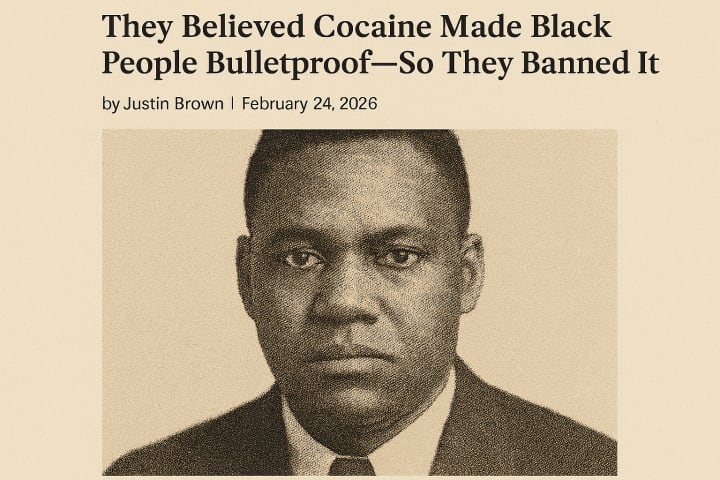
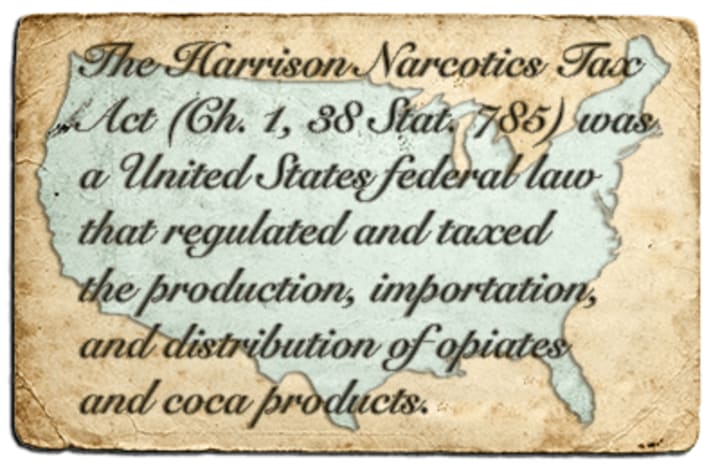
HARRISON NARCOTICS TAX ACT

by Soul on Fire LEAVIE SCOTT
The rumor moved like wildfire because it was designed to. It had the pacing of a ghost story and the precision of a press release. Whispers turned to headlines, headlines turned to hearings, and before long, the lie had grown legs long enough to step into the federal register.
The claim was wild enough to be unforgettable: Black people on cocaine were “bulletproof.” Not invincible in the comic-book sense, but dangerous in a way that demanded bigger guns, harsher laws, and new language to explain why fear felt so justified. It sounded like madness—because it was. And yet, it worked.
The story didn’t start in a lab. It didn’t emerge from peer-reviewed science or patient case studies. It started in the same place so many policy panics begin in America: the intersection of racial anxiety and political opportunity. Newspapers found it delicious. Policymakers found it useful. Law enforcement found it convenient. And the public, conditioned by an old and familiar script, found it believable.
They called Black men “cocaine fiends,” as if the drug created not a medical dependency but a new species—less human, more threat. They printed claims that bullets bounced off brown skin when “stimulated,” that morality melted under the drug’s heat, that Black bodies transformed into something a good community could not survive without stronger chains and thicker gates.
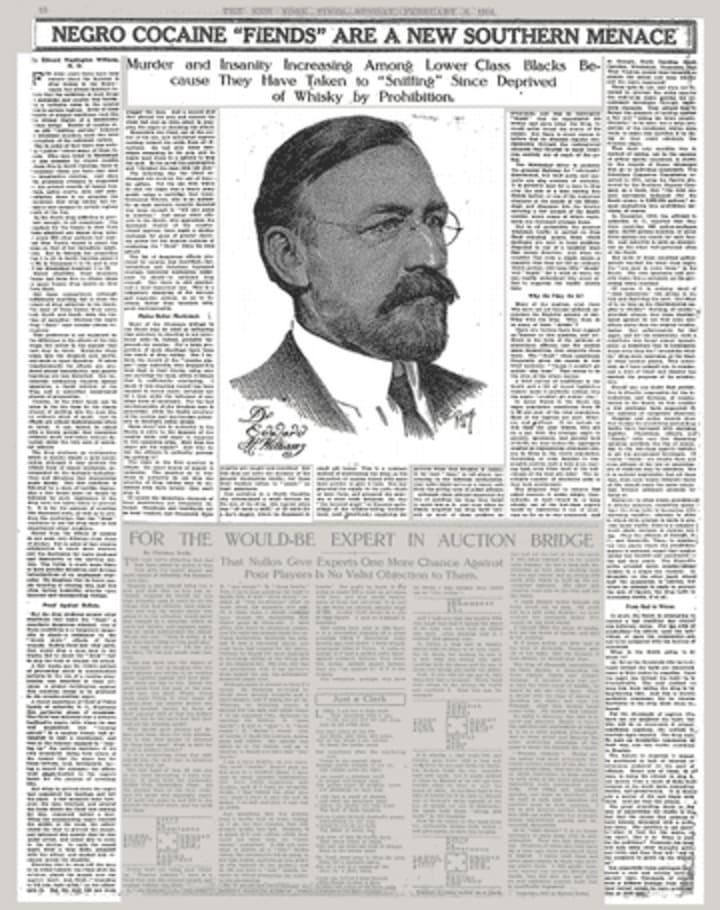
It was never about health. It was about control—about building a legal fortress around a racial imagination that required Blackness to be the danger and whiteness to be the authority.
The absurdity of the “bulletproof” myth was part of its power. The more impossible it sounded, the more it invited panic. Panic is a useful solvent; it dissolves nuance. In panic, a complex social question—poverty, labor exploitation, segregation, inequality—shrinks into a single, satisfying answer: punish.
That punishment arrived dressed as policy.
The Act That Wore a Lab Coat
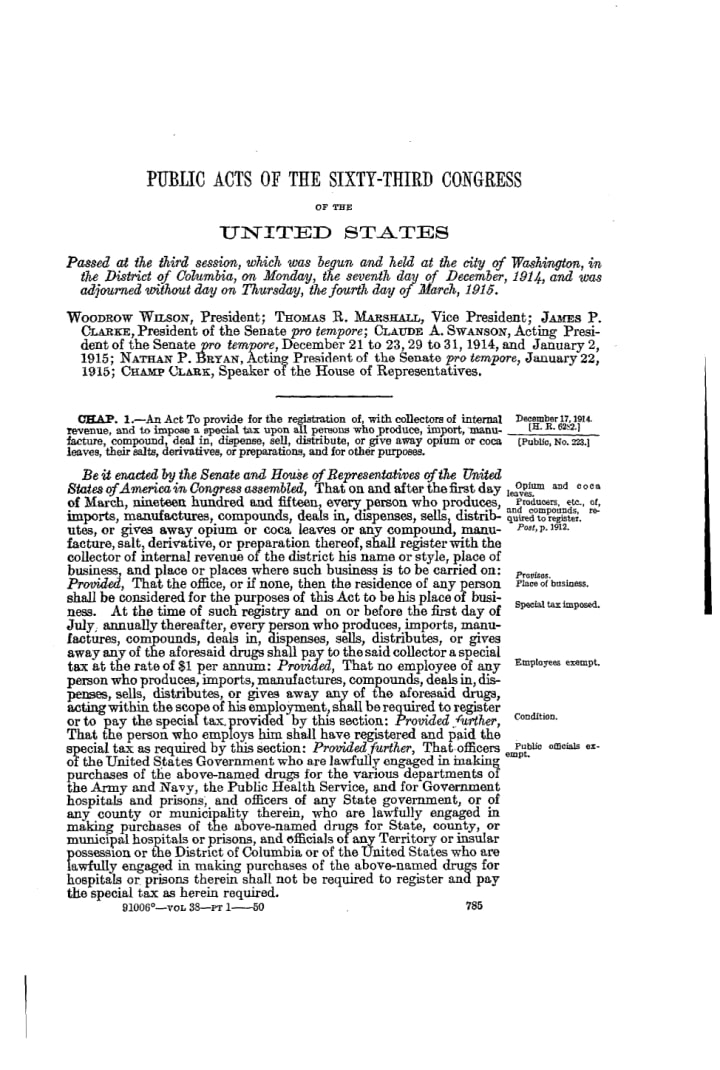
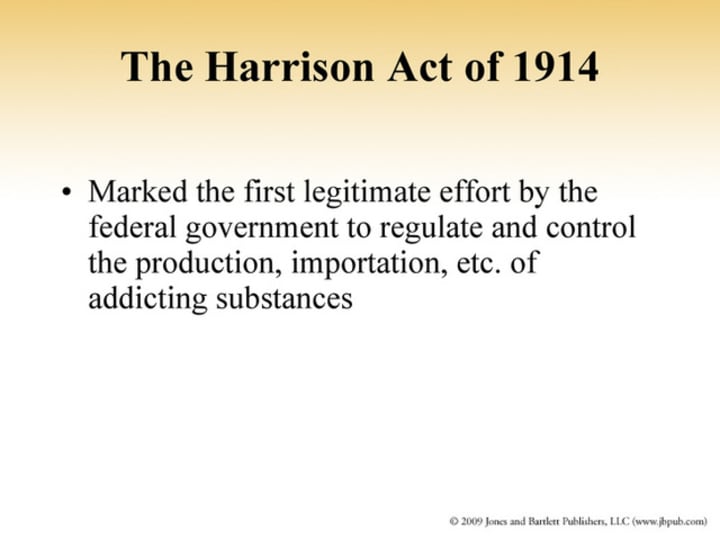
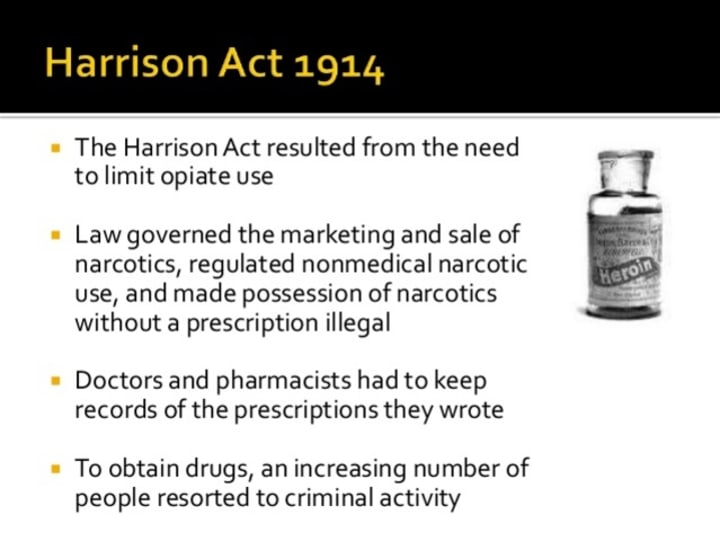
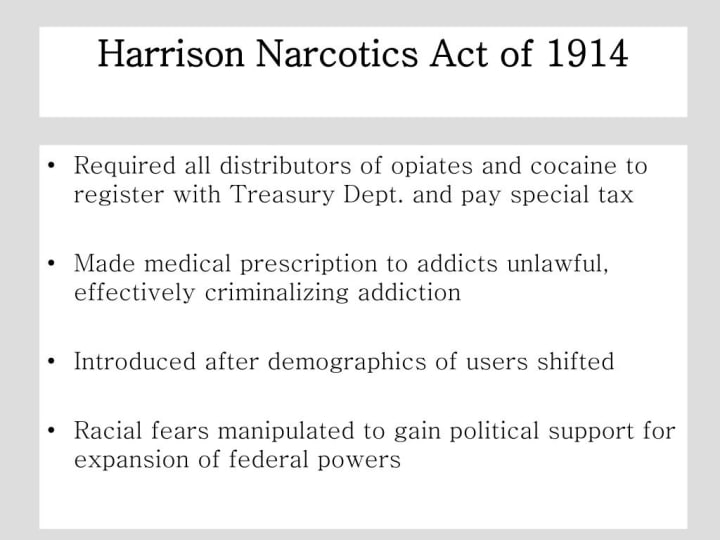
By December 17, 1914, Congress passed the Harrison Narcotics Tax Act, a law marketed as an orderly system of registration and taxation around certain drugs. But like so many “neutral” structures in American history, the law was neutral in language and unequal in practice. It bestowed new authority on the federal government, widened the net of criminalization, and made medical care less accessible for people the system already refused to see.
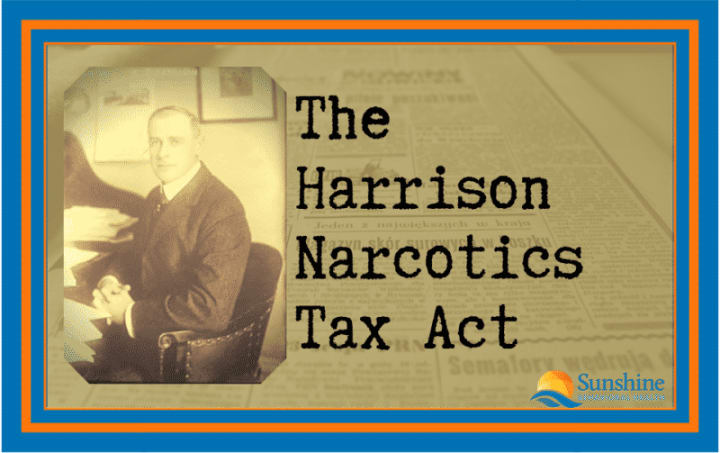
And while the Act did not say “Black” or “white,” everyone in power knew who it positioned for surveillance, arrest, and moral condemnation. The panic had done its job. Legislators could claim a duty to protect society, to protect women, to protect order—all the while protecting the lie that framed Black communities as uniquely dangerous when touched by substances that whiteness could sample in parlors and pharmacies without stigma.
Consider the hypocrisy: while lawmakers thundered about cocaine’s dangers in Black hands, Coca‑Cola—named for coca and once flavored with its derivatives—continued cultivating a white consumer base without the same criminal shadows attached. One set of users got marketing. Another got mugshots. If you want to understand the drug war, start there.
The Machine of Mythmaking
How do you get a nation to believe something as ridiculous as “bullets don’t stop them”? You tell the story enough times, with enough costume changes, until it feels like memory. A sheriff says it. A doctor repeats it. A newspaper prints it. A politician campaigns on it. Soon, no one can tell you where it started; they can only tell you they’ve “heard it everywhere.”
It helps if the lie fits neatly into an older fear—the fear of Black autonomy, of Black mobility, of Black success. In the early 20th century, the South trembled at the thought of Black men no longer bound to fields and contracts, no longer tethered to plantation wage systems dressed up as “employment.” Migration was shifting demographics. Education was opening doors. Black newspapers were thriving. Churches were building institutions. When progress cannot be reversed outright, it can be reframed as peril.
So the lie treated Black modernization as a public health threat. It pathologized Black movement as criminal. It packaged that pathology in the white coat of a “medical authority” and the badge of a “public safety concern.” Policymakers didn’t need the myth to be true; they needed it to be useful.
The Script Returns—Again and Again
History rarely repeats with identical lines, but the stage directions are familiar.
In the 1930s, marijuana became “marihuana,” and headlines described “reefer madness” infecting jazz clubs, Mexican immigrants, and Black neighborhoods. In the 1980s, crack cocaine—chemically similar to powder cocaine—brought catastrophic sentencing disparities, not because science demanded it, but because panic paid political dividends. The neighborhoods already starved of investment, housing, and adequate healthcare were given police budgets instead.
At each turn, media found an image easy to sensationalize: a lurid headline, a mugshot that did the work of a thousand op-eds, a film reel spliced to show a sequence that looked like truth even when it wasn’t. Policy followed the image. Funding followed the policy. And families followed their loved ones into courtrooms designed to be final.
The Cost You Can’t Print on a Headline
What are the “costs” of a lie like bulletproof Blackness? You can count some in numbers—arrests made, years served, livelihoods destroyed. But the larger cost is spiritual: the way a nation’s imagination gets trained to see Black life as perpetual crisis. The way teachers read risk in a child’s posture. The way employers interpret confidence as threat. The way a traffic stop becomes a test of survival. The way a Black person’s pain is medically under‑treated because the lie teaches that Black bodies feel pain differently—less intensely, less urgently, more resilient than they should.
You cannot pass a law to repair that imagination quickly. You need new stories—true ones, told often, with the patience of people who understand how long the old story has been at work.
Witness Versus Spectacle
A spectacle is designed to stun you into passivity. A witness is designed to call you into responsibility. Spectacles are quick. Witness is slow. The drug war has always preferred spectacle—baggies on a table, a line of men in cuffs, a press conference where everyone looks serious while saying nothing about the root.
Witness does the harder work: asking what kind of country invents a myth about bulletproof Blackness and then uses that myth to build a legal system. Asking who benefited financially from enforcement. Asking what happened to public health when fear became policy. Asking why treatment programs bloomed in suburbs while prisons bloomed in cities. Asking how long we will keep paying interest on a lie.
Breaking the Spell
So what do we do with this knowledge? First, we name the lie. We say clearly that Black criminalization has never been a side effect of drug policy; it has been a feature of it. We teach that science was invoked to justify policy, not to guide it. We remember that every panic leaves a paper trail of “experts” who, later, will say they were misunderstood.
Then we build. We build curricula that teach students to recognize moral panics when they appear in new outfits. We build advocacy that pushes for equitable sentencing, record expungement, and public health responses grounded in care rather than cages. We build local networks that turn neighbors into witnesses—people who know the names and stories behind the statistics. We build the kind of political literacy that makes it harder to sell us the next version of the same old hysteria.
And we tell our own stories—loudly, beautifully, relentlessly—because whoever tells the story first often gets to write the law that follows.
The Last Word
Black communities have never been bulletproof. They have been resilient in ways that make myths jealous. They have loved, taught, worked, prayed, marched, and rebuilt in the aftermath of policies justified by panic. They have turned funerals into movements and court dates into coalitions. They have refused to become the caricatures designed to manage them.
The drug war was not born from careful medicine. It was built from fear, profit, and control, and baptized with headlines crafted to make those forces feel like common sense. But common sense is not the same as truth. Truth is slower, sturdier, and less glamorous. Truth will sit with the facts long enough to notice the pattern. Truth will tell you that when a nation claims it must cage a people to save itself, what it is really saving is a hierarchy.
This is the history they didn’t teach us.
And this is the history we are teaching ourselves—Black History Unfiltered.
About the Creator
Organic Products
I was born and raised in Chicago but lived all over the Midwest. I am health, safety, and Environmental personnel at the shipyard. PLEASE SUBSCRIBE to my vocal and check out my store
Keep reading
More stories from Organic Products and writers in Criminal and other communities.
The Story of Tameka Drummer
At 34 years old, Tameka Drummer was a mother of four simply trying to make her way home when a routine traffic stop in Alcorn County, Mississippi, altered the trajectory of her life forever. It was 2006 when police pulled her over for an expired license plate — a tag that was later found sitting in plain sight in the backseat. What happened next set off a chain of events that would leave her serving life in prison without the possibility of parole for less than two ounces of marijuana.
By Organic Products 8 days ago in Criminal
From Abuse to Acquittal: The Case of Marcia Thompson and Terry Thompson
For nearly two decades Marcia Thompson lived in a marriage that, from the outside appeared stable and long-standing. In reality, her relationship with Terry Thompson was marked by fear, isolation, and repeated violence. What began as a long and complicated marriage gradually became a cycle of control, intimidation, and physical abuse—one that Marcia struggled to escape for years.According to court testimony, Terry was intensely controlling. He monitored Marcia’s movements, watched her closely, and limited her personal freedom. Friends and neighbors would later describe a pattern in which Marcia appeared increasingly withdrawn, anxious, and trapped within her own home. The abuse was not limited to emotional manipulation. Terry would sometimes beat her, leaving Marcia afraid not only for her safety but also for her ability to live independently and free from constant surveillance.
By Kure Garba7 days ago in Criminal
The Shadow Ledger
M Mehran The rain began just before midnight — the kind that turns city lights into blurred streaks and washes footprints from the pavement. In the old industrial quarter, where abandoned warehouses leaned like tired giants, a lone figure stepped out of the darkness. No one noticed him. That was always the point. His name, once printed on a birth certificate, had long been erased from records. On police radios he was known only as “Ledger.” Not because he stole money — but because he kept accounts. Every crime balanced. Every debt paid. Every sin returned. And tonight, another entry would close. The City That Forgot Years ago, the city had forgotten its edges. Luxury towers rose over neighborhoods where children slept hungry. Officials promised reform while shaking hands in shadowed rooms. Crime didn’t grow here — it evolved. Ledger had watched it all. Once, he had been a forensic accountant working with federal investigators. He traced financial trails for corruption cases, uncovering shell companies, offshore accounts, and millions siphoned from public funds. He believed numbers told the truth. Until his own case vanished. Evidence disappeared. Witnesses withdrew. His supervisor was promoted. The politician he had exposed was re-elected. Ledger learned something that day: Justice was negotiable. And numbers could be rewritten. Birth of a Criminal Mind They called him a criminal after the first fire. The office building burned at 2:14 AM. No casualties. Only one floor destroyed — the records archive of a construction firm under investigation for fatal safety violations. Inside the ashes, investigators found a single intact page: DEBT: 14 WORKERS BALANCE: PAID From that night onward, the city whispered about a phantom vigilante who punished those the courts could not touch. Authorities labeled him a domestic terrorist. Media called him a myth. Victims’ families called him something else: Justice. Tonight’s Target Ledger studied the building from across the flooded street. The glass tower gleamed like a monument to power. Inside worked Magnus Hale, a real estate magnate whose developments had displaced thousands. Fires, structural collapses, bribed inspections — every scandal buried under settlements and legal shields. Officially, Hale was untouchable. Unofficially, Hale’s wealth was built on graves. Ledger opened his weatherproof notebook — the Shadow Ledger — its pages filled with neat handwriting and red marks beside settled accounts. HALE, MAGNUS Evictions resulting in 63 deaths Bribery & fraud Unpaid restitution Balance due. He closed the book. The rain intensified. Entry Security cameras looped the same five seconds of footage — a gift from an anonymous signal override. The back entrance lock clicked open after a magnetic pulse disrupted the circuitry. Ledger moved silently through marble corridors. He didn’t rush. Criminals panic. Professionals proceed. On the 27th floor, the elevator opened into a private lobby. Soft classical music drifted from behind a steel door. Magnus Hale believed in thick walls and distance from the world below. Ledger believed in inevitability. He knocked. Silence. Then footsteps. The door opened a fraction, held by a security chain. “Yes?” Hale’s voice carried annoyance, not fear. “Financial audit,” Ledger said calmly. Hale scoffed. “At midnight?” Ledger held up a waterproof envelope. “Final notice.” Something in his tone made Hale hesitate. The chain slid free. That was the last decision Hale would ever make. The Confrontation Hale’s penthouse was vast — glass walls overlooking the storm, expensive art curated to suggest culture rather than taste. “Who sent you?” Hale demanded. Ledger removed his hood. “No one,” he replied. “I keep my own accounts.” Recognition flickered — not of the man, but of the stories. “You’re insane,” Hale said, reaching toward his phone. Ledger placed a small device on the marble table. The phone screen went black. “Sixty-three people,” Ledger said quietly. “Your developments displaced them. Winter exposure. Unsafe relocation zones. Fires.” “I settled those cases legally.” “You settled liability,” Ledger corrected. “Not responsibility.” Hale’s confidence returned. “You think breaking into my home gives you power? Do you know who I am?” “Yes,” Ledger said. “A balance overdue.” Justice Without Courtrooms Ledger never carried a gun. Violence was simple. Consequence required precision. He placed a tablet on the table and pressed play. Video testimonies filled the room: a mother describing eviction during a snowstorm; a former engineer revealing falsified safety reports; internal emails ordering cost cuts despite structural risks. Hale’s face drained of color. “You can’t use stolen evidence.” “It isn’t for court,” Ledger said. The storm thundered outside, lightning illuminating the city Hale had reshaped. Ledger slid a document forward. “Transfer of assets,” he said. “Emergency housing fund. Compensation trust. Full restitution. Signed tonight.” Hale stared. “You break into my home and expect me to give away my fortune?” “No,” Ledger replied calmly. “I expect you to balance your debt.” “And if I refuse?” Ledger stepped aside and gestured toward the glass wall. Far below, emergency lights flickered as city inspectors, journalists, and federal agents converged on Hale’s corporate headquarters — tipped anonymously hours earlier. Hale’s empire was already collapsing. “This document,” Ledger said, “determines whether families are compensated immediately… or after decades of litigation.” Hale’s hand trembled. For the first time in his life, money could not buy escape. Signature The pen hovered. Rain hammered the glass. Hale signed. Ledger watched without satisfaction. Justice was not pleasure. It was arithmetic. He collected the document, scanning the signature. Balance pending. Outside, sirens echoed through the wet streets. “Who are you?” Hale whispered. Ledger pulled up his hood. “An auditor,” he said. Then he was gone. The Ledger Grows By dawn, headlines erupted across the city: MAGNUS HALE ASSETS FROZEN WHISTLEBLOWER EVIDENCE RELEASED EMERGENCY HOUSING FUND CREATED Authorities denied involvement with the vigilante known as Ledger. Officials condemned illegal interference. Citizens debated morality versus law. Families moved into temporary housing funded overnight. And in the margins of public discourse, hope resurfaced. Criminal or Correction? On a rooftop overlooking the waking city, Ledger opened his notebook. He drew a red line through Magnus Hale’s entry. BALANCE: IN PROCESS He paused. The city pulsed with noise below — sirens, traffic, construction, ambition. Crime would never end. Power would always seek shadows. But so would he. Ledger closed the book and vanished into the thinning rain. Because in a world where justice could be delayed, buried, or bought… someone had to keep the accounts. And the Shadow Ledger was far from full. SEO Keywords naturally included: crime story, criminal justice, vigilante justice, corruption, urban crime, crime fiction, thriller story, justice system failure, dark city crime, crime narrative.
By Muhammad Mehran7 days ago in Criminal
Pearl
1980 something. we all hung out at Pearl and you and i were nothing special, or so i thought. i mean we all danced, drenched in our own sweat, our own saline solution of fear, too many beers, shots, laughter, tears, fucks in the bathroom and i don't know when we began to be afraid. do you?
By ROCK aka Andrea Polla (Simmons)2 days ago in Fiction




Comments
There are no comments for this story
Be the first to respond and start the conversation.