
William Shakespeare Biography: Life, Works, and Legacy of the Greatest English Playwright
From a Small English Town to Immortal Fame — The Man Who Changed How the World Tells Stories

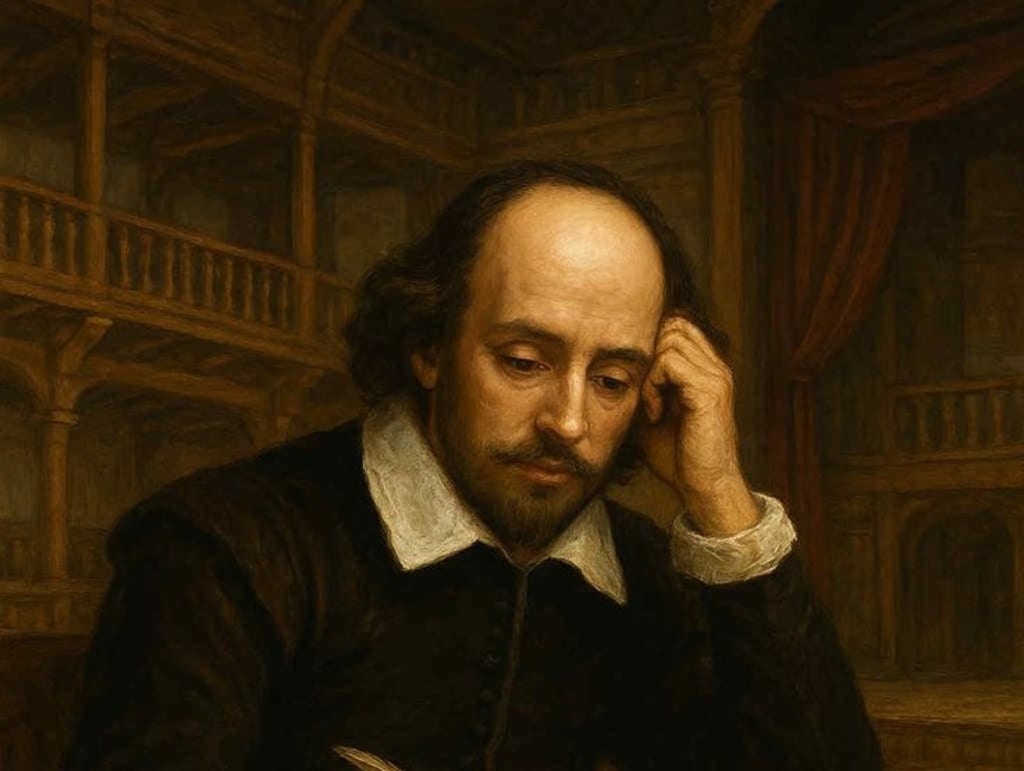
Imagine a world without Romeo and Juliet, Hamlet, or Macbeth. No famous line “To be, or not to be”, no tragic lovers, no powerful kings falling from pride, and no timeless lessons about life and love. Hard to imagine, right? Yet all these treasures came from one man born in a quiet English town more than 400 years ago. William Shakespeare rose from ordinary beginnings to become the most influential writer in the history of literature. His words crossed borders, centuries, and cultures, speaking equally to kings and common people.
🏡 Birth and Childhood
William Shakespeare was born in Stratford-upon-Avon in 1564. Although the exact day of his birth is unknown, tradition places it around April 23. He was the oldest surviving child of John Shakespeare, a glove maker and local official, and Mary Arden, who came from a respected family. Growing up in a busy household with several brothers and sisters, young William learned early about responsibility and social life.
As the son of a well-known townsman, Shakespeare most likely attended the local grammar school, where students studied Latin, classical literature, and drama. This education played an important role in shaping his imagination and language skills.
📚 Education and Early Influences
At grammar school, Shakespeare would have memorized Latin texts and acted in school plays. These early performances may have sparked his interest in theater. Although he never attended a university, his deep knowledge of history, politics, and human behavior later appeared in his writing. His education gave him the tools, but his genius turned those tools into timeless stories.
💍 Marriage and Family Life
In 1582, Shakespeare married Anne Hathaway. She was eight years older than him, and their first child, Susanna, was born soon after. A few years later, the couple had twins, Judith and Hamnet. Shakespeare spent much of his working life in London, while his family remained in Stratford.
Tragedy struck in 1596 when his only son, Hamnet, died at the age of eleven. Many scholars believe this personal loss influenced the emotional depth of Shakespeare’s later plays, especially his tragedies.
🎭 Rise in the London Theater
By the early 1590s, Shakespeare had moved to London and joined the theater world as an actor and playwright. He became part of a leading acting company known as the Lord Chamberlain’s Men, later renamed the King’s Men. Through this company, Shakespeare gained fame and financial success.
His early works included historical plays and romantic comedies, while later years produced great tragedies such as Hamlet, Othello, King Lear, and Macbeth. His plays were performed for both ordinary citizens and the royal court, making him a writer for all classes of society.
✍️ Literary Achievements
Shakespeare wrote around 39 plays, more than 150 sonnets, and several long poems. His works can be divided into three main groups:
Comedies, full of humor, love, and clever misunderstandings
Tragedies, exploring ambition, jealousy, betrayal, and fate
Histories, based on English kings and political struggles
What made Shakespeare unique was his deep understanding of human emotions. His characters feel real because they experience fear, hope, love, and regret—just like people today.
🏠 Wealth and Final Years
As his career succeeded, Shakespeare invested his money wisely and bought property in Stratford, including one of the largest houses in the town. Around 1613, he retired from the stage and returned to live quietly with his family.
He continued writing during these years, sometimes in partnership with other playwrights. His final works show a calmer tone, focusing on forgiveness and reconciliation.
⚰️ Death and Burial
Shakespeare died in 1616 at the age of 52. The exact cause of his death is unknown. He was buried in Holy Trinity Church in Stratford-upon-Avon. On his grave is a famous warning asking people not to disturb his remains. His death marked the end of a life, but not the end of his influence.
🌍 Legacy and Influence
More than four centuries later, Shakespeare’s plays are still performed all over the world. His works are translated into many languages and studied in schools and universities. Many common English phrases today come directly from his writing.
Shakespeare shaped modern drama and storytelling by showing how complex and emotional human beings truly are. His characters teach lessons about pride, loyalty, love, and power—lessons that remain relevant in every age.
🧠 Why Shakespeare Still Matters
Shakespeare matters because he understood people. He showed that humans can be brave and weak, kind and cruel, hopeful and fearful—all at the same time. His stories remind us that life is full of struggle and beauty, and that our choices shape our destiny.
✨ What’s your favorite Shakespeare play or quote? Share it in the comments!
🙏 If this blog helped you or inspired you, consider leaving a tip to support more high-quality educational content like this. Thank you...
About the Creator
Haroon Pasha
📚 Learn history, literature & knowledge daily
👍 Like | 💬 Comment | 🔔 Subscribe
🔄 Share to support free education
💖 Tip us to help grow this page
Keep reading
More stories from Haroon Pasha and writers in Chapters and other communities.
Albert Einstein: The Genius Who Changed the Universe
Albert Einstein (14 March 1879 – 18 April 1955) was a German-born theoretical physicist whose ideas transformed our understanding of the universe. Best known for the theory of relativity and his mass–energy equivalence formula E = mc², Einstein’s work laid the foundation for modern physics. He also made groundbreaking contributions to quantum theory, statistical mechanics, and cosmology. In 1921, he received the Nobel Prize in Physics for his explanation of the photoelectric effect, a discovery that would pave the way for quantum mechanics.
By Haroon Pashaabout 16 hours ago in Chapters
It's 2026. Songs Turning 10 This Year
In 2016, we saw the rise of short form videos and what would lead to the birth of TikTok. We cannot forget the Snapchat filters no matter how cringe worthy some of them might have been. It was also the year in which the hit series Stranger Things debuted.
By Jasmine Aguilar4 days ago in Beat



Comments
There are no comments for this story
Be the first to respond and start the conversation.