
Will Russia and China Support Iran Against the US and Israel?
Analysis of military ties, oil trade, sanctions evasion, and the limits of Moscow and Beijing’s support for Iran.

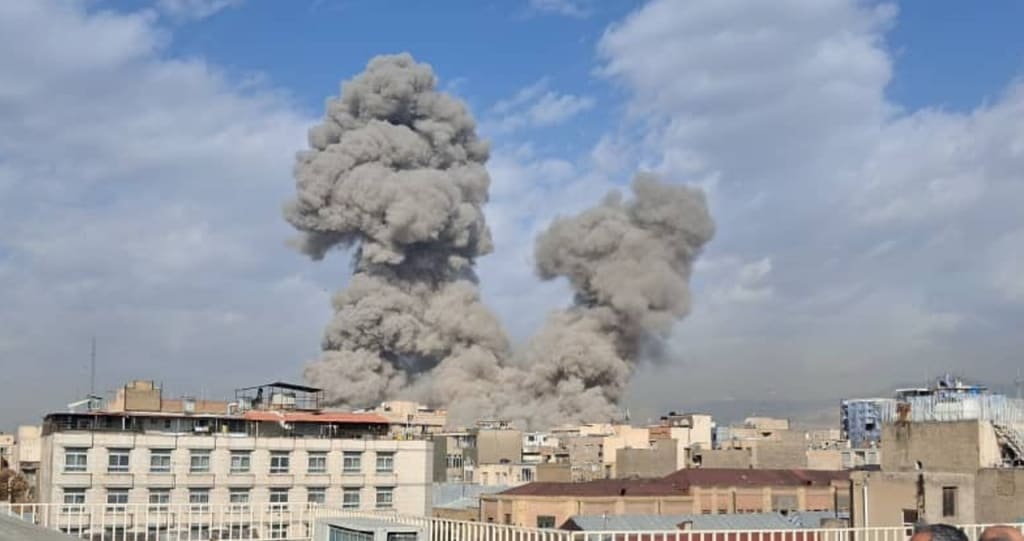
Britain has allowed the United States to use its airbases in connection with the ongoing attacks against Iran, sparking debate over what kind of support Tehran might receive from its allied countries.
Both Russia and China maintain strong diplomatic, trade, and military ties with Iran.
However, the current conflict will reveal how far they are willing to go in supporting this ally.
Russia’s Rhetorical Support
Sergei Gorishko says that although Moscow has made a great deal of noise over the joint U.S. and Israeli attacks on Iran, its response has largely been limited. Russia has expressed anger over the strikes and signaled solidarity with Tehran, but it has refrained from taking any steps that would risk direct involvement in the conflict.
Kremlin spokesperson Dmitry Peskov expressed “deep disappointment,” saying that despite talks between Washington and Tehran, the situation had “turned into outright aggression.”
He added that Moscow remains in constant contact with the Iranian leadership and Gulf states affected by the tensions.
Russia’s Foreign Ministry condemned what it described as “unprovoked aggression” by the United States and Israel against Iran, calling it political assassination and a “hunt” for the leaders of sovereign states.
On Sunday, Russian President Vladimir Putin sent a condolence message to his Iranian counterpart following the death of Iran’s Supreme Leader Ayatollah Ali Khamenei, describing it as a “blatant violation of human morality and international law.”
Despite this, the Kremlin appears to be avoiding criticism of U.S. President Donald Trump and continues to thank Washington for mediation efforts regarding Ukraine.
When asked on Monday how Russia could still trust Washington, Peskov said Russia “relies first and foremost only on itself” and ensures the defense of its own interests.
When examining those interests, it becomes clear why Russia’s support for Iran remains largely rhetorical, even though Tehran has become one of Moscow’s closest allies since Russia’s invasion of Ukraine.
Iran has been supplying drones to Russia and helping Moscow develop ways to circumvent Western sanctions.
Iran also fits neatly into Russia’s vision of a multipolar world order in which state sovereignty outweighs human rights, and governments maintain complete internal control. The fall of such a government would be a setback for Russia’s global outlook.
However, the Kremlin has already shown it is unwilling to take major risks for its allies whether in Venezuela, Syria, or during last year’s 12-day war between Iran and Israel.
Russia is deeply entangled in the war in Ukraine and appears either unwilling or unable to provide assistance beyond diplomatic statements and limited military-technical cooperation.
The strategic partnership agreement signed between Iran and Russia on January 17, 2025, falls just short of a mutual defense pact.
Moscow and Tehran pledged information-sharing, joint exercises, and efforts to “ensure regional security.” However, they did not promise to defend each other in the event of an attack. Economic ties between the two countries are also modest, with trade totaling only four to five billion dollars.
Nevertheless, military and industrial cooperation between them is increasing. In February, the Financial Times reported that the two countries had reached a major deal under which Russia would supply Iran with air defense systems worth 500 million euros.
Russia has already provided Iran with Yak-130 training aircraft and Mi-28 attack helicopters, and Tehran is expected to receive Su-35 fighter jets soon. However, Russia has yet to deliver advanced defensive systems.
The use of Iranian-made Shahed drones significantly altered Russian military tactics in Ukraine. But last year, Moscow rapidly expanded domestic drone production, reducing its reliance on Iranian weapons.
For Moscow, Iran is too important to allow it to collapse but not important enough to fight for. This situation may change in the future, but for now, Russian intervention is likely to remain largely rhetorical.
China: Tehran’s Economic Lifeline
China strongly condemned the killing of Ayatollah Ali Khamenei. Historically, Beijing has opposed U.S. strategies of regime change around the world.
The strongest pillar of China-Iran relations is their mutually beneficial economic partnership. China is Iran’s largest trading partner and its most important energy customer.
Despite years of U.S. sanctions on Iran, Beijing has remained Tehran’s economic lifeline. With the support of its shipping fleet, China purchases large volumes of Iranian crude oil at discounted prices.
For example, in 2025 China bought more than 80 percent of Iran’s exported oil. The revenue from these purchases has enabled Iran not only to stabilize its economy but also to fund its defense expenditures.
In 2021, China and Iran signed a 25-year strategic agreement that further strengthened their relationship. Under the deal, China pledged billions of dollars in investment in Iranian infrastructure and telecommunications.
China’s “Long Game
Historically, China’s response to Iran-Israel and Iran-U.S. conflicts has been measured.
Whenever disputes involving Iran have arisen—including during last year’s 12-day Israel-Iran war—China has called for “restraint” and blamed “external interference,” a reference to U.S. policy.
During previous Iran-Israel confrontations, China has used—or threatened to use—its veto power at the United Nations Security Council to shield Tehran diplomatically and block resolutions against it. However, it has never offered direct military intervention.
Beijing’s strategy has long been to keep the United States entangled in the Middle East while ensuring that the region does not descend into total chaos, which could drive up global oil prices.
If a pro-Western government were to take power in Tehran, it would represent a major geopolitical setback for China, as Iran not only meets China’s energy needs but also helps counter U.S. influence in the region.
Iran is a member of BRICS and the Shanghai Cooperation Organization and serves as a crucial geographic connector linking Central Asia, the Caucasus, and the Middle East.
The collapse of the Iranian government could weaken the credibility of these multilateral mechanisms that Moscow and Beijing are trying to strengthen.
It is widely believed that unless the United States and Israel launch a full-scale war against Iran and deploy ground troops on Iranian soil, the country’s political and military structures are unlikely to collapse.
Beijing will likely continue playing its usual “long game,” cooperating with whoever succeeds Khamenei, regardless of who that may be. Meanwhile, Russia will look for opportunities that serve its own interests.
About the Creator
Keep reading
More stories from Real content and writers in Chapters and other communities.
The 2026 Iranian Missile and Its Impact on Gulf Business, Travel, and Daily Life
Alia has been living in the Dubai Hills area with her husband and two daughters for the past eight years. She never imagined that even a city as safe as Dubai could come under attack. These days, she constantly hears the sound of explosions that make the windows of her home tremble and leave her young daughters frightened.
By Real contentabout 18 hours ago in Chapters
Inside Rebels
I still remembered the first day Mr. Hargrove entered our sophomore English classroom, his shoulders hunched like a storm cloud ready to unload its fury. I was fifteen, clutching a battered notebook, and my best friend, Maya, sat beside me, her eyes narrowed with an instinctive wariness. The walls, once adorned with vibrant student posters, seemed to shrink under the weight of his scowl, and his voice cut through the chatter like a blade. “This is not a playground; it is a battlefield of ideas,” he announced, his tone dripping with disdain for any hint of youthful enthusiasm. From that moment, the air grew thick with an oppressive expectation that made each breath feel like a silent accusation, and I sensed that Maya and I would soon be forced to navigate a terrain far more treacherous than any literary analysis we were meant to master.
By Forest Greena day ago in Chapters


Comments
There are no comments for this story
Be the first to respond and start the conversation.