
Uzbekistan and Afghanistan Target $5 Billion Trade Deal Amid Regional Economic Shift
Bilateral trade grows 2.5 times in five years as Iran launches new trilateral free trade zone with Afghanistan and China.

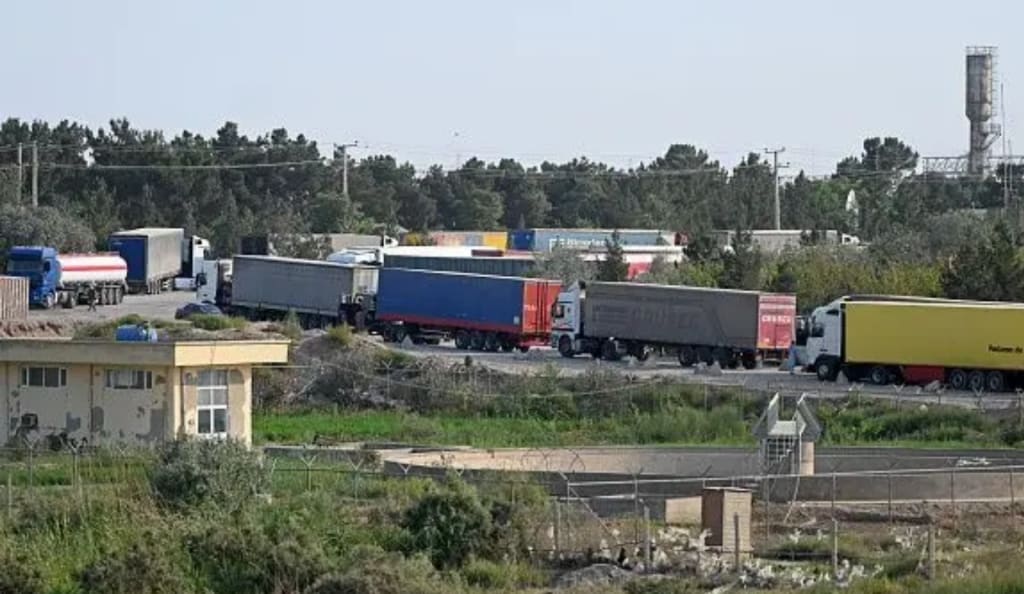
Taliban government says it has discussed increasing bilateral trade with Uzbek authorities, and both countries are committed to raising their mutual trade to “five billion dollars.”
Uzbek Deputy Prime Minister Jamshid Khodjaev said that Uzbekistan and Afghanistan have agreed to significantly expand their economic relations and increase bilateral trade to $5 billion.
Khodjaev announced this goal after speaking via video conference with the Taliban government’s Minister of Industry and Commerce, Nooruddin Azizi. During the meeting, both sides reviewed existing cooperation and discussed plans for future development.
“In just five years, mutual trade has increased 2.5 times — from $653 million in 2021 to $1.7 billion in 2025. Our current goal is to raise this level to $5 billion,” Khodjaev said.
The two officials also discussed practical steps to further deepen trade and economic cooperation, including preparations for an upcoming visit by an Afghan delegation to Uzbekistan.
In a video statement, Nooruddin Azizi said that Afghanistan’s trade volume with Uzbekistan has currently reached $1 billion annually, and the total trade volume has exceeded $1.5 billion.
There are also plans to hold a business forum in Kabul after Ramadan and to prepare a detailed roadmap identifying priority sectors for cooperation.
During the talks, emphasis was placed on the need to swiftly implement a preferential trade agreement, and both countries agreed to put the agreement into effect as soon as possible. Officials also discussed ways to promote joint investment and industrial projects.
Key areas of cooperation include:
Processing of agricultural products
Construction materials
Textile industry
Strengthening food security
They also discussed essential trade facilitation requirements such as exhibition halls, logistics centers, and the construction of warehouses to improve the marketing and distribution of goods.
Despite regional challenges, trade between Uzbekistan and Afghanistan has steadily increased over the past five years — and now both governments are seeking to accelerate this process through a structured economic partnership and closer regional integration.
Tehran has approved a plan for a joint international free trade zone with Afghanistan and China.
According to a source within the Taliban government in Afghanistan, Morteza Zakarian, head of economic affairs in Iran’s southern Khorasan province, said that an international trade and industrial free zone will be established in the province between Iran, Afghanistan, and China.
The project offers a strategic opportunity to increase exports, create employment opportunities for residents of border areas, and strengthen regional economic ties.
“Pars Today” quoted Zakarian as saying that Afghan and Chinese partners have expressed willingness to provide financial support and even build a special industrial city.
Iranian media reported that Iranian President Masoud Pezeshkian has approved the proposal, which also aims to support technology transfer and strengthen economic institutions.
Zakarian emphasized that the combined population, geographic locations, and production capacities of Iran, Afghanistan, and China provide complementary resources that could contribute to the development of a strong global economic zone.
Decline in Pakistani Exports to Afghanistan
This expansion of Afghanistan’s economic ties with Uzbekistan and Iran comes at a time when Pakistani exports to Afghanistan have declined by nearly 59 percent due to frozen trade.
Reports indicate a sharp drop in Pakistan’s exports to Afghanistan during the first seven months of the current fiscal year, reflecting the deepening trade stalemate and political crisis.
Official data from Pakistan’s central bank shows that the value of exports fell from $550 million during the same period last year to approximately $228 million.
The decline in exports from July to January is attributed to the suspension of trade between the two countries since early October, which has been cited as a major reason for the sharp decrease in Pakistan’s regional exports. The trade disruption has severely limited official cross-border exchange activities.
In recent months, relations between Islamabad and Kabul have been strained due to tensions along the Durand Line and mutual accusations over security concerns, further complicating efforts to restore stable economic interaction.
The Taliban government in Afghanistan has advised traders and importers to explore alternative trade routes and diversify supply sources to avoid shortages in local markets. They have stressed reducing reliance on a single transportation route and encouraged businesses to seek regional partnerships to ensure a steady supply of essential goods.
About the Creator
Keep reading
More stories from Real content and writers in Chapters and other communities.
Mojahedin-e Khalq (MEK) Claims 250 Operatives Attacked Iran Supreme Leader’s Residence — Tehran Calls It Fake News
The organization Mojahedin-e Khalq (MEK) has claimed that around “250 of its operatives” carried out an attack in central Tehran targeting the office and residence of Iran’s Supreme Leader, Ayatollah Ali Khamenei. However, Iranian officials and state media have denied that any such incident occurred.
By Real contenta day ago in Chapters
🏢💥 Unraveling 9/11 Conspiracy Theories: Understanding Claims, Evidence, and Public Debate
The September 11, 2001 attacks on the United States remain among the most significant and tragic events in modern history. Nearly 3,000 lives were lost, the global economy was shaken, and the world witnessed the rise of a new era of geopolitical tension and security concerns. Alongside these events, a complex web of conspiracy theories has emerged, challenging the official narrative and sparking debate that spans governments, media, academia, and the public.
By Haroon Pashaa day ago in Chapters



Comments
There are no comments for this story
Be the first to respond and start the conversation.