
India and Pakistan: A Complex Relationship of History, Politics, and Shared Culture
A Journey Through the Complex Relationship of Two Neighbors
Introduction
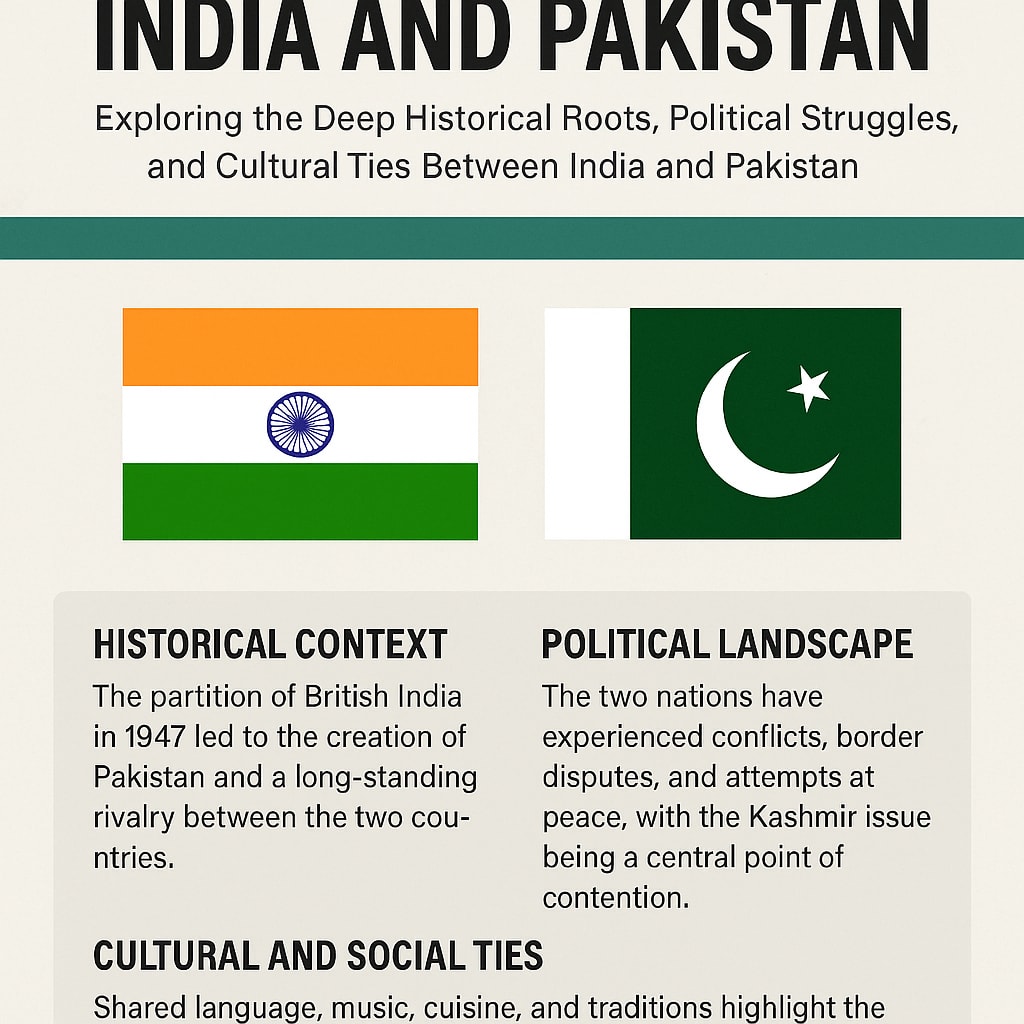
India and Pakistan share a rich and complex history, from their colonial past to their current political relations. Though they were once one country, their division in 1947 left behind deep scars and a multifaceted relationship that continues to evolve. This article explores the historical, political, and cultural connections between these two neighboring countries.
Historical Context
The partition of British India in 1947 created Pakistan as a separate Muslim-majority nation. The aftermath of partition led to mass migrations, communal violence, and a long-lasting rivalry between the two countries. The Kashmir conflict, which began soon after the partition, continues to be a central issue in their relationship.
Political Landscape
Over the years, India and Pakistan have been involved in multiple wars, border skirmishes, and diplomatic crises. Both countries have nuclear capabilities, which further intensify the stakes of their rivalry. However, despite this tension, there have been several attempts at peace talks and cooperation, including moments of détente and confidence-building measures. The political climate in both countries is often shaped by nationalism, the role of the military, and the quest for regional influence.
Economic Relations
Despite the political tensions, India and Pakistan have shared economic interests in certain areas. Trade between the two countries has been sporadic, and there have been discussions about regional cooperation in sectors like energy, agriculture, and transport. However, economic relations are often hindered by political and security concerns.
Cultural and Social Ties
India and Pakistan, although politically divided, share many cultural similarities, including language, music, cuisine, and traditions. The Bollywood film industry is popular in both countries, and many artists, musicians, and writers have contributed to both cultures. Despite the political divide, many people in both countries see the cultural bond as an enduring link that transcends borders.
The Kashmir Issue
The Kashmir dispute remains one of the most sensitive and unresolved conflicts in South Asia. Both India and Pakistan claim Kashmir as their own, and the region has witnessed decades of violence, unrest, and political maneuvering. International intervention and diplomacy have made little progress in resolving the issue, and it remains a critical point of contention.
The Path Forward: Hope for Peace?
While the relationship between India and Pakistan is marked by tension, there is also a possibility for peace. Many in both countries desire stability, economic development, and improved relations. Confidence-building measures, people-to-people exchanges, and third-party mediation could be essential for breaking the cycle of conflict and establishing lasting peace.
Conclusion
The relationship between India and Pakistan is a complex and multifaceted one, shaped by history, politics, and shared cultural ties. While their differences are deep and often divisive, there remains a possibility for reconciliation and cooperation. The future of their relationship will depend on the efforts of leaders, the involvement of the international community, and the will of the people in both nations.
About the Creator
Keep reading
More stories from writers in Chapters and other communities.
Unofficial Challenge: What would you do if you were rich?
I love the kind of work I get to do in my career, but as I job search and browse apartments again due to another understaffed and unsustainable work environment that I did not intend to get into, my daydreams of better days consistently lean into the same question: What would I do if I didn't have to worry about my basic needs being met?
By Kay Husnick7 days ago in Writers



Comments
There are no comments for this story
Be the first to respond and start the conversation.