
After Khamenei: How the Middle East Crisis Could Redraw Global Politics
The death of Iran’s supreme leader is reshaping alliances, triggering retaliation, and testing the limits of international diplomacy

After Khamenei: How the Middle East Crisis Could Redraw Global Politics
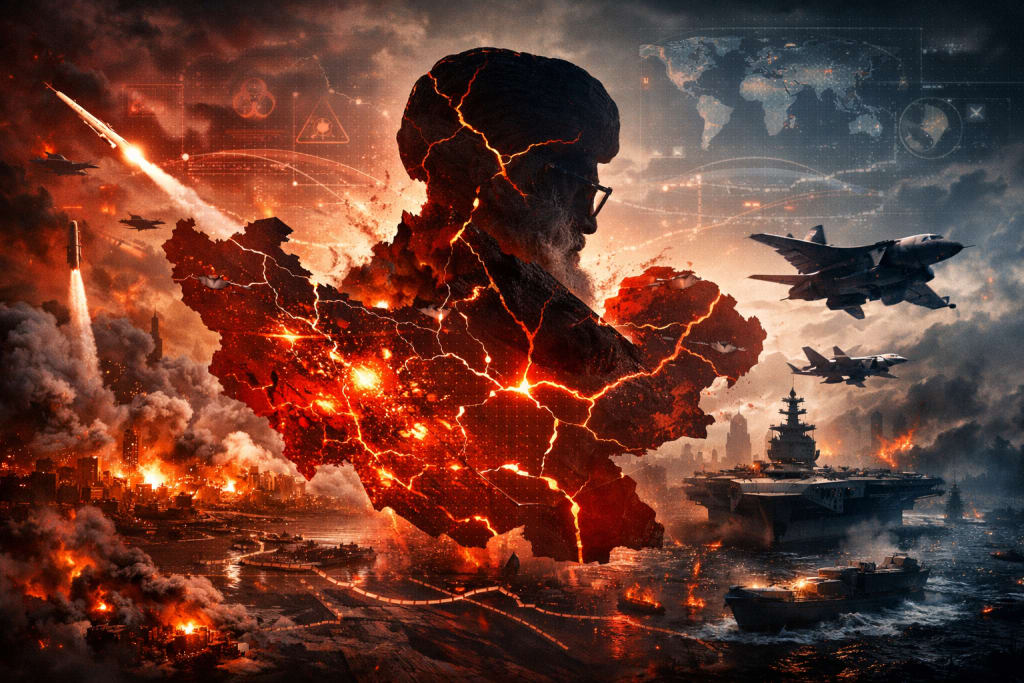
The confirmed death of Ayatollah Ali Khamenei after joint strikes by the United States and Israel has sharply intensified the ongoing conflict in the Middle East—turning what was a dangerous regional crisis into a moment with global implications. Khamenei, who led Iran for nearly four decades and wielded extraordinary political and military influence, was killed when missiles and airstrikes hit Tehran in the opening phase of a major military operation targeting Iranian leadership and strategic infrastructure. The impact of his death is already reverberating across the region and the world in ways that may last for years.
Inside Iran, the sudden removal of the supreme leader has created a leadership vacuum. Tehran responded almost immediately with its own missiles and drone strikes against Israeli and U.S. targets in the Gulf and surrounding countries. Officials in Iran’s top leadership have vowed revenge—a response described as a “legitimate duty” of the nation by Iranian president Masoud Pezeshkian. While a temporary government council has taken power, long-term stability remains uncertain as hardliners and reformists vie for control amid a climate of intense nationalism and grief.
The ripple effects are already visible beyond Iran’s borders. In Lebanon, Iran-aligned Hezbollah missiles struck northern Israeli territory, prompting Israeli retaliation in Beirut and escalating a long-standing conflict between the two sides. This extension of hostilities into multiple fronts highlights how localized tensions can quickly spread when a key node—such as a dominant leader—is suddenly removed.
Other U.S. allies have broadly supported efforts to counter Iran’s regional influence, but global reactions reveal deep divisions. European leaders, while condemning Iranian retaliation, have emphasized the need for de-escalation and diplomacy to prevent further catastrophe. Meanwhile, Russia and China have sharply criticized the strikes, calling them violations of international law and warnings about the danger of destabilization that could embolden extremist movements or spark wider conflict cycles.
One immediate global impact is economic uncertainty. Iran sits astride one of the world’s most crucial energy corridors—the Strait of Hormuz—through which a significant portion of global oil shipments pass. Fears of prolonged conflict have already driven volatility in oil markets, disrupted shipping routes, and raised inflationary pressures worldwide. Investors are shifting into safe-haven assets such as gold and the U.S. dollar as risk sentiment intensifies.
The crisis also underlines how alliances and rivalries shape today’s geopolitics. The U.S. and Israel framed the strikes as necessary action against a regime they characterize as aggressive and destabilizing, particularly over Iran’s long-contested nuclear program and support for proxy militias across the Levant. By contrast, Russia and China have seized on the situation to criticize Western military interventions, presenting them as breaches of sovereignty and international norms.
For the broader Middle East, the consequences are severe. Countries such as Saudi Arabia and members of the Arab League have called for restraint, warning that the spillover from the conflict could destabilize fragile states and economies already strained by years of unrest and cooperation challenges. Meanwhile, smaller states like United Arab Emirates, Qatar, and Kuwait have closed airspace and reinforced security in response to regional tensions.
Beyond energy markets and military conflict, Iran’s leadership transition raises questions about the future of diplomacy on key issues such as nuclear negotiations. Khamenei oversaw decades of nuclear policy and had the final say on whether Iran pursued weaponization or agreed to international oversight. With him gone, the direction of Iran’s nuclear program is uncertain, which could either intensify fears of proliferation or open the door to renewed diplomatic engagement—depending on who ultimately consolidates power in Tehran.
At the United Nations, world leaders have called for urgent talks to prevent further escalation. Secretary-General António Guterres warned that unless hostilities cease, the risk of a wider conflict with devastating humanitarian and economic consequences cannot be ignored. The U.N. Security Council held emergency discussions, reflecting the severity of global concern.
While no global war has been formally declared, the world now watches a situation that could expand farther than the Middle East. Great powers, fractured alliances, and rapid military responses show that local actions can have international consequences. The death of Ayatollah Khamenei is more than the fall of a leader—it is a turning point that may reshape power balances, diplomatic relations, and regional stability for years to come.
About the Creator
Wings of Time
I'm Wings of Time—a storyteller from Swat, Pakistan. I write immersive, researched tales of war, aviation, and history that bring the past roaring back to life
Keep reading
More stories from Wings of Time and writers in Chapters and other communities.
The First Hours of World War III
The First Hours of World War III World War III will not begin with a formal declaration, a single invasion, or a dramatic announcement on television. If it comes, it will begin quietly—through alerts, miscalculations, automated systems, and decisions made under extreme pressure. The early hours of a global war will feel confusing, fragmented, and unreal, long before the world understands what has happened.
By Wings of Time 3 days ago in Chapters
Tattoos and Rail Guns Chapter 18: When Demons Plan For the Future
Sharness rode up to her “temple”; the 1920s mansion had been refurbished with an apocalypse in mind, making it an excellent base for her operations. She had fallen in love with the curves and swoops of the mansion; it was a gorgeous edifice only highlighted by the gardens around it and the pools that someone had taken care to design slides, fire pits, and hidden nooks. It was made to satisfy the needs of those who had lived there and she could appreciate that as no human living on the planet could.
By Jamais Jochim6 days ago in Chapters
Two Grumpy Old Men Solve the Problem
Marty and Steve were two grumpy old men who lived together. They had known each other for years. Marty had been a bachelor all his life. Steve said it was because no one could stand to ever live with. Marty’s standard reply was “Well, you are, so what sort of a moron does that make you!”
By Calvin Londonabout 12 hours ago in Humor



Comments
There are no comments for this story
Be the first to respond and start the conversation.