
1 Corinthians Chapter 11
Summary of this chapter.

### **Summary of 1 Corinthians Chapter 11**
1 Corinthians Chapter 11 addresses two key topics: head coverings during worship and the proper observance of the Lord’s Supper. In this chapter, the Apostle Paul provides guidance on maintaining order and respect within the Christian community, highlighting the importance of tradition, authority, and unity in worship.
---
#### **Head Coverings and Authority in Worship (1 Corinthians 11:2-16)**
Paul begins the chapter by commending the Corinthians for holding to the traditions he taught them. He then transitions into the first issue: the role of head coverings during worship, particularly for men and women. This passage deals with the concept of authority and respect in the context of public prayer and prophecy.
Paul outlines a hierarchy of authority: Christ is the head of every man, man is the head of woman, and God is the head of Christ. He teaches that this divine order should be reflected in how men and women conduct themselves during worship. According to Paul, men should not cover their heads while praying or prophesying because they reflect the image and glory of God. Conversely, women should cover their heads as a sign of respect for authority.
Paul links the practice of head coverings to the creation narrative. He explains that man was created first, and woman was made from man to be his companion. While this establishes man’s position of authority, Paul emphasizes the interdependence between men and women. He clarifies that just as woman came from man, all men are born of women, and both ultimately come from God. This mutual dependence underscores the importance of equality in God’s eyes, despite differing roles.
The head covering, Paul explains, is a symbol of authority and propriety. In the Corinthian culture, uncovered hair could be seen as a sign of impropriety, especially in a worship setting. For a woman to cover her head in prayer reflects a recognition of this cultural norm and respect for the social and spiritual order. Paul acknowledges that customs may vary, but he urges the Corinthians to follow the established practice to avoid unnecessary controversy in the church. His concern is to maintain order and respect for authority, while fostering a spirit of unity within the community.
---
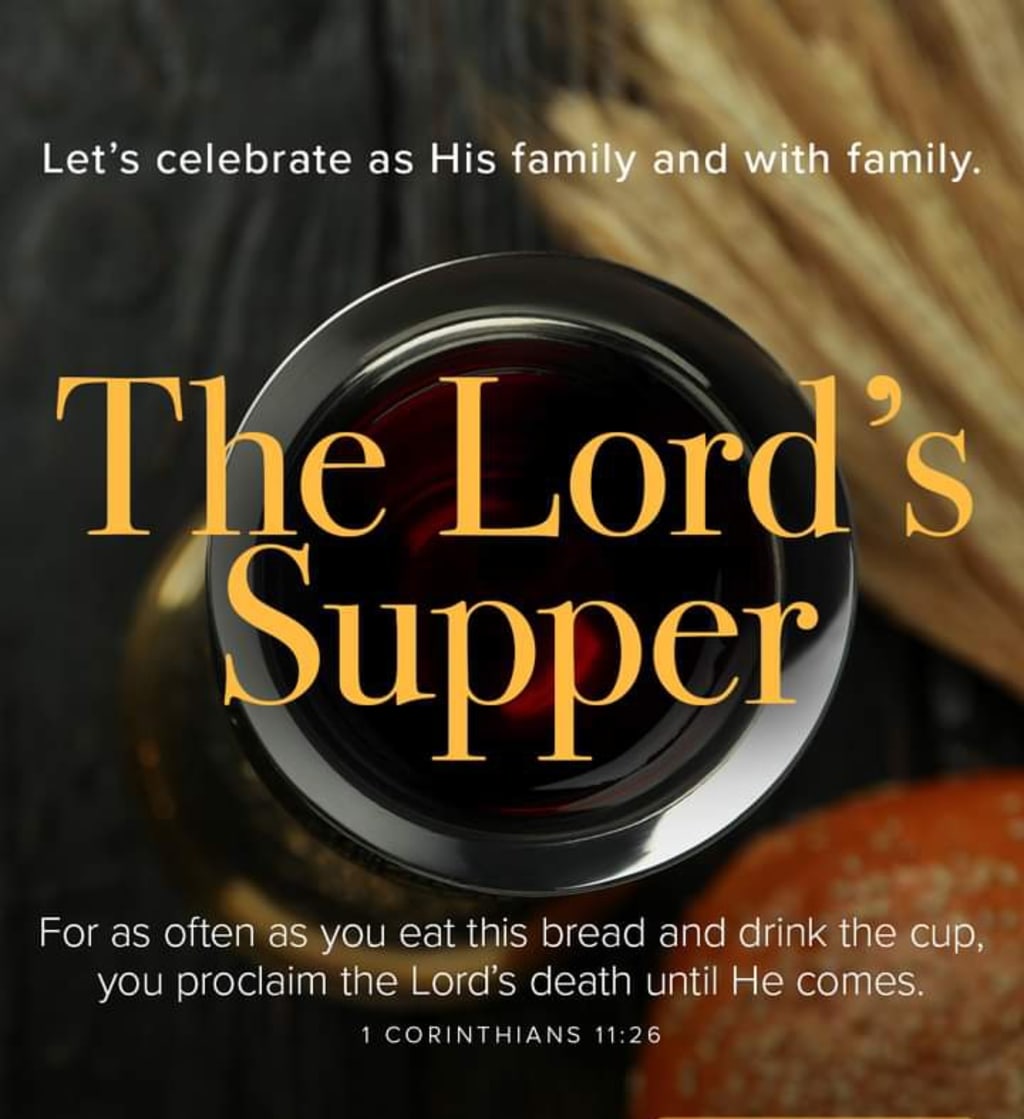
#### **The Lord’s Supper (1 Corinthians 11:17-34)**
The second half of the chapter focuses on the proper observance of the Lord’s Supper, an essential Christian tradition that commemorates Jesus’ sacrifice. Paul addresses serious issues regarding how the Corinthians were observing this sacred meal. He is critical of their behavior, noting that divisions and selfishness had corrupted the practice.
Paul rebukes the Corinthians for turning the Lord’s Supper into an occasion for indulgence rather than reverence. In Corinth, it appears that the communal meal had devolved into a setting where wealthier members would eat and drink excessively while poorer members went hungry. This behavior undermined the purpose of the meal, which was meant to unite believers in remembrance of Christ's sacrifice.
Paul recounts the institution of the Lord’s Supper, using Jesus’ own words. On the night He was betrayed, Jesus took bread, gave thanks, broke it, and said, “This is my body, which is for you; do this in remembrance of me.” In the same way, after supper, He took the cup, saying, “This cup is the new covenant in my blood; do this, whenever you drink it, in remembrance of me” (1 Corinthians 11:24-25).
Paul emphasizes that the Lord’s Supper is a solemn act of remembrance and proclamation of Jesus’ death. By participating in this meal, believers declare their faith in Jesus’ sacrifice and the new covenant it established. However, Paul warns that those who partake in an unworthy manner, without self-examination, bring judgment upon themselves. He urges the Corinthians to reflect on their behavior before approaching the table, reminding them that the meal represents Christ’s body and blood, and should be observed with deep reverence.
In response to the divisions in the church, Paul calls for unity and consideration for others. He instructs the Corinthians to wait for one another and share the meal together as a sign of their common faith. The act of breaking bread and drinking from the cup should symbolize the unity of the body of Christ, not a division between the rich and the poor.
---
### **Conclusion**
1 Corinthians Chapter 11 is a significant passage where Paul provides essential teachings on maintaining order, respect, and unity in worship. The discussion on head coverings highlights the importance of respecting cultural practices and recognizing authority in worship settings. Paul’s instructions about the Lord’s Supper emphasize the sacredness of the meal and the need for believers to approach it with humility, respect, and self-reflection.
The overarching message of the chapter is one of reverence—whether in recognizing the roles within the church or in observing the Lord’s Supper. Paul calls the Corinthian church to greater unity, reminding them that their worship practices should reflect the sanctity and shared faith in Christ’s sacrifice, not personal divisions or cultural disputes.
About the Creator
Danny Prem kumar
A vision is our long-term goals and aspirations for the future in terms of its long-term growth and impact on this world. My mission defines what we do and what we stand for, while our vision speaks to our goals and ideals for the future.
Keep reading
More stories from Danny Prem kumar and writers in Chapters and other communities.
Exodus Chapter 14
**Summary of Exodus Chapter 14** Exodus Chapter 14 is one of the most dramatic and pivotal chapters in the Bible, recounting the miraculous deliverance of the Israelites from Egyptian slavery through the parting of the Red Sea. This chapter illustrates God’s immense power and faithfulness, while also revealing the fear and faith struggles of the Israelites as they face an overwhelming enemy. It serves as a powerful testament to God's ability to save His people in the most impossible of circumstances.
By Danny Prem kumarabout a year ago in Chapters
Reversing Aging
Aging is a natural process, but what if we could slow it down — or even reverse it? The quest for youth and longevity has fascinated humanity for centuries, and today, science is making remarkable strides in understanding how we age and how we might turn back the clock. Let’s explore the latest breakthroughs, practical strategies, and future possibilities of reversing aging.
By Gustavo Woltmann2 days ago in Chapters



Comments
There are no comments for this story
Be the first to respond and start the conversation.