
Frankenstein: The “Monster” Story That Completely Changed How I See Humanity — And Why It’s More Terrifying Than You Think
Why Frankenstein is not just a horror classic, but a disturbing reflection on creation, responsibility, and the consequences of playing god

When I first picked up Frankenstein, I thought I knew exactly what I was getting into. A scientist creates a monster. The monster becomes dangerous. Chaos follows. It sounded like a straightforward horror story—something dramatic, maybe even exaggerated.
But what I found was something far more complex.
This isn’t really a story about a monster.
It’s a story about a creator.
Mary Shelley didn’t just write a tale meant to scare readers. She created a narrative that forces you to question responsibility, ambition, and what it truly means to be human. And the deeper I got into the story, the more uncomfortable those questions became.
Victor Frankenstein, the scientist at the center of the story, isn’t driven by evil intentions. In fact, his motivations seem almost admirable at first. He wants to push the boundaries of science. To achieve something no one has ever done before. To bring life where there was none.
It sounds like progress.
Innovation.
Discovery.
But there’s a moment where that ambition crosses a line.
And that line is where everything begins to fall apart.
What struck me most was how quickly Victor shifts from obsession to rejection. The moment his creation comes to life, he doesn’t celebrate it. He doesn’t guide it. He abandons it. That single decision—driven by fear and disgust—becomes the foundation of everything that follows.
And that’s when I realized something important.
The real horror in Frankenstein isn’t the creature itself.
It’s neglect.
The creature, often misunderstood as purely violent, is actually one of the most tragic figures in the story. It begins as something innocent, curious, and deeply sensitive. It learns by observing. It seeks connection. It wants to understand the world it has been brought into.
But it’s rejected at every turn.
Feared.
Hated.
Isolated.
And over time, that isolation transforms it.
Not because it was born evil—but because it was never given a chance to be anything else.
That realization changed how I saw the entire story.
Because it raises a difficult question: who is truly responsible for the destruction that follows?
The creator who abandoned his responsibility?
Or the creation that reacted to a world that refused to accept it?
There’s no easy answer.
And the book doesn’t try to give you one.
Instead, it forces you to sit with that discomfort.
Another theme that stood out to me was the danger of unchecked ambition. Victor isn’t satisfied with ordinary achievements. He wants more. He wants to surpass limits. And in doing so, he ignores the consequences of his actions.
That kind of ambition feels familiar.
In many ways, it reflects a mindset we still see today—the desire to innovate without fully considering the impact. To focus on what can be done, rather than what should be done.
And that’s what makes this story feel so relevant.
It’s not just about science.
It’s about responsibility.
Because creating something—whether it’s technology, ideas, or change—comes with consequences. And ignoring those consequences doesn’t make them disappear.
It amplifies them.
The structure of the novel also adds to its impact. The story is told through multiple perspectives, which creates a layered understanding of events. You see Victor’s fear, the creature’s pain, and the way their actions intertwine.
This shifting perspective makes it impossible to view the story in simple terms.
There is no clear hero.
No clear villain.
Only choices—and their consequences.
What surprised me most was how emotional the story is. I expected tension, maybe even fear. But I didn’t expect to feel empathy for the creature. To understand its loneliness. To see its anger as something that grew out of suffering.
That emotional depth is what makes Frankenstein so powerful.
It doesn’t just show you what happens.
It makes you feel why it happens.
And that changes everything.
As the story progresses, the consequences of Victor’s actions become unavoidable. What began as a personal ambition turns into something that affects everyone around him. Lives are destroyed. Relationships are broken. And the weight of those choices becomes impossible to ignore.
That sense of inevitability builds slowly.
You can see it coming.
But you can’t stop it.
And that’s what makes it so tragic.
Before reading this book, I thought of monsters as something external—something separate from humanity. But this story blurs that line completely. It suggests that monstrosity isn’t defined by appearance, but by actions.
And sometimes, the most dangerous actions come from those who believe they are doing something great.
By the time I reached the end, I wasn’t thinking about the creature as a monster anymore. I was thinking about responsibility. About what happens when creation is separated from care. About how easily ambition can turn into destruction when it’s not balanced with empathy.
Frankenstein didn’t just change how I see horror stories.
It changed how I see human nature.
Because in the end, this isn’t a story about something unnatural.
It’s a story about something deeply human.
The desire to create.
The fear of what we’ve created.
And the consequences of turning away when it matters most.
And once you understand that, the story stops being fiction.
It becomes a warning.
About the Creator
Keep reading
More stories from Lukáš Hrdlička and writers in BookClub and other communities.
Dracula: The Dark Story That Haunted Me Long After I Finished It — And Made Me See Fear in a Completely New Way
When I first opened Dracula, I expected a typical horror story. A vampire, a castle, a few moments of suspense. Something atmospheric, maybe even entertaining—but distant enough to not really affect me. I thought I knew the story already. After all, the image of Dracula is everywhere in popular culture.
By Lukáš Hrdličkaabout 7 hours ago in BookClub
Self Help: Grifters' Gospel
On Self-Help, Snake Oil, and the Illusion of Change Psychology professionals and students can be imagined on two opposite sides of a line called self-help books: likely a larger group opposes pop-science and step-by-step manuals filled with talk of success, journaling, and not giving a f**k; others love them, but they aren’t many.
By Avocado Nunzella BSc (Psych) -- M.A.P 27 days ago in BookClub
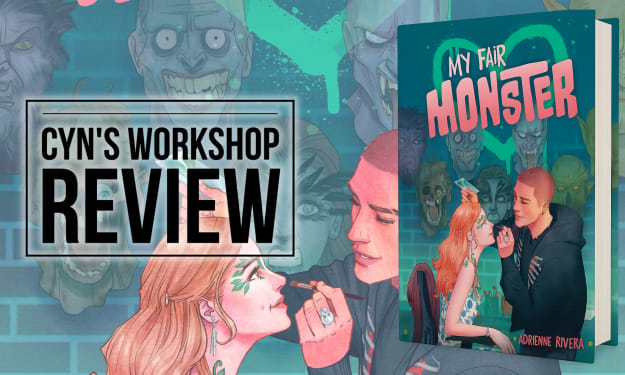
My Fair Monster by Adrienne Rivera — A Heartfelt, Horror-Loving Romcom Filled with Heart, Humor & Healing
My Fair Monster is a heartfelt, horror-loving YA romcom that blends pageantry, romance, and the emotional journey of undiagnosed ADHD into a story that’s as fun as it is deeply meaningful.
By Cyn's Workshop6 days ago in BookClub
When the Shelter Closes
Across the street from my house, a man slept under a tree, his dog by his side. My first, naive thought: he must be traveling through. But he kept coming back, often sleeping there during the day. Then it hit me—that person might not have a home.
By Bride of Sound4 days ago in Humans



Comments
There are no comments for this story
Be the first to respond and start the conversation.