
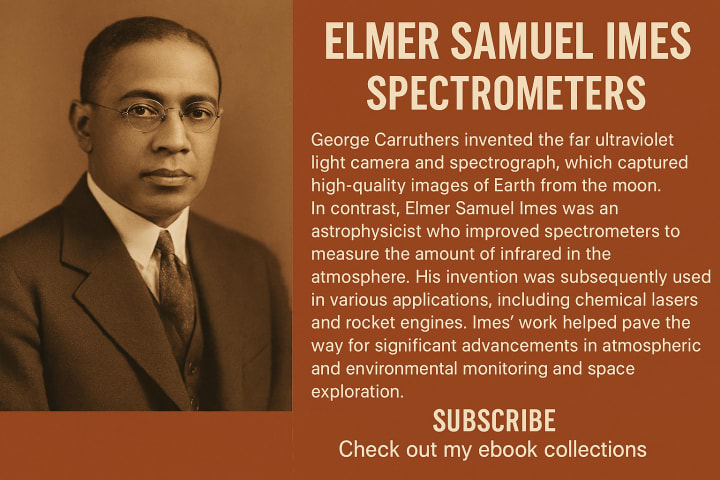
Elmer Samuel Imes – Spectrometers
A long-form narrative inspired by two visionary innovators of light, measurement, and the human imagination.
When you first walk into a laboratory at night, it doesn’t sound like the future. It hums like an old radio. It smells like dust, oil, and the cleaned glass of careful hands. It blinks with little green eyes from panels, and threads of light sneak through slits so narrow you’d think they were mistakes. But futures are born in rooms like this—where one person listens for a tone others can’t hear, where patience meets curiosity and the result becomes history.
Elmer Samuel Imes learned that language of light the way some people learn to read the ocean: by studying what shifts, what returns, what hides in the whitecaps. He listened to light—measured it, compared it, bent it, and coaxed it through instruments that could split a beam into a chorus. He understood that darkness is never silent and that even the invisible has a signature if the instrument is faithful enough to catch it.
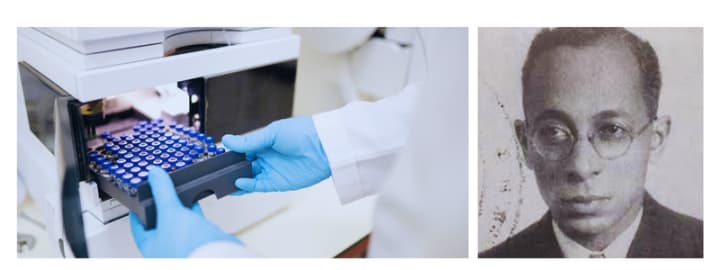
In the story I’m about to tell, Elmer Imes is working late. The hallway is quiet, the clock has retired into the background, and a mercury lamp glows with a stoic intensity. On the bench: a spectrometer, that disciplined sculpture of mirrors, slits, and dispersive elements; to its side: notebooks thick with inked equations, annotated spectra, and the small hand-drawn stars of a mind that won’t let questions go to sleep. The lab seems ordinary—benches, clamps, a smell of acetone—but the work is anything but. He is measuring the infrared, chasing the faint warmth in the atmosphere that most eyes cannot see, and turning it into numbers that can be weighed, compared, and trusted. He is crafting a method, not just taking a measurement.
At first, the experiment offers only static—the random jitter of an imperfect setup. But Imes is a patient sculptor. He adjusts the alignment, refuses the easy compromise, nudges a slit by half a hair, tightens the stage until it holds position the way a mountain does. He polishes a prism until the faintest smear disappears, because he knows that in measurement, honesty begins with the surface. The signal rises like a late-blooming star. The instrument has found its key, and the atmosphere yields a thin, truthful line across the chart recorder. Somewhere far above the lab roof, molecules vibrate in sympathy; somewhere much farther away, engines that have not yet been designed will depend on this clarity.
Across time and space—on another night, under another sky—George Carruthers gazes in the opposite direction. If Imes hears the warm whisper of our air, Carruthers chases the cold blue syllables of the far ultraviolet, that quicksilver language that most of Earth filters away. He dreams an instrument brave enough to climb beyond the blanket of atmosphere and stare straight into the ether. He will send it to the Moon, where it can look back at Earth and see our planet not as a map of countries, but as a living, luminous signature. He will translate emptiness into evidence.
Between Imes’s bench and Carruthers’s Moon, a bridge takes shape—a bridge of methods, a bridge of instruments, a bridge of courage. Imes refines spectrometers so they can hear what needs to be heard: the quiet absorption features, the subtle fingerprints of gases, the way infrared lines open like windows in a stone wall. He builds not only devices but proof: that what we can measure we can control, and what we can control we can transform. Carruthers, in turn, carries that faith into space. The spectrograph becomes a scout, a witness, a scribe that writes the ultraviolet history of Earth’s exosphere and the interstellar neighborhood.
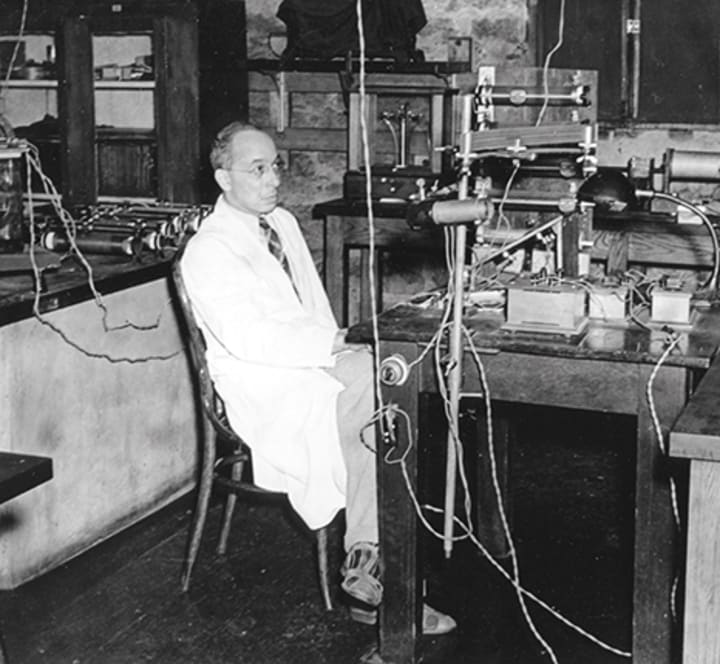
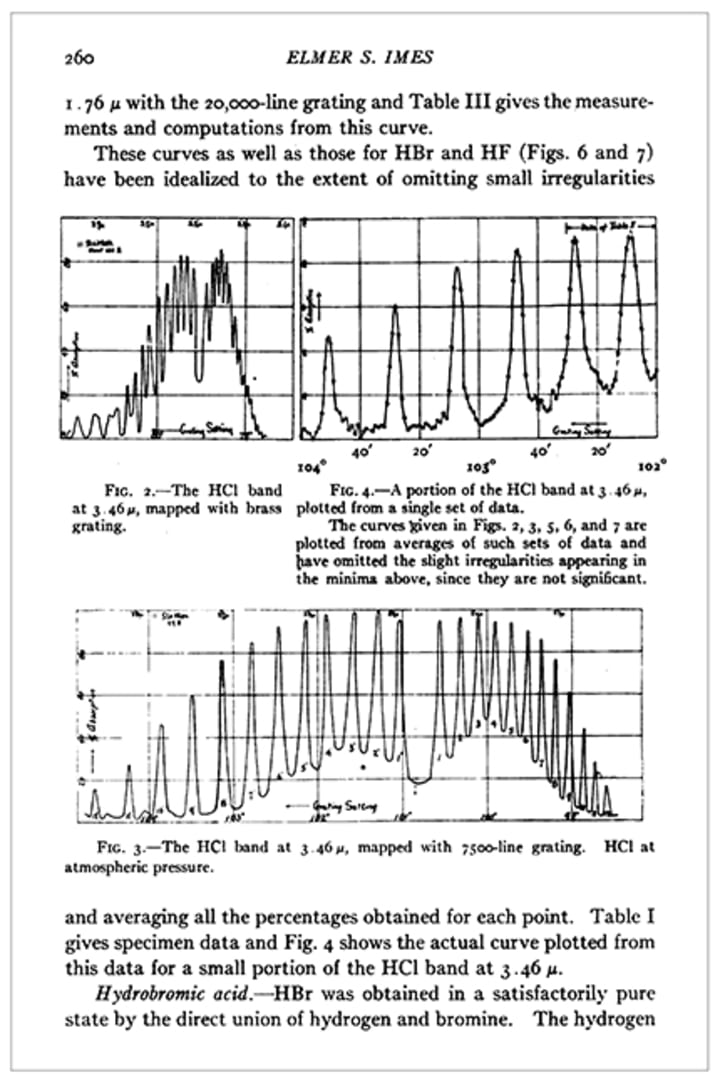
But let’s settle, for a moment, back in the lab with Imes. Night edges toward morning. The city outside is asleep and then not asleep; trucks cough awake; a far-away siren draws a red line in the dark. Imes checks the instrument again. He is mapping the infrared absorption of the atmosphere with a thoroughness that feels like listening to a friend tell you everything they’ve never said aloud. Wavelength by wavelength, the data prints out. In the margins, notes on pressure, temperature, optical path length. In the lab book, a meticulous index of conditions, rows of comparative runs, an evolving model of what the numbers mean when they sing together.
Here is the miracle people often miss about measurement: it marries romance to discipline. A line on a chart is beautiful because it is faithful. It’s the exact opposite of imagination and yet it’s also imagination’s passport. Without those lines, engines remain drafts, sensors remain promises, and missions remain speeches. With them, applications multiply: chemical lasers that depend on precise energy transitions; rocket engine diagnostics that read the exhaust plume the way a doctor reads a pulse; atmospheric monitors that watch the planet’s breath and tell us what we’re doing to our only home.
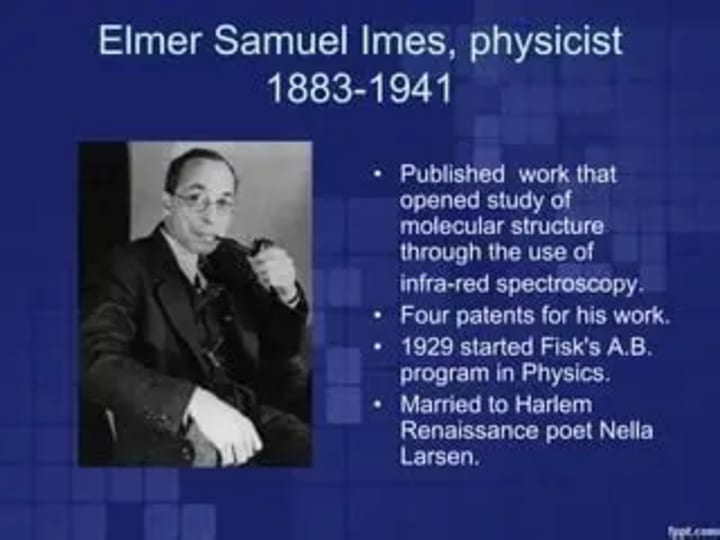
In this story, Imes pauses, stretches his fingers, and imagines the instrument in the field—on a tower above a coastal test range, or inside a laboratory where engineers are iterating the heart of a new engine. He imagines an instrument in orbit someday, looking down and translating the language of clouds and gases into policy, caution, and hope. He doesn’t need to be there to feel his hand in it. He understands that an honest measurement is a gift that keeps working, even after the maker has turned out the light and closed the lab door.
Meanwhile, miles away and years ahead, young students flip through textbooks and see figures adapted from experiments like his—peaks and valleys labeled with molecular names, the patterns of absorption that separate carbon dioxide from water vapor, ozone from methane. They draw conclusions from symbols they never have to capture themselves, and that’s a victory, too. Progress means the next traveler can start from the last traveler’s furthest camp.
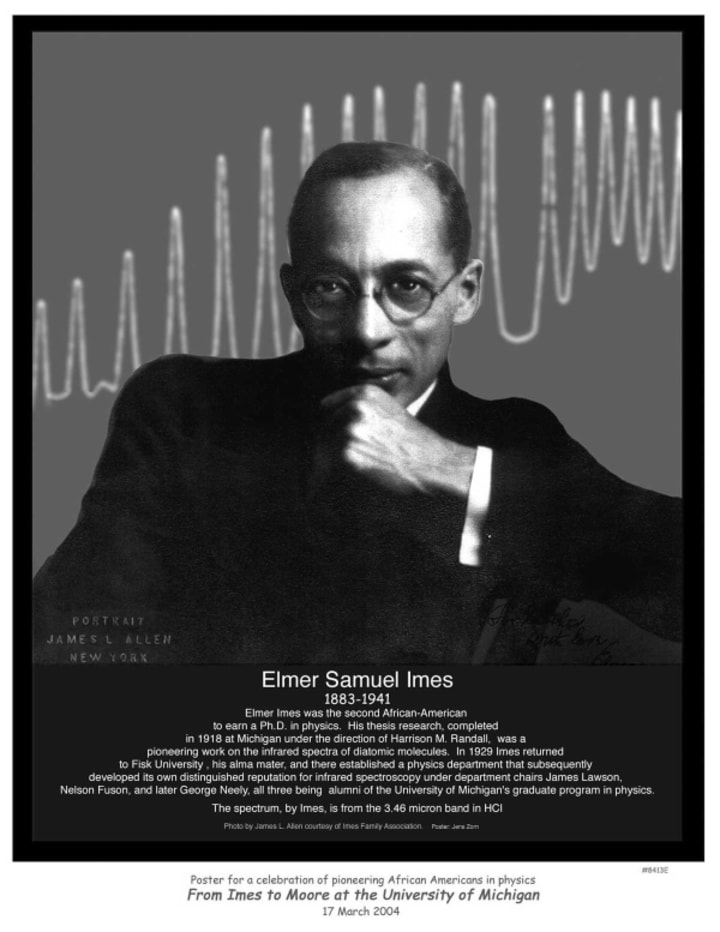
But this story is not merely about instruments. It is also about the arc of a life that refuses to shrink to what is expected of it. Every achievement carries a background radiation of obstacles: locked doors, underfunded labs, skeptical peers, the grind of proving and proving again. Imes knows this terrain. He meets it with persistence: the quiet kind that replaces complaint with craft, that answers doubt with a result so clear it silences the room.
On another timeline, Carruthers stands in a clean room with technicians and engineers, their hands inside antistatic gloves, their hearts inside a single mission. The far ultraviolet camera and spectrograph that has consumed their waking hours is ready to ride a rocket. It is both delicate and tough, like all good tools. It is the culmination of dream sequences that began at a desk, in a notebook, with a question. When the instrument finally arrives on the Moon and looks back at Earth, it captures images not with the human eye but with the truth of wavelengths we cannot see. It shows the planet wrapped in glowing envelopes and streams, confirms theories, surprises skeptics, and plants a flag for curiosity.
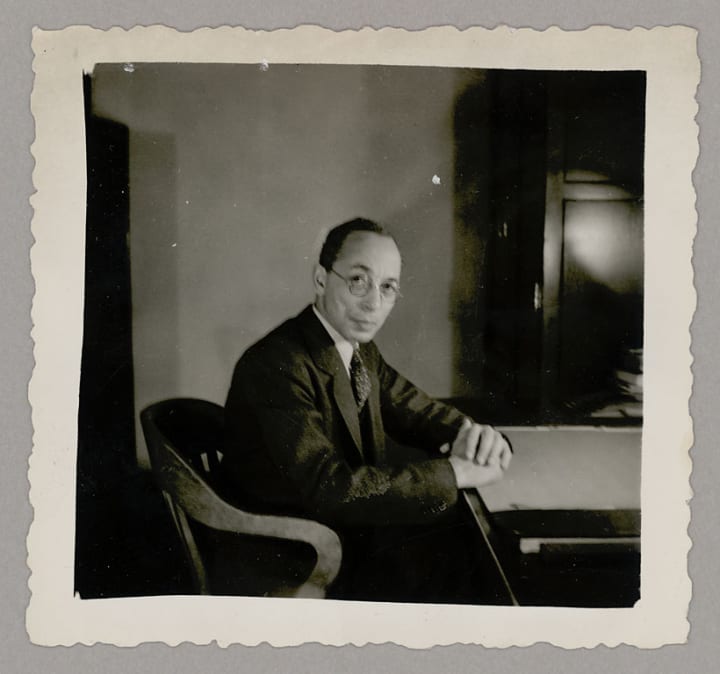
Imes would have appreciated the poetry of that—light measured up close, light recorded from afar, both testimonies of the same universe. For all their differences, the two innovators share a devotion to clarity: not glamour, not applause, but the stubborn, shining clarity of a method done right. The world remembers big launches and famous photographs, but it is the quiet hours—the calibration, the adjustment, the note in the margin—that earn their place in the chain of discovery.
In our night laboratory, dawn finally arrives as a kind of golden rescue. Through the windowpanes, a wedge of sunlight falls across the bench; the mercury lamp looks suddenly pale, as though day has outshone even its confidence. Imes closes the latest run and lays the printed chart aside, atop a stack that has grown into a small topography of evidence. He sips the last of his coffee, now cold but honest, and begins to transcribe the numerical backbone of the night into the ledger. Numbers become parameters; parameters become models; models become instruments others can use without having to re-suffer every uncertainty he faced. That is what generosity looks like in science: not just answers, but methods others can trust.
As the city fully wakes, the larger world spins on in its customary hurry. Newspapers declare that technology is accelerating; politicians celebrate a new contract; someone announces an engine that runs cleaner, burns more efficiently, gets us a little closer to after. If you listen carefully, you can hear the faint applause meant for engineers and experimenters, for patient minds who turned questions into capabilities. You can hear, too, the echo of footsteps in long hallways where night workers finally go home.
Before he leaves, Imes performs one more ritual. He resets the spectrometer to a neutral configuration, re-centers the movable slit, and caps the optics to shield them from dust. He labels the notebooks with exact dates and times. He draws a line—firm and level—and beneath it writes the next plan: a different pressure range, a longer path length, maybe a new detector that promises a better signal-to-noise ratio at the rims of the infrared. Progress is a chain of nexts.
And across the decades, the nexts multiply. Improved spectrometers leave the lab and enter wind tunnels, engine bays, satellite payloads. They monitor combustion health by reading light from exhaust, tuning feedback loops in real time so engines waste less and live longer. They inform chemical lasers with precision targets—transitions like carefully chosen notes—so the instruments sing on cue. They watch the skies, parse the atmosphere’s story day after day, and—like weathered guardians—warn us when that story turns dangerous. By the time cameras are peering at Earth from the Moon’s quiet basalt, the grammar of light that Imes helped perfect has already changed how we work, how we travel, and how we understand the air we share.
It is sometimes tempting to compress history into headlines—“Invention Leads to Breakthrough”—but it’s richer than that. It’s conversations at lab benches, arguments in peer review, calibrations that take a whole afternoon for a signal that appears only in the last minutes before dinner. It’s a feeling that the universe is not a stranger, that if you give it a patient question and a faithful instrument, it will answer you with a pattern that can be repeated by anyone, anywhere.
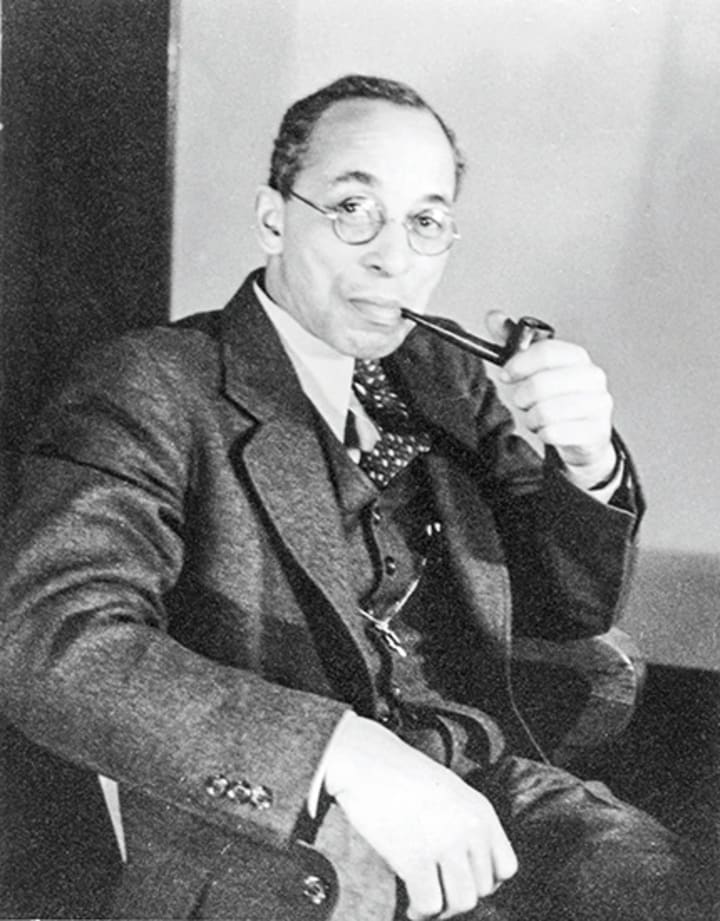
So here’s to Elmer Samuel Imes, who stood at the crossroads of precision and possibility and quietly built a road forward. Here’s to the spectrometer, to every slit and prism and mirror and detector, to every graph that took a long night to earn. Here’s to George Carruthers, who lifted that same spirit to the Moon and taught it to look back at us with ultraviolet eyes. Here’s to the idea that progress is not a shout but a steady tone—the measured hum of a well-built instrument in a dark room, telling the truth.
And here is the part of the story that belongs to you. The tools are better now. Detectors are colder and more sensitive; optics are polished to tolerances that would have sounded like boastful fiction a century ago. Software can filter the noise, and scientists can share results around the world in a heartbeat. But the heart of the work hasn’t changed. It still asks for patience. It still rewards honesty. It still feels like stepping into a room where the future hums and finding your place at the bench.
If you have ever wanted to do work that lasts beyond you, start with the humble parts: get the alignment right, write the notes so clearly that someone else can pick up where you left off, treat your measurements like sworn testimony. Build instruments others can trust. That is how discoveries scale into industries, into exploration, into a civilization that chooses knowledge over guesswork.
Light is older than our questions, but our questions make the light useful. Elmer Imes understood that. George Carruthers understood that. And if you choose to listen the way they did, the universe will keep speaking.
About the Creator
TREYTON SCOTT
Top 101 Black Inventors & African American’s Best Invention Ideas that Changed The World. This post lists the top 101 black inventors and African Americans’ best invention ideas that changed the world. Despite racial prejudice.
Keep reading
More stories from TREYTON SCOTT and writers in BookClub and other communities.
Walter Lincoln Hawkins
Walter Lincoln Hawkins By Leavie Scott – Special Feature Report Tampa, FL — In the decades before the digital age, long-distance communication traveled not through satellites or fiber optics, but through miles of copper wire stretched across states, coasts, and continents. These cables—exposed to blistering summers, freezing winters, storms, salt air, and corrosion—were the fragile backbone of human connection. Before the 1950s, the coats that protected these wires were made of lead, heavy and prone to deterioration. The system worked, but barely.
By TREYTON SCOTT3 days ago in BookClub
Self Help: Grifters' Gospel
On Self-Help, Snake Oil, and the Illusion of Change Psychology professionals and students can be imagined on two opposite sides of a line called self-help books: likely a larger group opposes pop-science and step-by-step manuals filled with talk of success, journaling, and not giving a f**k; others love them, but they aren’t many.
By Avocado Nunzella BSc (Psych) -- M.A.P 26 days ago in BookClub
7 Spiritual Awakening Books You Should Read In 2026
At some point in life, many of us feel an unmistakable inner pull — a quiet but persistent sense that there must be more to existence than routines, achievements, and external validation. This moment often marks the beginning of a spiritual awakening: a shift in awareness that changes how we perceive ourselves, others, and reality itself.
By Diana Meresc5 days ago in BookClub
I was in a Toxic Relationship, with my Workplace
“You got that?” My ex yelled. His hands were balled into fists at his side. At six foot three, he towered over me. A normal person would have been afraid, but I looked up a video of George Lopez repeatedly saying, “I got this,” and showed it to him. I had grown used to this treatment, so much so that I didn’t blink when he ripped the phone from my hand and threw it across the room.
By Jade M.a day ago in Confessions



Comments
There are no comments for this story
Be the first to respond and start the conversation.