

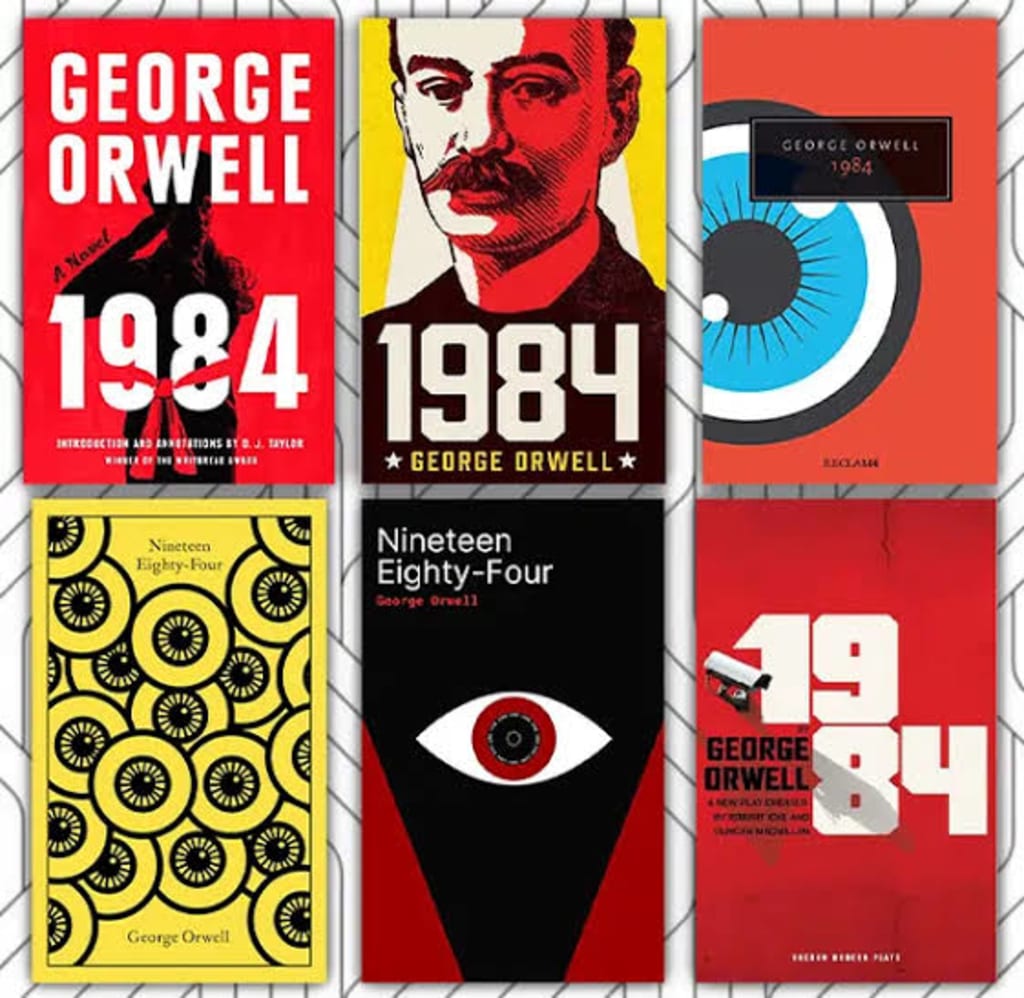
Published in 1949, 1984 by George Orwell remains one of the most influential dystopian novels ever written. Set in a totalitarian superstate called Oceania, the novel explores how absolute political power can reshape truth, identity, and even human thought. More than a political warning, 1984 is a psychological study of control—how systems dominate not just behavior but reality itself.
The story follows Winston Smith, a minor government employee who works at the Ministry of Truth. His job is to alter historical records so that the ruling Party always appears correct. Through Winston’s quiet rebellion—questioning authority, seeking personal freedom, and longing for authentic human connection—the novel exposes the suffocating reach of a regime that monitors and manipulates every aspect of life.
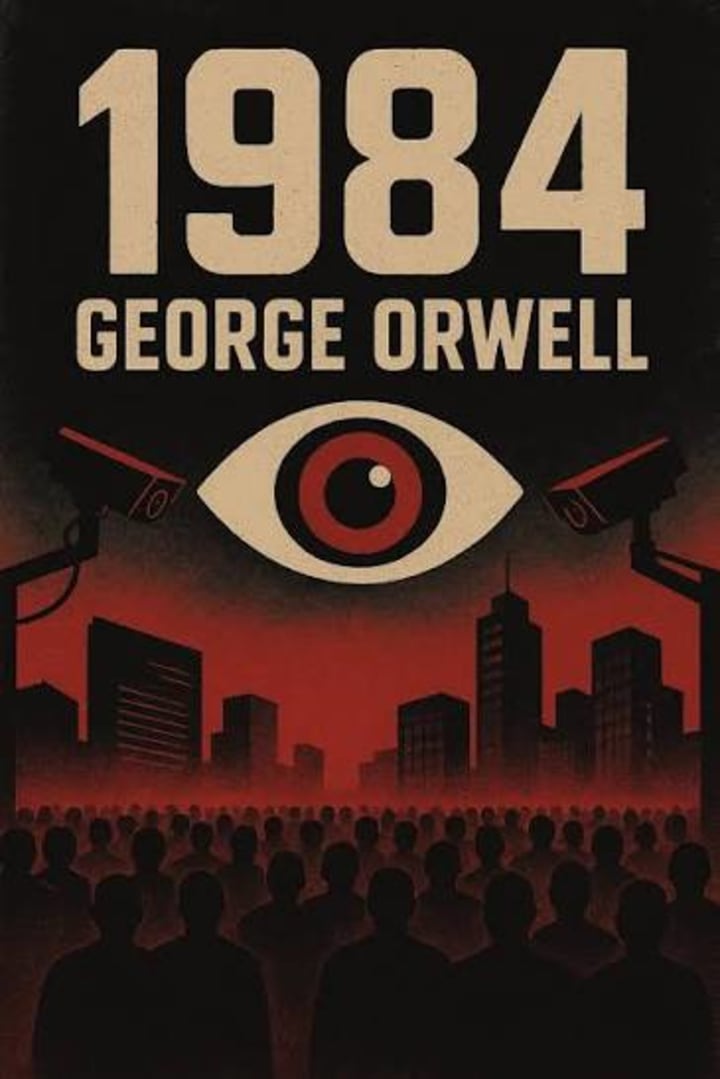
At the heart of 1984 lies the concept of surveillance. Citizens live under constant observation through telescreens and informants. Privacy is nonexistent. This omnipresent monitoring is not merely about security; it is a psychological tool. When people believe they are always watched, they begin to police themselves. Fear becomes internalized. Control no longer requires force—it becomes a habit of mind.
Another central theme is the manipulation of truth. The Party’s slogan, “Who controls the past controls the future; who controls the present controls the past,” captures the novel’s most disturbing idea: reality can be engineered. By rewriting history and restricting language through “Newspeak,” the regime reduces people’s capacity to think critically. If language shrinks, thought shrinks. If evidence disappears, dissent becomes impossible. Truth is not discovered—it is declared.
Orwell also examines the erosion of individuality. The Party demands not only obedience but loyalty of emotion. Citizens must love authority, fear enemies, and distrust independent thought. Even private feelings are dangerous. Winston’s internal struggle reflects a universal human need—the desire to preserve personal identity in a system designed to erase it.
One of the novel’s most powerful contributions to culture is the figure of Big Brother, the symbolic leader whose image represents constant authority. Big Brother is less a person than a presence—an embodiment of control that is everywhere and nowhere at once. This idea has become a cultural shorthand for invasive surveillance and authoritarian power.
Despite its dark setting, 1984 is not merely about political systems. It asks deeper questions about human resilience. How much pressure can truth withstand? What happens when reality itself becomes unstable? Can freedom exist without memory, language, or trust? The novel suggests that the most dangerous form of control is not physical domination but psychological transformation—when people accept falsehood willingly because they no longer believe in objective truth.
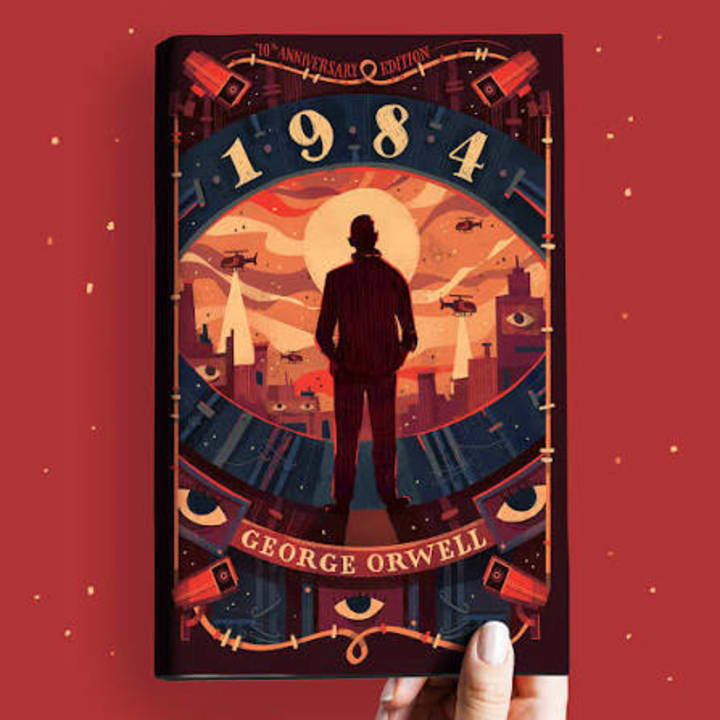
The book’s relevance has only grown over time. Modern readers often connect its themes to concerns about misinformation, mass surveillance, and the power of media narratives. While Orwell wrote in response to the totalitarian movements of his era, his insights transcend historical context. He shows that freedom depends not only on political structures but on the ability of individuals to think independently and value truth.
Stylistically, Orwell’s prose is direct, clear, and unsettlingly calm. He does not rely on elaborate description; instead, he builds tension through ordinary details—a propaganda broadcast, a rewritten newspaper article, a suspicious glance. This simplicity makes the world of 1984 feel plausible rather than fantastical, intensifying its emotional impact.
Ultimately, 1984 endures because it confronts a timeless danger: the loss of objective reality and personal autonomy. It reminds readers that freedom is fragile and that truth requires constant defense. The novel does not simply predict a dystopian future—it challenges every generation to ask whether the conditions for such a future could emerge quietly, gradually, and without resistance.
In that sense, 1984 is not only a story about control. It is a warning about complacency—and a call to remain conscious, critical, and aware.
About the Creator
Sk
"I am a passionate writer, crafting books and articles on Vocal Media, exploring human experiences, stories, and creative reflections."
Self Help: Grifters' Gospel
On Self-Help, Snake Oil, and the Illusion of Change Psychology professionals and students can be imagined on two opposite sides of a line called self-help books: likely a larger group opposes pop-science and step-by-step manuals filled with talk of success, journaling, and not giving a f**k; others love them, but they aren’t many.
By Avocado Nunzella BSc (Psych) -- M.A.P 28 days ago in BookClub
8 Books to Help You Heal After Infidelity
Infidelity is one of the most emotionally destabilizing experiences we can face in a relationship. It shakes identity, trust, safety, and even our understanding of love itself. Whether we were betrayed or made choices we regret, the aftermath often leaves us asking the same painful questions: Why did this happen? Can trust ever return? And most importantly — how do we heal?
By Diana Meresca day ago in BookClub



Comments
There are no comments for this story
Be the first to respond and start the conversation.