
The Future of Beauty
How Technology is Changing Skincare and Makeup


The beauty industry is evolving rapidly, fueled by technological advancements that are transforming the way we approach skincare and makeup. From AI-driven skincare solutions to virtual makeup try-ons, technology is not only enhancing the effectiveness of beauty products but also revolutionizing the way we interact with them. In this article, we’ll explore how technology is reshaping the beauty landscape, making skincare more personalized, makeup more accessible, and the beauty experience more immersive than ever before.
AI and Personalized Skincare
One of the most significant innovations in the beauty industry is the use of Artificial Intelligence (AI) to create personalized skincare routines. Traditional skincare often involved a trial-and-error approach, with consumers selecting products based on general advice or trends. However, thanks to AI, consumers now have access to skincare recommendations that are tailored specifically to their unique skin types, concerns, and goals.
AI-driven apps and devices can analyze an individual's skin through photos, detecting issues such as dryness, redness, acne, and fine lines. Using this data, these platforms suggest a customized skincare regimen, which may include cleansers, moisturizers, serums, and treatments designed to address the specific needs of the user’s skin. Notable examples include apps like Proven Skincare and SkinCeuticals that use AI to provide users with personalized skincare solutions based on a range of factors, including skin type, environment, and lifestyle.
Furthermore, some companies are using AI-powered diagnostic tools to create a more dynamic experience. For example, L’Oreal's AI-powered skincare advisor can scan your skin and provide real-time product recommendations, while devices like Foreo use sonic pulsations to enhance the effectiveness of skincare routines, all driven by real-time data.
Smart Beauty Devices
Alongside AI, smart beauty devices are revolutionizing how we care for our skin. These devices are designed to be used at home, offering professional-level skincare treatments that were once only available in salons. From LED masks to microcurrent facial devices, these technologies allow consumers to take their skincare routines to the next level without ever leaving the house.
One of the most exciting innovations in this space is LED light therapy. Devices like Dr. Dennis Gross’s SpectraLite™ FaceWare Pro use red and blue light to target different skin issues, such as acne and wrinkles. Red light helps to stimulate collagen production, improving skin texture and reducing signs of aging, while blue light targets acne-causing bacteria, providing users with clear, glowing skin. These devices offer a highly effective and non-invasive way to address skin concerns at home.
Another notable advancement is the use of microcurrent devices, such as the NuFace, which uses gentle electrical currents to tone and lift the facial muscles. This technology mimics the effects of a facial massage, helping to reduce the appearance of fine lines and sagging. As these devices become more affordable and user-friendly, they are becoming a staple in the beauty routines of many people seeking non-invasive alternatives to more costly treatments.
Augmented Reality and Virtual Makeup Try-Ons
Makeup has long been an area where consumers could benefit from technology. Augmented Reality (AR) has taken the guesswork out of choosing makeup products by allowing users to try them on virtually before making a purchase. AR-based apps like YouCam Makeup and Sephora's Virtual Artist allow users to upload a selfie and experiment with different makeup looks in real time, from lipstick and eyeshadow to foundation and eyeliner. These apps use advanced facial recognition technology to apply makeup on a user’s face virtually, showing exactly how different shades and products will look without physically applying them.
This technology not only provides a fun and engaging way to experiment with new looks but also serves as a practical tool for consumers to find the perfect shades and products. Virtual try-ons eliminate the uncertainty that often comes with buying makeup online, leading to more confident purchases and less product waste.
Furthermore, major makeup brands are adopting AR features in their websites and apps, allowing users to try on makeup products from the comfort of their homes. L’Oreal and Estée Lauder have integrated AR technology into their shopping experiences, helping customers visualize products on their faces before adding them to their carts. This has been especially beneficial in the wake of the COVID-19 pandemic, when in-store shopping became limited.
3D Printing: The Next Frontier
Another emerging technological advancement in beauty is 3D printing. While still in the early stages, 3D printing has the potential to revolutionize the way beauty products are created and customized. Brands like Prinker have already begun to explore 3D printing for temporary tattoos, while companies like Revolution Beauty are experimenting with 3D-printed cosmetics. This technology allows consumers to create personalized makeup products and accessories, offering infinite possibilities for customization.
For example, 3D-printed makeup can allow users to blend their own shades of foundation or lipstick, ensuring a perfect match for their skin tone. 3D printing could also lead to more sustainable beauty products, as it allows brands to produce items on demand, reducing the waste associated with mass production and excess inventory.
Sustainability and Beauty Tech
In addition to enhancing the effectiveness of skincare and makeup, technology is also helping the beauty industry become more sustainable. Many beauty brands are using technology to develop eco-friendly packaging, reduce waste, and create sustainable products. Lush Cosmetics, for example, uses recycled materials in its packaging and offers "naked" products that eliminate the need for packaging altogether.
Some companies are also investing in more sustainable production methods, such as biodegradable formulas and refillable containers. Loop, a global circular shopping platform, partners with beauty brands to create reusable packaging systems, allowing consumers to return empty containers for cleaning and refilling, reducing the environmental impact of single-use packaging.
The Future of Beauty
The future of beauty is undeniably intertwined with technology. As AI, AR, smart devices, and 3D printing continue to evolve, we can expect even more groundbreaking innovations that will make skincare and makeup more personalized, effective, and sustainable. Consumers will have access to highly customized solutions that address their unique needs and preferences, while new technologies will make beauty routines more accessible and efficient.
As technology continues to shape the beauty industry, one thing is certain: the future of beauty is not just about looking good; it’s about feeling good, making informed choices, and taking better care of ourselves with the help of innovation. Whether it's through personalized skincare or virtual makeup try-ons, the possibilities are endless.
About the Creator
Artical Media
my name is Neeru Verma+++
I am from Delhi In India.
I Working from Last Year Content Writing & Artical Writing.
Thank you.
For Reading My Articals.
Visit My Store:DIGIMARTS.redbubble.com
Keep reading
More stories from Artical Media and writers in Blush and other communities.
Divulging Polish: An Extensive Manual for Styling and
Introduction: In a world that flourishes with initial feelings, individual style and prepping assume a critical part in forming one's character and supporting certainty. The craft of styling goes past simple style; it is an impression of distinction and self-articulation. This article digs into the domains of styling and magnificence, offering an exhaustive aide with reasonable tips to assist people with saddling their remarkable appeal and transmit certainty.
By Artical Media2 years ago in Blush
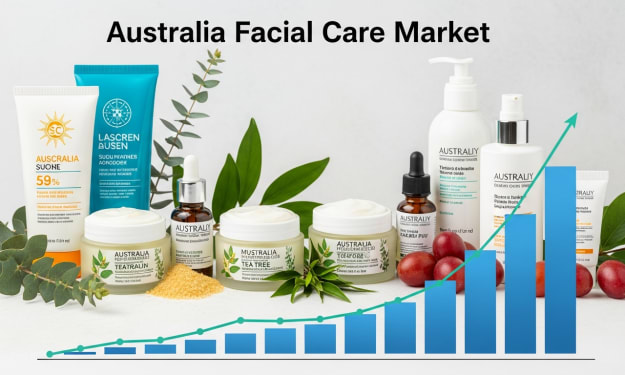
Australia Facial Care Market: Skincare Priorities, Innovation & Consumer Demand
Australia Facial Care Market Overview The Australia facial care market continues its impressive growth trajectory as consumers increasingly prioritise skin health, appearance and preventative beauty routines. Facial care — including cleansers, moisturisers, serums, masks, toners, eye care and specialised treatments — is no longer confined to niche beauty enthusiasts but embraced as a mainstream self-care category. The Australia facial care market size reached USD 2.9 Billion in 2024. Looking forward, the market is expected to reach USD 5.1 Billion by 2033, exhibiting a growth rate (CAGR) of 5.89% during 2025-2033. This growth reflects rising beauty consciousness, innovative product development, omni-channel retail expansion and lifestyle shifts that prioritise both aesthetics and dermal wellness. (Market data based on IMARC Group analysis.)
By Amyra Singh4 days ago in Blush
The “Low-Effort” Beauty (And the Smart Routines That Actually Work)
There’s a specific kind of frustration that hits when you’re running late, your hair has decided today is rebellion day, and your skincare routine is staring back at you like a to-do list you never agreed to.
By Patricia G5 days ago in Blush
Dead and Wearing Green
She was wearing that green dress when I first saw her, five years ago to the day. Flowing meadow fabric draped over long legs, thick auburn hair flowing down her back. That smile. Of course, she is still beautiful now. But now she is no longer alive.
By Karen Cave5 days ago in Fiction


Comments
There are no comments for this story
Be the first to respond and start the conversation.