
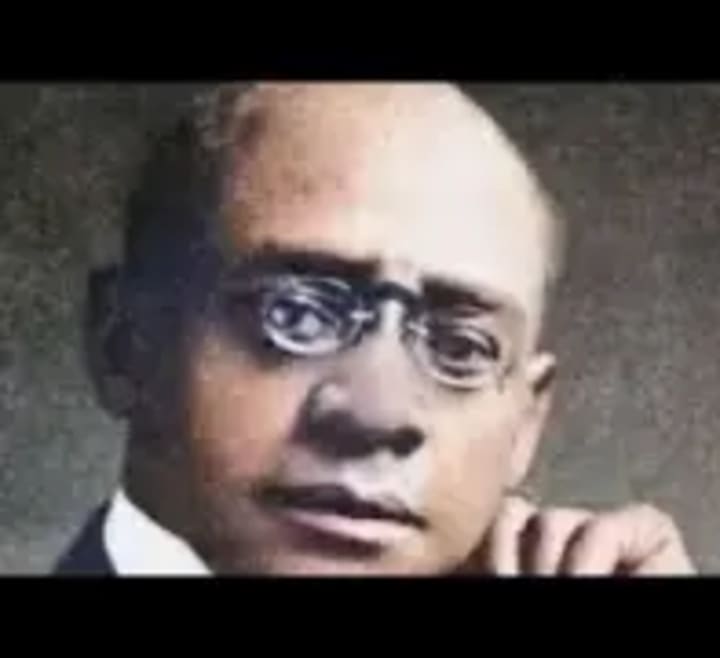
Shelby Davidson
The USPS Auditor Whose Quiet Genius Streamlined American Office Work
In an era when America’s rapidly expanding postal system depended on accuracy, timing, and mountains of paperwork, one man working behind the scenes imagined a better way. His name was Shelby Davidson (1868–1930)—a United States Postal Service auditor whose inventions transformed office machines and helped usher in a more efficient age of clerical work.
Though often overlooked in traditional histories, Davidson’s work represents the intersection of intellect, perseverance, and everyday problem‑solving that powered early 20th‑century innovation. His contributions remain a testament to how profoundly a single idea—born not in a laboratory, but in the daily grind of an office—can change the way an entire system operates.
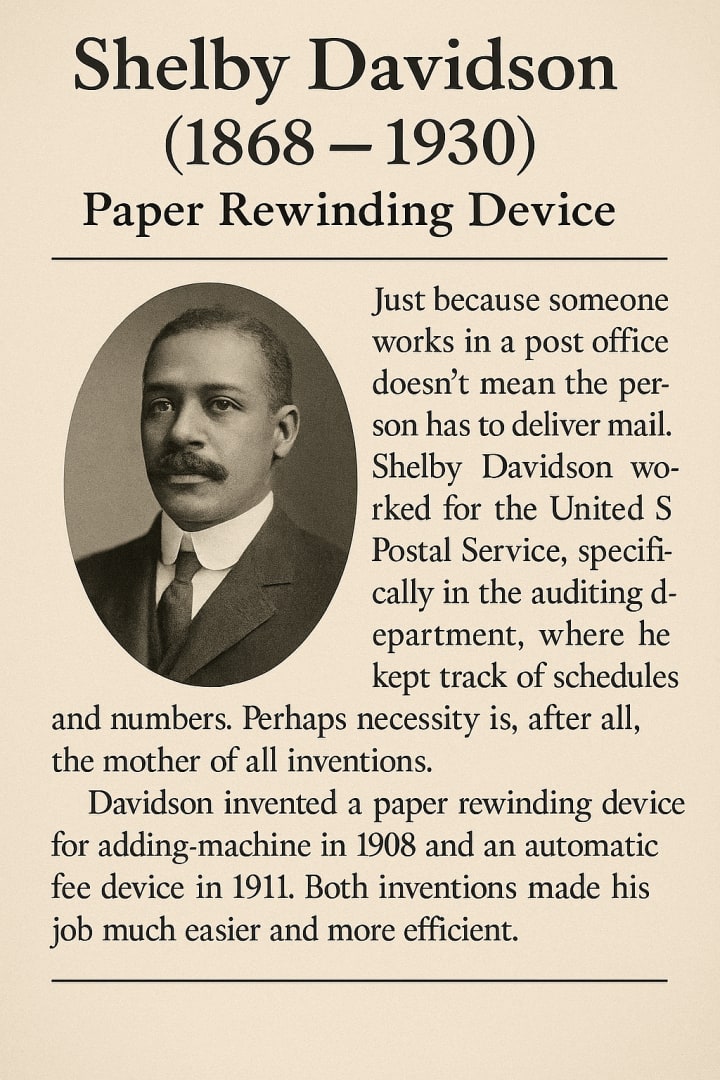
From Humble Beginnings to the Heart of Federal Operations
Born just three years after the Civil War, Shelby Davidson entered adulthood at a time when opportunities for African American professionals were scarce. Yet by the early 1900s, he had carved out a respected career within the U.S. Postal Service, one of the nation’s largest and most complex government agencies.
Davidson worked not as a mail carrier or clerk but in the auditing department, a role demanding precision and long hours hunched over ledgers, receipts, and adding machines. His responsibility:
Monitor financial records
Track schedules
Verify figures
Ensure accuracy across regional operations
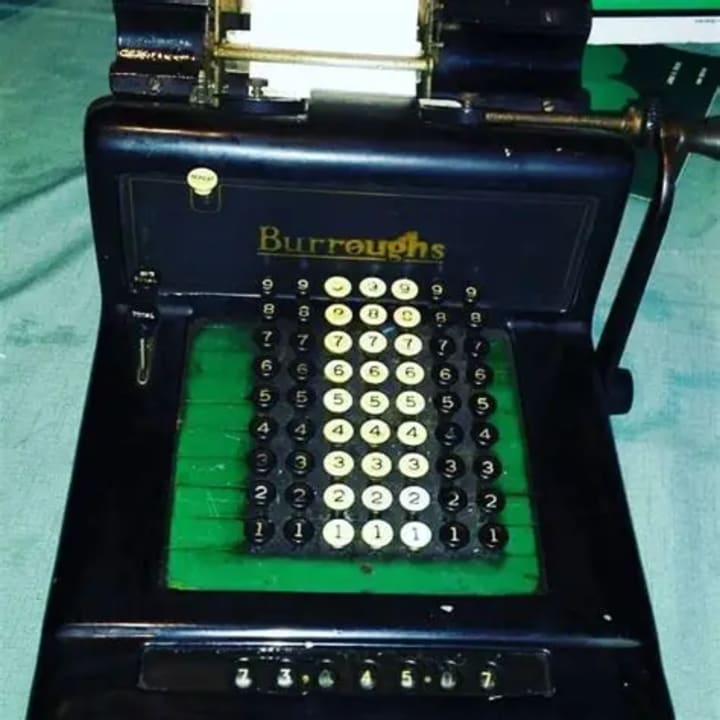
The work was essential—and exhausting. Adding machines of the time were reliable but far from efficient. Paper rolls had to be rewound manually, and fee calculations required repetitive steps that slowed productivity. Davidson saw this not as a burden, but as a puzzle.
And he intended to solve it.
A Problem Solver at Heart
Davidson’s inventive thinking blossomed directly from the challenges he faced every day. He recognized that the time and energy wasted managing paper and recalculating fees could be drastically reduced with the right mechanical improvements.
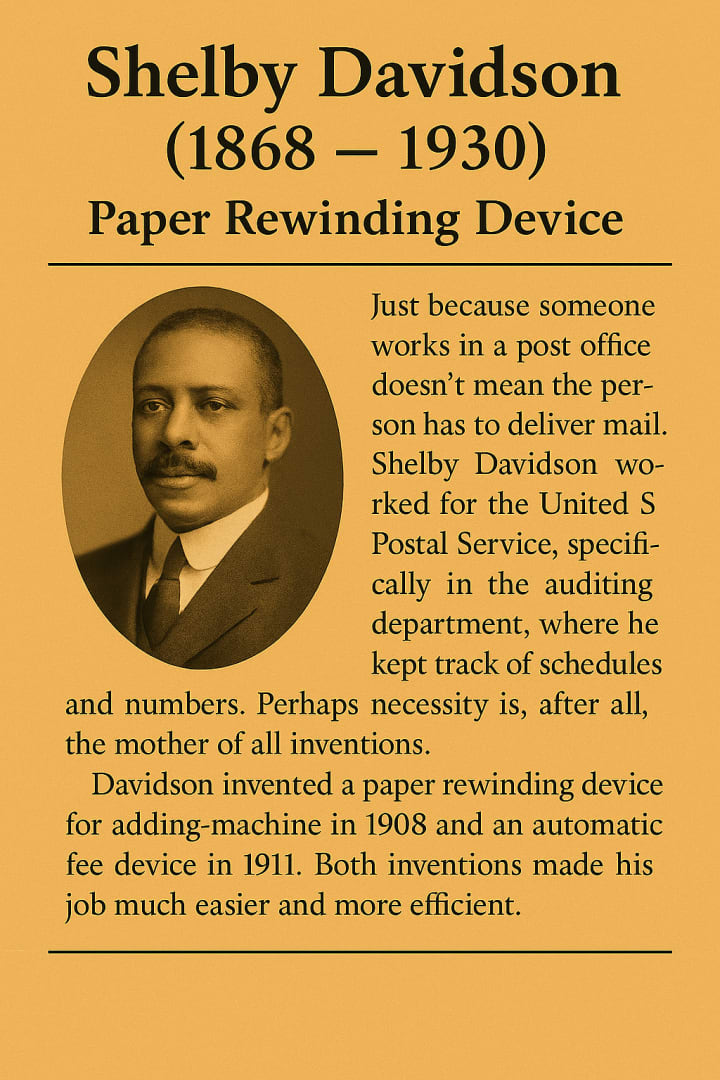
In 1908, he patented his first major invention:
➤ A paper rewinding device for adding machines
This mechanism allowed clerks to quickly rewind and reset paper rolls—a deceptively simple innovation that saved significant time in high-volume auditing offices.
Then, just three years later, Davidson refined his understanding of office workflow even further.
In 1911, he patented his second breakthrough:
➤ An automatic fee device
This invention streamlined financial calculations, reducing human error and helping postal workers complete routine transactions far more efficiently.
Both devices were widely praised for their usefulness and practicality. They weren’t flashy, but they were indispensable—exactly the kind of tools that quietly power progress.
A Legacy of Ingenuity
Shelby Davidson’s inventions may not be widely known today, but their impact was real. He embodied the spirit of ingenuity that defined early American innovation: observing a problem, designing a solution, and improving the work environment for thousands who would never know his name.
His story reminds us that great inventors aren’t always the ones in laboratories. Sometimes they’re the people at desks, in warehouses, or in back offices—people who understand systems from the inside and have the creativity to make them better.
Davidson’s legacy lives on through the modern machines and automated systems that descended from the earliest office innovations. More importantly, his life stands as a powerful reminder that brilliance can come from anywhere, and that some of the most important innovations begin with simple, everyday frustrations.
About the Creator
TREYTON SCOTT
Top 101 Black Inventors & African American’s Best Invention Ideas that Changed The World. This post lists the top 101 black inventors and African Americans’ best invention ideas that changed the world. Despite racial prejudice.
Keep reading
More stories from TREYTON SCOTT and writers in Beat and other communities.
Henry “Box” Brown’s escape
Mailed himself to freedom A Short Story: The Man in the Wooden Crate Henry Brown awoke before dawn in Richmond, the air thick with the sorrow that had settled over him since the day his wife Nancy and their children were sold away. He had watched them march in chains, swallowed by a crowd of hundreds, powerless to stop the tearing apart of his family. The memory stayed with him always—a silent wound he carried as he worked in the tobacco factory, day after day.
By TREYTON SCOTTabout 14 hours ago in Beat
I've Just Realized
The President doesn't understand music. There. It felt very good to write that; it's some thing I just realized today. Oh , yes; he plays it. He TRUMPets it in rallies and meetings, pumps it across the airwaves when he gathers up our minutes waiting for his late arrival.
By Judey Kalchik 3 days ago in Beat
Rikki La Rouge 🇬🇧 Metal Years
In 2007 Rikki La Rouge started her own label ANVIL SAPIEN RECORDS. Ricky got her start in England and in Great Britain. She built her following in the United Kingdom. The first distribution company that give her a chance was a distribution company in England.🏴
By Revista Miko:XCI5 days ago in Beat
The Saddest Thing - The Billionaires Who Rule America Aren't Even Enjoying Themselves
This single post says more about our ruling class than a thousand policy papers. The saddest thing about today's system is that the men robbing the rest of us - sabotaging our economic prospects, our pensions, our access to affordable healthcare - are not even happy.
By Scott Christenson🌴6 days ago in The Swamp


Comments
There are no comments for this story
Be the first to respond and start the conversation.