
"One More Round, Delia's Gone"
The Debt I Owe to Johnny Cash and One Specific Album

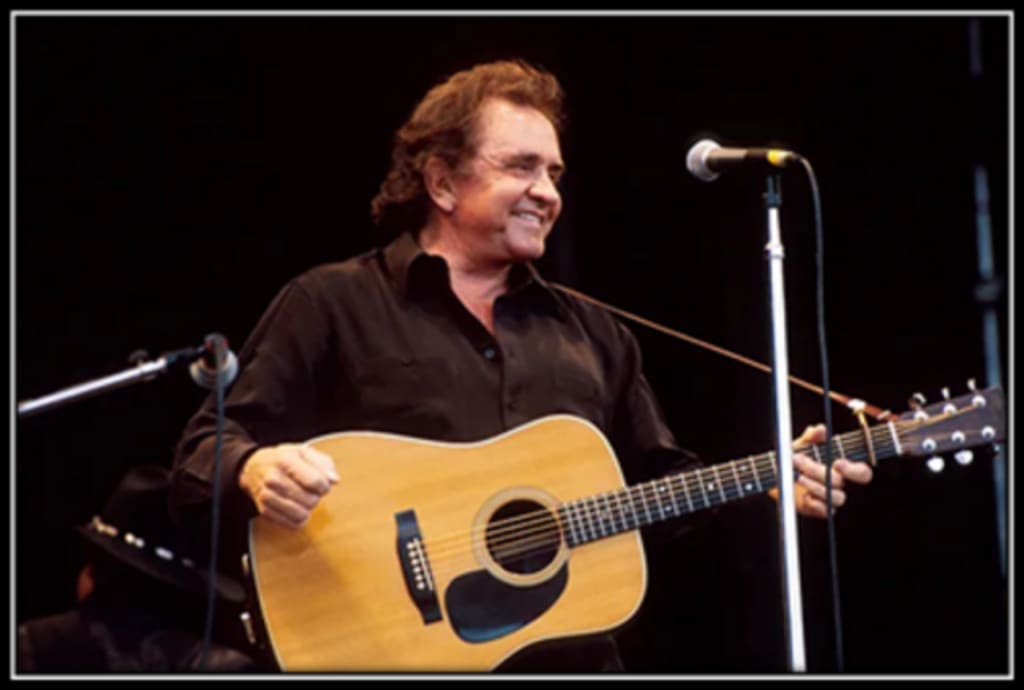
One of the strangest things I’ve ever heard someone say came from Johnny Cash.
In a 1996 interview to promote Unchained, his second album for producer Rick Rubin, Johnny talked about the renewed interest he was receiving from audiences following the first Cash/Rubin collaboration, 1994’s American Recordings, which featured just Johnny and his guitar. Cash discussed the long process leading to the solo format of that first album. The months of trial and error mostly consisted of Johnny and Rick sitting at Rubin’s Los Angeles home, with the recording equipment set up and running down a list of 200 songs that Johnny had in his head and which he had always wanted to record. According to Cash, after that process and the decision to keep the album bare, came the matter of working on Cash's guitar playing and making it sound good for recording since, as he put it, “I can’t play guitar.”
I had to rewind the video a few times to be sure I heard him right. Johnny Cash was actually saying that he didn’t play guitar.
When Cash and Willie Nelson appeared as guests on a 1997 episode of VH1 Storytellers (the live album of which I've already written about here), there was a point during the night of stories and songs where Johnny and Wille swapped guitars, with Willie performing “Crazy” using Cash’s black Martin D-23. Johnny joked that it was the first time his guitar was actually being played.
I couldn’t believe Cash was talking down on his guitar playing. The reason for that disbelief was simple but meaningful. I would never have been a serious guitar player if not for American Recordings, and for the role that the album played in my desire to play guitar in the first place.
Just before I moved from Las Vegas to New York in the summer of 2004, I was in the middle of a sea change. Having spent years listening to classic country working my way up to sampling classic rock & roll (and playing air guitar, as rock-loving kids often do), I finally decided I wanted to learn to play guitar for real. For my 13th birthday, my last one before moving, I received a cheap toy-store red and yellow acoustic guitar for beginners. At first, I didn’t have easy access to guitar lessons, and in any event, I was a few months away from leaving Las Vegas anyway. I easily went through my last months in Vegas and first months in Bronxville, New York, pretending to play the small toy guitar, miming the music videos I would watch on my computer and from the classic rock VHS tapes I had started collecting by that time.
(I burned through my VHS copy of Elvis: Aloha From Hawaii over and over in my last Vegas months.)
At age 14, I was already acting like a newly anointed shredding god. Never mind that I didn't know where I was moving my fingers.
Within a few months of moving to Bronxville, my relatives noticed that I was spending a lot of time standing in front of my bedroom mirror with my toy guitar and imagining that I was Elvis Presley or Chuck Berry. For my 14th (& first New York) birthday, my aunt took me to a music store near Mount Vernon where she bought me a more serious black and yellow acoustic/electric guitar. A few weeks later, she arranged for me to receive once-a-week guitar lessons at home each Friday.
Around this time, my aunt would occasionally take me and my brother to Manhattan on certain weekends where she and my uncle had an office near Broadway and 10th Street. As the office was located in a nice part of Manhattan, I was allowed, once we had arrived at work, to step out of the office and spend my day walking up and down the streets of this small corner of the Big Apple to hang out.
Aside from the famous Strand Bookstore, one of the other spots where I spent most of my free time was a large Virgin Superstore only a block away from the Strand. With allowance money in my pocket, my love affair with CD/DVD collecting started becoming serious during my frequent Virgin trips.
I still remember that one of the first CDs I bought during these trips was American Recordings.
By then, I had already become enough of a Johnny Cash fan, having lived on his music from an early age (thanks to my "classic country" coming of age) and long before the attention Cash received for his haunting 2002 music video of his cover of Nine Inch Nails' “Hurt” and his subsequent 2003 passing shortly afterward. As a Cash fan, I would inevitably have, at some point, heard about the late-era Rick Rubin resurgence that began with American Recordings and the challenge it presented Johnny with doing an album (and going to perform at small Gen X clubs) armed with nothing more than his guitar.
In the months afterward, I listened to the album endlessly on my small boombox in the bedroom I shared with my brother. This was while I was still doing my weekly Friday guitar lessons. Within six months, I had advanced my playing to the point where I knew my basic guitar chords and, to my surprise, knew enough to learn to play by ear. With my confidence raised, I started challenging myself to learn songs outside my required assignments.
This is where American Recordings came in.
With the sparse arrangement and the simple chord arrangements (as well as the benefit of a capo, which I later bought on one of my Virgin shopping trips), I began practicing the album's many highlights (“Deila’s Gone”, “Like a Soldier”, "Redemption", "Thirteen", and the tongue-in-cheek “The Man Who Couldn’t Cry”) endlessly. I even started learning to strum using only my thumb instead of a guitar pick to play. I wanted to get that pure natural sound that Johnny had made on the album.
I had loved American Recordings from the moment I first played the CD on my Walkman during the long subway rides we took from my aunt’s Broadway office to our house in Bronxville at the end of our weekend office days. However, learning to play guitar made me appreciate the album even more. When I finally moved back to Las Vegas in 2007, I already had a strong base of songs I had mastered on guitar. I had not only soaked up Johnny Cash but also other rock guitar icons like Elvis, Chuck Berry (even if, with Berry, I was never able to be that kind of guitarist), Roy Orbison, and the man who would soon take top marks in my artist admiration list, Bob Dylan. The guitar class I would take in my junior year of high school, shortly after my Vegas return, would further force me to hone my craft and keep my music mind sharp.
(I am forever grateful to that class if only for teaching me the iconic guitar intro to “Oh, Pretty Woman”.)
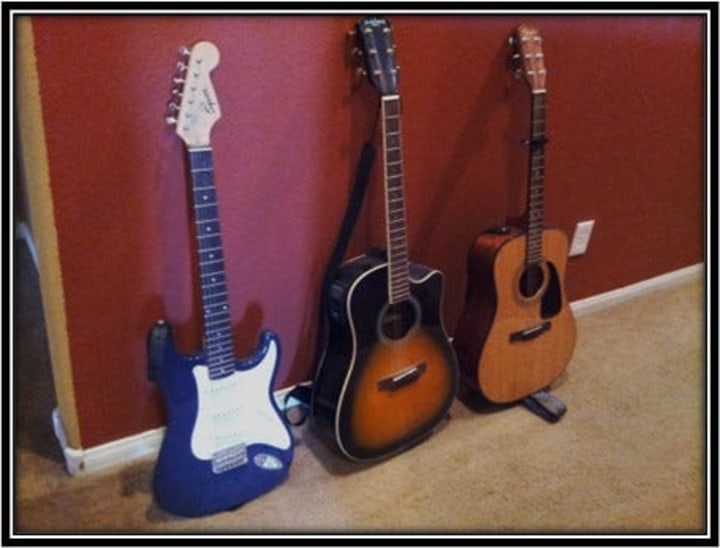
These days, my guitar playing has risen to the level of a credible rhythm guitarist. I may not be confused with a "shredding god", but it's far from where I imagined myself when I was pretending to play my red toy guitar at age 13. I have also challenged myself to start practicing fingerpicking on guitar which now gives me something new and interesting to aim for.
This brings me back to Johnny’s 1996 interview where he said he couldn’t play guitar. Looking back, I think Cash meant that he couldn’t play the instrument in the same manner that artists like Willie Nelson can, where their guitar skills are more advanced and go beyond just using the guitar as an instrument for singing (the way that, for example, Roy Orbison described his aims for playing guitar.) However, it should be said that even the most skilled guitar player can’t always translate soul and emotion out of his playing. Sometimes, even being a great guitar player won’t go far if your audience doesn’t feel strongly for you, or turns against you for whatever reason.
(The recent drop in public admiration for Eric Clapton is a case in point.)
Interestingly, Johnny Cash would not be the last case of Rick Rubin working with an artist who was insecure about his guitar skills. A few years after Cash’s death, Rubin would help resurrect the career of another pop legend, Neil Diamond with another masterpiece of an album, 2005's 12 Songs. In a 2006 CBS Sunday Morning profile on Neil made to promote his Rubin collaboration, Diamond remembered how Rick had insisted and pushed for Neil to play guitar on the album, something the superstar had stopped doing sometime between Beautiful Noise and The Jazz Singer, and around the time that Neil almost began performing more with his glittering costumes more than with instruments.
“Rick insisted that I play guitar while I was singing [on the album], and I stopped that many years ago because I always felt that there were better guitar players than me.” — Neil Diamond
Rubin, also interviewed for the CBS profile, offered a counterpoint to Diamond’s stance. “There's a soulful quality, and there is a truth to what he’s doing on the guitar, that no one else could do.”
That quote by Rubin could be easily applied to Johnny Cash as well. I challenge anyone who reads this piece to go on YouTube and look for any video of Johnny Cash playing with just his guitar, notably his 1994 talk show appearances (Late Night with David Letterman, The Jon Stewart Show) to promote American Recordings, and his moving “Thanksgiving Prayer” from when he made one of his recurring guest appearances on TV's Dr. Quinn, Medicine Woman. Cash’s “Tennessee Two” sound found in classics like “I Walk The Line” and “Folsom Prison Blues” will stand highest in how listeners define the Cash sound, but there is something intimate, warm, and real that comes through strongest when Johnny aims his thumb on those six strings.
Take it from a writer whose 20-year love affair with the guitar is, in no small part, thanks to Johnny Cash and American Recordings.
Sincerely: Random Access Moods
About the Creator
Michael Kantu
I have written mostly pop culture pieces for Medium, Substack, and on a short-lived Blogspot site (Michael3282). I see writing as a way for people to keep their thoughts, memories, and beliefs alive long after we depart from the world.
Keep reading
More stories from Michael Kantu and writers in Beat and other communities.
Andreas Szakcs Productions Officially Begins Production on New Project
Andreas Szakcs Productions has officially entered production on its latest project, marking an exciting and ambitious new chapter for the studio. Known for its striking visual storytelling, meticulous craftsmanship, and commitment to high production standards, the company is poised to deliver a project that promises to engage audiences both emotionally and visually.
By Andreas Szakacsa day ago in Beat
The Devil's Triangle
The sails ruffled in the breeze as we cruised along. The Sea Breeze was a mid-size catamaran that sailed out of Royal Naval Dockyard in Bermuda. We had booked this trip weeks in advance and were now looking at our Captain, Spike and two boat hands. Paddy and Wilson seemed like nice guys, joking around with the passengers and telling us some stories about Bermuda that only locals would know. Their island accents sounded almost British but they were pleasant to listen to.
By Barbara Gode Wiles2 days ago in Fiction



Comments
There are no comments for this story
Be the first to respond and start the conversation.