
Global Efforts Synergize Through Music
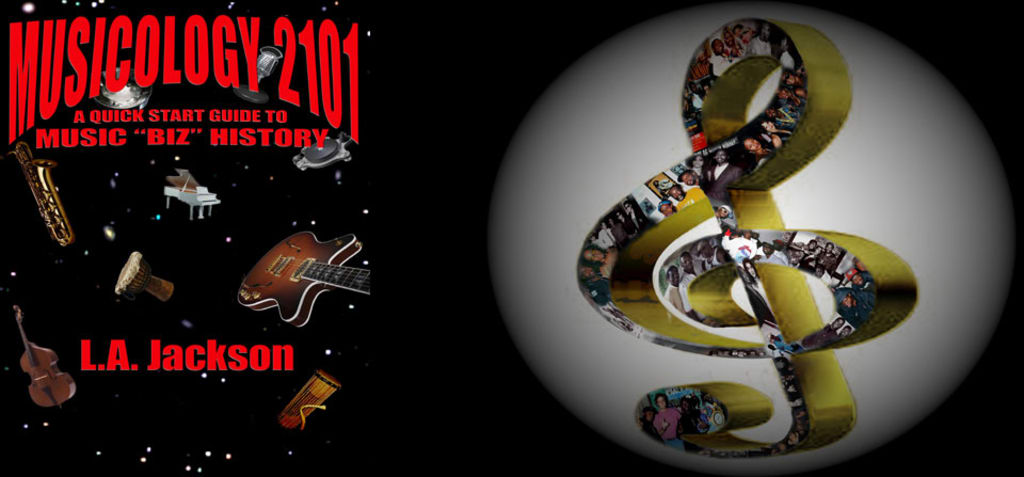
Musicology 2101 Book Excerpt
"We Are The World" Shows Community Unity: The Good...
On April 5th, 1985, roughly five thousand radio stations across Africa, Asia, China, Europe and North America simultaneously played “We Are the World,” a song written by Michael Jackson and Lionel Richie. This song was produced by the legendary Quincy Jones and was based on a simple notion: to unite American recording artists and help raise money for famine victims in one of Africa’s most remarkable lands, Ethiopia.
The project was deployed through the hands of Calypso music legend Harry Belafonte, a true visionary with a long track record as an advocate of several high profile civil rights and humanitarian causes. Looking back, this kind gesture took place just a year after I began my internship with the distributor of this massive project. Before we jump ahead with the “We Are the World” project, it would be advantageous to get familiarized with Mr. Belafonte’s dossier.
REWIND: While scores of people may think Harry, codename Calypso Man, was born in Jamaica, he was actually born in New York City. Belafonte’s Jamaican lineage comes from his father, but he only spent about five years in Jamaica as a resident—for most of his childhood, Harry lived in the New York area. As a testimony to his musical genius, he pulled off a major musical feat: the epic recording of his 1956 release Calypso. It featured the classic hit Banana Boat Song and was loaded with a signature lyric, “Day-O.” Harry Belafonte’s Calypso album went on to spend 31 weeks in Billboard’s #1 position—that’s over half a year! What modern-day album do you think can “hit the mark” like that? As monumental as it was, I can’t even recall the We Are The World recording doing that. The We Are The World album spent closer to three weeks at the top chart spot; but its massive hit became the fastest-selling single in history.
By displaying his talents as only he can, Harry Belafonte made history on more than a few occasions. In addition to his numerous musical endeavors, he also dabbled in the motion picture industry, alongside another “A-list” actor who goes by the name of Sidney Poitier. Coming from the Bahamas, Sidney was another childhood Caribbean favorite who deserves a good click on the search engine as well.
BPRD FACT: The first time Harry Belafonte performed live,
his backup group was the Charlie Parker band. The lineup included
among others, the legendary Charlie Parker, Max Roach and Miles Davis:
all of these musicians are burned ino the entertainment biz “A-list.”
As we FAST FORWARD to the “We Are the World” project, Harry Belafonte contacted head of the United Support of Artists for Africa Foundation, Ken Kragen. After discussing this landmark idea, Kragen called Lionel Richie, whose wife passed the idea on to Stevie Wonder the next day. Then music’s best, Quincy Jones, signed on as producer and brought in Michael Jackson, known to some as The King of Pop: the rest is history! (RIP M.J.–speaking for many, we really miss you much.) Incidentally speaking, when We Are the World jumped to the top of Billboard’s charts, another tune that made it to the Top 5 singles list was One More Night by Phil Collins. His album was so hot back then it was in the top spot both before and after We Are the World claimed the top position from April 27 to May 17, 1985. In addition, there was Madonna with Crazy for You and Material Girl, as well as Nightshift by The Commodores, a band that once featured Lionel Richie as their lead singer.
We Are the World was recorded by the core acts on January 28th, 1985, the evening of the American Music Awards. This was a smart way to guarantee the top recording acts would be present. Before long, the list of supporting acts grew to over three-dozen celebrities, from Dan Aykroyd to Stevie Wonder. The song’s opening developed from a basic raw phrase, and its chorus turned into an international world anthem. Producer Quincy Jones transformed three days of pre-production work with Lionel Richie and Michael Jackson into a recording session of less than three hours, by advising artists in advance to “check their egos at the door.”
As this unforgettable recording session transpired, the performers ‘put their hearts into doing their parts.’ When the deed was done, egos were retrieved at coat check on the way out. Richie and Jones remained behind, bunkered in the studio tightening up the track until the next morning. Recording in Hollywood’s famous A&M Studios, the artists were arranged choir-style with a half-dozen microphones in place for the song’s chorus. In a little over a month after being recorded, We Are the World arrived in stores. Needless to say, Harry Belafonte’s dream parlayed itself into a phenomenon as the single sold over 800,000 copies between Thursday, March 7th, and Sunday, March 10th, 1985. Entering the Billboard singles chart at #21, it became the fastest-rising Billboard #1 single in 10 years. Although a fierce bidding war for the record’s release probably took place between record companies like Motown (Lionel Richie’s label) and Epic Records (Michael Jackson’s label), Columbia Records (Epic’s sister company) won out. Here’s a quick reminder: Columbia and Epic were the “children’s division” of parent company, CBS Records. To comprehend the significance of the bidding wars, just figure in the economics of this situation:
● By mid-May, Columbia Records presented a check to the United Support of Artists for Africa Foundation in the amount of $6.5 million. This was only two months after the initial release date; additional sales netted over 7 million singles, and 4 million-plus albums
● Within a year, media and product sales generated over $40 million: twenty-five years later, sales topped out with revenues of more than $60 million
● Before the new decade arrived, 1988 saw CBS Records get sold to Sony Corporation for $2 billion; industry speculations were that Sony made its money back the following year
The well-documented We Are the World feat was analyzed by those who were still busy keeping track at the time of its “metaphoric cloning” in February of 2010. Opening the lens wider, we can see clearly that this ‘amalgamatic musical manifestation’ managed to get itself reincarnated: the history-making song was recorded and released once again—this time it was called We Are the World 2010. We’ll get more in-depth with this historic event shortly but in the meantime, please note that “We Are the World” was not the first project to help our fellow man. But it was America’s answer to the United Kingdom’s “Band Aid,” which came out almost six months earlier—this U.K. based project will be discussed right after we drill down into the We Are the World 2010 project. A key point here is that each release brought light to the issue of starvation. But today, do benefits like these still make an impact? Are social issues being dealt with any better? Let’s take a look into We Are the World 2010, and then we’ll cross the liquid line and check out what the music folks across the waters did to initiate their chain of worldwide, fundraising events.
About the Creator
L.A. Jackson
L.A. Jackson went to Georgia State University on a Bill Lowery scholarship, majoring in Commercial Music & Recording. Working with CBS Records (later Sony Music), he marketed music by Columbia, Epic and Def Jam. Then came Musicology books.
Keep reading
More stories from L.A. Jackson and writers in Beat and other communities.
Passa The Salsa
Another Latin music style is Salsa, which you will soon see is a popular music genre unto itself. Salsa instruments include the bass, bongo, conga, cowbell, clave, cabaca, guitar, maracas, piano, timbales, trombones, trumpets, woodwinds called ocarinas and panpipes. Salsa embodies the Latin music persona, but has since expanded to include American genres like Pop, Rock, Jazz, and R&B. You may notice that when a music style--in this case Salsa--gets popular, it often sub-divides and forms other styles of Salsa: Erotica, Gorda, and Romantica. There are also fusions like Charanga-Vallenata, Mereng-House, Salsa-Merengue, Songa-Salsa, TImba, and Salsa flavored Reggeaton.
By L.A. Jackson5 years ago in Beat
Sing Me an Aria
The Barber of Seville is a comic opera by Gioachino Rossini, centered around themes of love, deception, and clever schemes. The story follows Count Almaviva, who is in love with Rosina, the ward of the wealthy Dr. Bartolo. He disguised himself as a poor student, Lindoro Almaviva, and serenaded Rosina to win her affection. Figaro, the clever barber of Seville, assists Almaviva in his plans to outsmart Dr. Bartolo, who intends to marry Rosina himself.
By Rasma Raisters7 days ago in Beat


Comments
There are no comments for this story
Be the first to respond and start the conversation.