
Frank Caprio: The Compassionate Judge Loved Across the World
How the American judge known for kindness in the courtroom became a global symbol of mercy — and why he was admired even in Pakistan

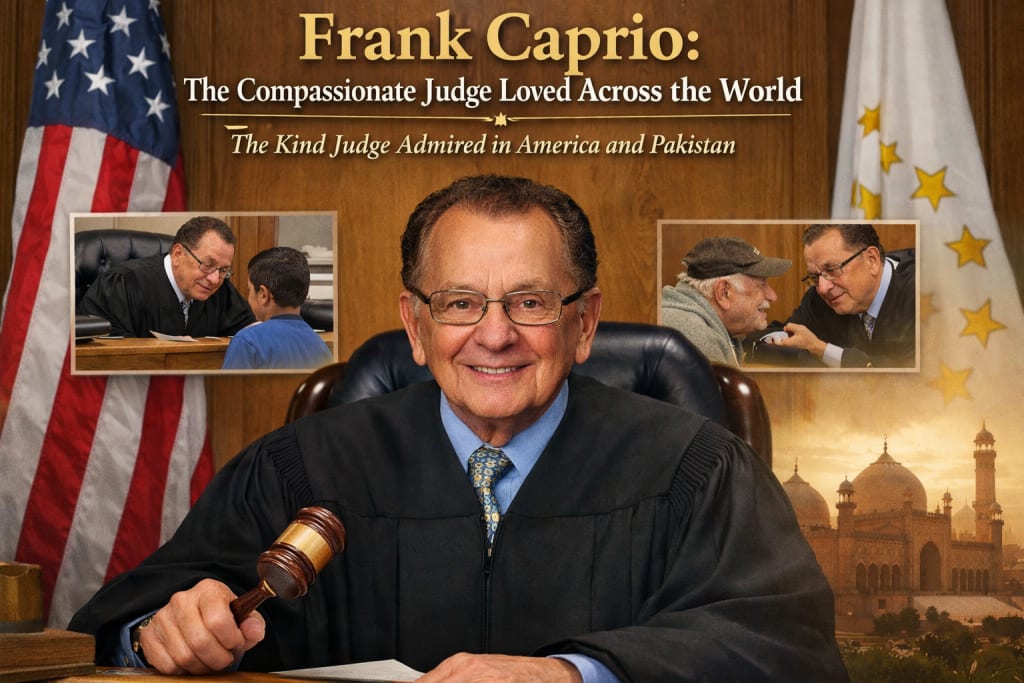
In a world where courtrooms are often associated with strict rules and harsh judgments, one judge stood out for his compassion and humanity. **Frank Caprio**, a municipal judge from Providence, Rhode Island, became widely known around the globe for the kindness he showed to people appearing in his courtroom. Often called “the world’s kindest judge,” Caprio’s unique style of justice made him a beloved figure not only in the United States but also in countries thousands of miles away — including Pakistan.
Frank Caprio served as the chief municipal judge in Providence for many years. However, it was not his position alone that made him famous; it was the way he treated people who came before him. Instead of focusing solely on punishment, Caprio often tried to understand the circumstances of those accused of minor violations, especially parking tickets and small traffic offenses.
His courtroom became the center of a television program titled **“Caught in Providence.”** The show captured real moments from his court proceedings, highlighting his conversations with defendants and the empathy he often showed them. These clips, later shared widely on social media platforms such as YouTube and Facebook, reached millions of viewers around the world.
What made Caprio special was his ability to combine justice with compassion. When elderly citizens, struggling workers, immigrants, or parents with financial difficulties stood before him, he frequently listened carefully to their stories. In many cases, he reduced fines or dismissed tickets entirely if he believed the person had learned their lesson or was facing genuine hardship.
One of the reasons Caprio’s videos resonated so strongly with viewers was his respect for people from different backgrounds. Providence is a diverse city with residents from many ethnic communities, including immigrants who sometimes struggled with language barriers. Caprio often took the time to speak gently, ask questions about their lives, and even praise them for their hard work.
Many memorable moments from his courtroom involved emotional interactions. In one widely shared clip, an elderly man explained that he had parked illegally because he was buying medicine for his wife. Instead of issuing a harsh penalty, Caprio showed understanding and dismissed the fine. In another case, he asked a young defendant about school and encouraged him to focus on education rather than mistakes.
These moments turned Caprio into an internet sensation. His courtroom videos were viewed hundreds of millions of times online. People from different countries began sharing them not only because they were entertaining but because they showed a side of the justice system rarely seen — one based on empathy and understanding.
In Pakistan, Caprio’s clips became particularly popular on social media. Many viewers admired his respectful attitude toward ordinary people. In a society where courts are often perceived as intimidating and distant, Caprio’s approach appeared refreshing and humane. His actions sparked discussions about the importance of compassion within legal systems.
Pakistani viewers frequently shared his videos on Facebook, Twitter, and WhatsApp, praising him as an example of how justice should be delivered. Some commentators even suggested that judges everywhere could learn from his method of balancing the law with humanity.
Caprio himself often explained that his philosophy of kindness came from his upbringing. He was the son of Italian immigrants and grew up in a working-class family. His father worked long hours delivering milk, and the family did not have much money. Caprio has said that these early experiences taught him empathy for people struggling to make ends meet.
Because of this background, he understood that many individuals who appeared in his courtroom were not criminals but ordinary people facing everyday challenges. Instead of humiliating them, he tried to help them leave the courtroom with dignity.
Despite his gentle approach, Caprio also believed in accountability. He made it clear that rules must still be respected. However, he believed that the purpose of justice should not simply be punishment but also fairness and understanding.
Over time, his reputation as a compassionate judge continued to grow. People began referring to him as a symbol of “human justice.” His courtroom became a place where the law was applied firmly yet with empathy.
Frank Caprio’s legacy shows that even within formal institutions like courts, kindness can play a powerful role. His example reminds people that justice does not have to be cold or mechanical; it can also be humane.
For millions around the world — including viewers in Pakistan — Frank Caprio remains more than just a judge. He represents the idea that compassion and fairness can go hand in hand, and that sometimes the most powerful form of justice is simply understanding another person’s story.
About the Creator
Irshad Abbasi
Ali ibn Abi Talib (RA) said 📚
“Knowledge is better than wealth, because knowledge protects you, while you have to protect wealth.
Keep reading
More stories from Irshad Abbasi and writers in Beat and other communities.
Love Behind the Lens: The Untold Romance of Microsoft’s “Bliss” Wallpaper
For millions of people around the world, the image is instantly recognizable: a lush green hill rolling gently under a brilliant blue sky scattered with soft white clouds. This serene landscape, known as “Bliss,” became the default wallpaper of **Windows XP**, and in doing so, it turned into what is often called the most viewed photograph in history. But behind this seemingly simple image lies not just a story of photography and technology — it carries a quiet narrative of passion, timing, and a deep love for capturing fleeting beauty.
By Irshad Abbasi a day ago in Beat
Review of 'Man on the Run'
My wife and I saw Man on the Run, a nearly 2-hour documentary on Amazon Prime, about Wings, Paul McCartney's group that flew around the world from shortly after The Beatles broke up in early 1970 to shortly after John Lennon was murdered at the end of 1980, making a Beatles reunion forever impossible.
By Paul Levinson5 days ago in Beat
Saul Damelyn Opens the Doors to Memory, Art, and Reckoning
There is something quietly assured about “Museum of Love,” the debut single from Saul Damelyn and British indie imprint Damelyn Records. Its lyric video world premiere does not simply illustrate the song. It builds a world around it. What emerges is a visual meditation on memory and attachment that feels thoughtful rather than ornamental, grounded rather than grand.
By Chris Adamsabout 24 hours ago in Beat



Comments
There are no comments for this story
Be the first to respond and start the conversation.