
Artist Spotlight with George Collins
Exploring life, music and momentum with George Collins as he turns riffs, stories and experiences into songs that inspire and uplift.

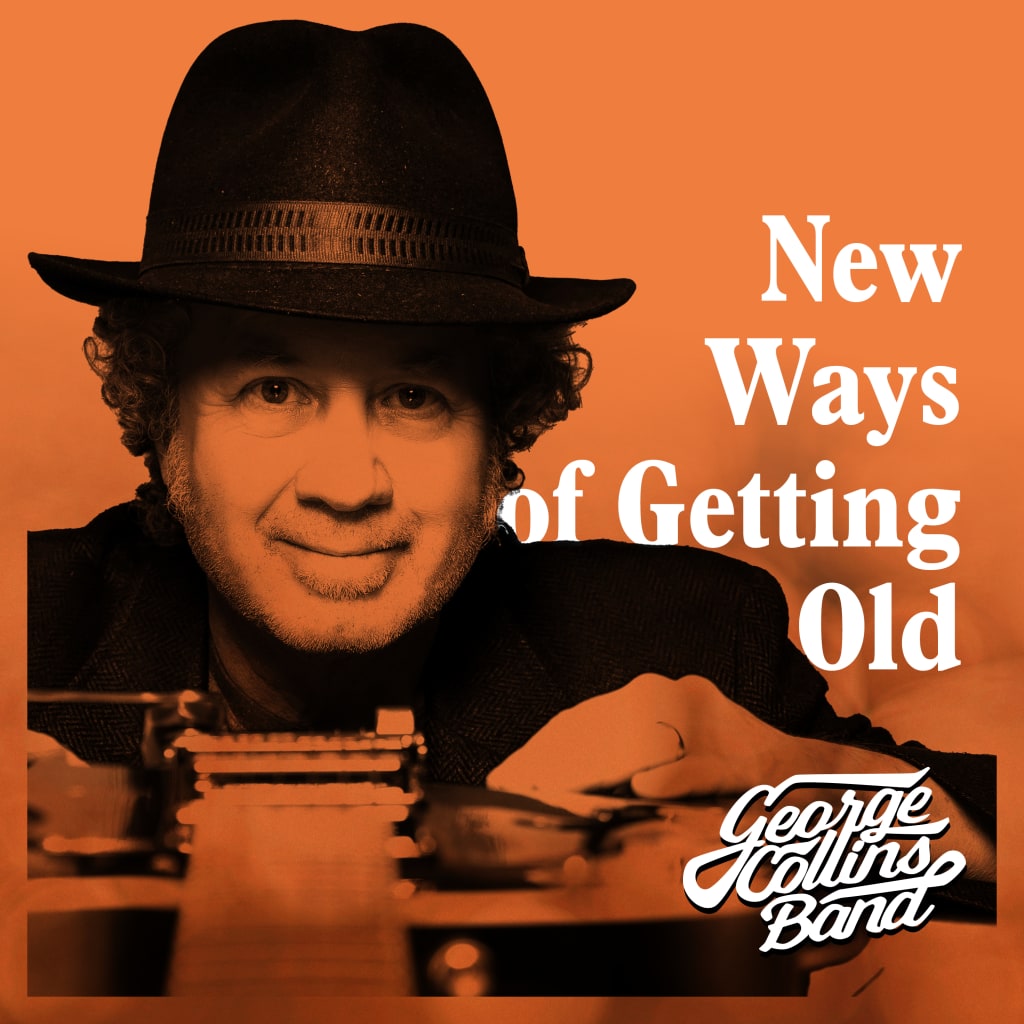
With his latest single, “What Living Is For,” George Collins continues to prove that creative momentum doesn’t fade with time. It only deepens.
Taken from his forthcoming album New Ways of Getting Old, the song captures a spirit of forward motion, optimism and hard earned perspective, blending classic rock energy with reflective songwriting.
A lifelong musician, seasoned performer and accomplished writer, Collins brings a rare combination of intellectual depth and emotional honesty to his work.
From riff driven roots to literary influences, from intimate listening rooms to international stages, his journey has been anything but conventional. In this Exclusive Interview, he reflects on the inspirations behind his new music, the experiences that shaped his voice and why, now more than ever, he’s focused on living and creating with purpose.
Your latest single “What Living Is For” is very grounded and forward looking. Was there a specific moment or realization that pushed you towards writing a song with that kind of energy?
When I started working on songs for my latest album, “New Ways of Getting Old,” I knew that I wanted to push the envelope and write in a wide variety of styles and genres to reflect the many different types of music that have influenced me, both as an artist and as a listener.
I am primarily a guitarist, and I played in many rock bands as lead guitarist in my younger years. For the new album, I wanted to get back to my roots and write some songs that were more rock oriented and riff-driven than much of my recent work.
This single leans into momentum and action rather than reflection. Did that represent a conscious shift for you creatively, or did it happen organically?
Once I came up with the riff for “What Living Is For,” I started searching for a suitable subject. The riff is propulsive with a lot of forward energy and momentum, so I knew it was going to be a positive, uplifting song about going for the gusto and living life to the max. I considered various lyrical scenarios, then hit upon the idea of a guy climbing up a mountain and jumping off with a hang glider. These images are perfectly captured in the lyric video for the song, which just premiered on my YouTube channel, George Collins Band.
You’ve had several distinct chapters in your life. How does your past outside of music shape the way you write songs now?
I have several graduate degrees, one of which is a Masters Degree in English Literature. I have read a great deal of poetry and fiction, which certainly informs my songwriting. For example, the bridge of “What Living Is For,” stating an intention to “suck the marrow out of life,” is a direct quote from the opening of Thoreau’s masterpiece, “Walden,” which I studied in depth many years ago in grad school. As T.S. Eliot once said, “Mediocre artists borrow; great artists steal.”
You perform regularly, in very different places, including Prague and the United States. How do those environments influence your songwriting and the way you connect with audiences?
The Hard Rock Café in Prague caters primarily to foreign tourists drinking and partying, so my shows there tend to focus more on well known, upbeat cover songs that folks can sing along with. The Bluebird Café in Nashville, however, is what’s known as a “listening room,” where songwriters present their original songs and the audience sits in rapt, respectful silence. Cover songs are forbidden, as is casual chit chat when a song is being performed – it’s more like a classical music concert. Key West is also a tourist and party town (like the Broadway strip in Nashville), and while audiences want to hear songs they know, they are also open to hearing originals – especially if they’ve had enough to drink!
What artists or genres have most influenced your sound and approach to music?
Too many to mention! My earliest memories are of me sitting in our family rec room and listening to The Beatles’ “Rubber Soul” in December 1965, when I was turning four years old. The Beatles are without a doubt my biggest single influence. I had older brothers and cousins who turned me on to music as a boy, so during the late 1960s I was heavily into all the British Invasion bands but also Motown and Soul and the Woodstock generation groups (my cousins were there and told me all about it).
During the early 1970s I was into the classic singer/songwriters, and then psychedelic and progressive rock, then Southern Rock, and then the British New Wave. During the 1980s and 1990s, it was alt rock and grunge. And I’ve always been into classical, jazz and blues.
My tastes are eclectic and I can listen to many different styles of music in a single sitting – for me, the only barometer is quality.
How do you hope listeners feel after hearing your music?
It depends on the song – some tunes are more emotional and reflective, while others are more uplifting and energetic. I am generally a positive and optimistic person by nature, and I believe that comes through in my songwriting, so I hope people feel empowered and more alive after listening to my music – even if it's a sad song.
Can you share a behind-the-scenes moment from your creative process that reflects your approach to songwriting?
My recent single, “New Way,” is the leadoff track for my new album, “New Ways of Getting Old.” I had this killer riff kicking around in my head for years (not really in my head – I record all sorts of musical scraps and am always scribbling down lyrical ideas).
One day I randomly recalled a line from one of my favorite movies, “A Clockwork Orange,” in which Georgie, one of Alex’s ultra-violent Droogs, attempts to take over the gang, informing Alex that Georgie’s coup is “Part of the new way.” Ever since my student days, I have always used that line (in my best Droog-y accent) whenever I wanted to turn over a new leaf and make a fresh start.
Then I realized that line perfectly matched the rhythm of the riff – it was like a match made in heaven. Once I had the lyrics and the riff lined up, I wrote the rest of the song very quickly. This happens very often in my songwriting – I’ll combine an old musical scrap with a lyrical idea that I may have jotted down years ago, and Voila! A fresh, brand new song is born.
As someone who came to music full time later on in life, how has that affected your relationship with ambition, success and creative fulfillment?
I was actually playing music full-time back in my twenties, but I never broke out of the local club scene, so I pivoted and pursued an international business career instead. Now, decades later, I’m older and hopefully wiser and I don’t feel the pressure to be the next Bruce Springsteen as I did in my younger years. I had a wonderful and fulfilling business career, I have a beautiful and loving family, I have lived and travelled all around the world, and I consider myself the luckiest man alive that I now have the opportunity to work on my music full-time again. I’m just trying to create the best music I can and share it with as many people as possible – that, to me, is the definition of success and creative fulfillment.
What’s next for you - any upcoming releases or projects you’re excited about?
I’m currently releasing a new single from “New Ways of Getting Old” every eight weeks, with the videos rolling out shortly thereafter. I am also writing songs for my next album (working title: “No Artificial Ingredients”). In parallel, I’m actively pitching to Hollywood producers a screenplay I’ve adapted from a novel I’ve written, a “jazz-infused love story” called PLAYING THE CHANGES, which will be published later this year. So there is never a dull moment around here!
About the Creator
Keep reading
More stories from Whitney Miller and writers in Beat and other communities.
Tony Saint Tone Finds His Groove in "The Shift (Into the Light)"
With his latest single, “The Shift (Into the Light),” veteran singer songwriter Tony Saint Tone delivers a vibrant, groove driven song that feels perfectly timed for a world craving optimism and forward motion.
By Whitney Miller5 days ago in Beat
I've Just Realized
The President doesn't understand music. There. It felt very good to write that; it's some thing I just realized today. Oh , yes; he plays it. He TRUMPets it in rallies and meetings, pumps it across the airwaves when he gathers up our minutes waiting for his late arrival.
By Judey Kalchik a day ago in Beat
When True Love Never Questions Your Soul
“And she’s going to learn that this life will hit you, hard, in the face, wait for you to get back up, just so it can kick you in the stomach but getting the wind knocked out of you is the only way to remind your lungs how much they like the taste of air.” — Sarah Kay’s Poem — If I Should Have a Daughter
By Chantal Christie Weiss3 days ago in Humans


Comments
There are no comments for this story
Be the first to respond and start the conversation.