
Urban Hieroglyphics: The High-Stakes Theater of Transit Art
Steel Canvases and Concrete Chronicles: Decoding the Motivations Behind the Global Graffiti Movement

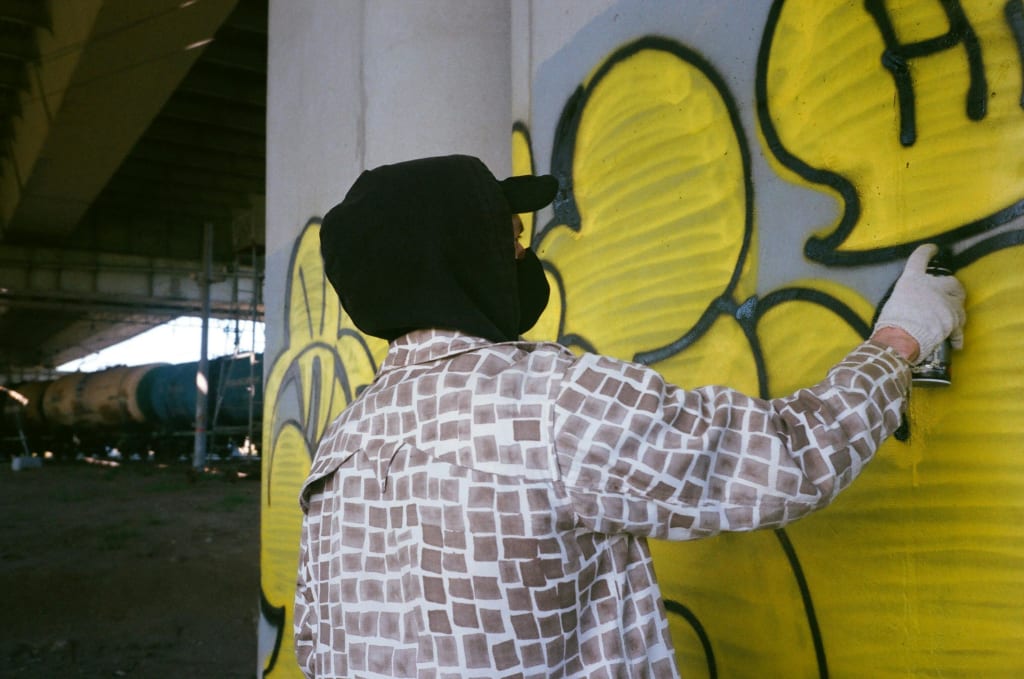
The city breathes, but it also speaks. To the average commuter hurrying toward a subway platform or stuck in gridlock on a concrete overpass, the vibrant streaks of aerosol paint across a train car or the jagged lettering on a bridge pillar are often dismissed as "visual noise." However, to a clandestine global network of artists, these are not mere marks of defiance; they are a sophisticated, high-stakes language of reclamation. The phenomenon of painting on trains and public infrastructure is perhaps the most enduring and controversial art movement of the modern era, a persistent shadow that refuses to be erased.
The Steel Gallery: Why Trains?
In the hierarchy of the "writing" world, the train is the holy grail. Whether it is the New York City subway systems of the 1970s or the intercity freight lines crossing the European Union today, the train serves a singular, powerful purpose: mobility.
When an artist paints a stationary wall, the audience is local. But when they "bomb" a train—a process often involving high-risk infiltration of secure rail yards—the artwork becomes a rolling billboard. It travels through diverse neighborhoods, across socio-economic borders, and into the eyes of thousands who would never step foot in a traditional gallery. For the writer, the train is a living organism that carries their name (their "tag") through the veins of the city.
Companies like Amtrak in the U.S., Deutsche Bahn in Germany, and SNCF in France spend millions annually on chemical removal and high-tech surveillance. Yet, the allure remains. Why? Because in a world where digital fame is fleeting, there is an undeniable, visceral permanence to seeing several tons of steel carrying your colors through a rain-slicked station at dawn.
The Architects of the Night: Who Are They?
Contrary to the "hoodlum" stereotype perpetuated by mid-century media, the modern graffiti subculture is a startlingly diverse demographic. It includes professional graphic designers, blue-collar laborers, and even students from prestigious art institutes.
They operate under a strict, self-imposed meritocracy. You aren't respected because of your wealth or background; you are respected based on your "flow" (stylistic execution) and your "ups" (how many difficult locations you’ve managed to paint). Behind the masks and the smell of propellant lies a community driven by an obsession with typography and spatial awareness. They are the "Vandals of Elegance," individuals who spend weeks sketching in "black books" only to execute a piece in twenty minutes under the threat of arrest.
The Message in the Motion: What Do They Want?
The primary objective of most street and transit art is, ironically, the most human one: to be seen. In an urban environment dominated by corporate advertising—where every square inch of visual space is sold to the highest bidder for insurance or soft drinks—graffiti is a non-consensual reclamation of the public eye.
The Assertion of Self: In a sprawling metropolis of millions, it is easy to feel invisible. A "tag" on a bridge or a "whole-car" on a train is a defiant shout of "I am here."
The Aesthetic War: Many artists view the gray, brutalist architecture of modern cities as a form of visual oppression. By introducing "Wildstyle" lettering—complex, interlocking characters that require an educated eye to decode—they are attempting to "beautify" what they perceive as a sterile environment.
Political Subversion: While much of the work is ego-driven (the cult of the name), a significant portion of street art serves as a grassroots newspaper. From the murals in the West Bank to the political stencils seen across London and Paris, the street is the only place where the message cannot be censored by a corporate editor.
The Engineering of the "Burner"
The technical skill required to paint a bridge or a moving train is immense. Artists must account for the porousness of concrete, the slickness of industrial enamel, and the wind resistance of the structures.
The "Piece" (Short for Masterpiece): These are large, multi-colored works that showcase the artist's ability to blend colors and create 3D effects with nothing but a spray can.
The "Throw-up": Quick, bubbly letters, usually in two colors, designed for maximum visibility with minimum time on site.
The "Heaven Spot": Painting on the highest points of bridges or buildings. These are the most dangerous and, consequently, the most respected.
The Cost of Expression vs. The Value of Culture
The tension between city authorities and artists remains a stalemate. Cities like Melbourne, Australia, and Berlin, Germany, have attempted to "sanitize" the movement by creating "Legal Walls," hoping to divert the energy away from trains and bridges. While this has given rise to the world-renowned "Street Art" scene—led by figures like Banksy or JR—it hasn't stopped the clandestine writers.
To the "hardcore" writer, a legal wall lacks the "adrenaline" and the "authenticity" of the illegal spot. There is a sacredness to the risk. The act of painting becomes a performance where the artist is both the protagonist and the fugitive.
Final Thoughts: A Permanent Dialogue
We often talk about "cleaning up" our cities, but a city without graffiti is a city that has stopped talking to itself. Whether you view it as a blight or a blessing, the painting of trains and bridges is a testament to the human desire to leave a mark on an indifferent world.
These artists are the unofficial archivists of our urban evolution. They remind us that the city is not just a place to work and consume, but a canvas to be contested. As long as there are trains to catch and bridges to cross, there will be someone in the shadows, shaking a can of paint, waiting for the guard to turn his head
About the Creator
yusuf selho
Crypto analyst and financial writer providing in-depth insights, market trends, and investment strategies. Simplifying complex concepts to help you make informed decisions. Fol the latest updates and opportunities in the digital asset spac
Keep reading
More stories from yusuf selho and writers in Art and other communities.
The Lunar Check-In: Engineering the First Five-Star Stay in the Stars
The silent, silver plains of the Moon—once the exclusive playground of Cold War pioneers and robotic rovers—are about to get a lot more hospitable. We aren’t just talking about research outposts or "survival pods" anymore. We are talking about high-thread-count sheets, panoramic views of the "Earth-rise," and the logistical miracle of hospitality at 1/6th gravity. The dream of the Lunar Hotel is no longer confined to the pages of 1950s pulp fiction; it is currently being drafted on the CAD programs of the world’s most ambitious aerospace firms.
By yusuf selho3 days ago in Wheel
'Till Death We Do Art
There would be nothing divine in this world without art. Nature may surpass the divine to all intents and purposes, but like everything it absorbs and is absorbed by, it remains here, stuck on the surface of this world, ever-present, physically bound to the universe.
By Avocado Nunzella BSc (Psych) -- M.A.P 23 days ago in Art
Heavenly Harmonies and Heavy Criticisms: The Complex Rise of Bethel Music
Heavenly Harmonies and Heavy Criticisms: The Complex Rise of Bethel Music Walk into almost any contemporary Christian church on a Sunday morning—whether in London, Lagos, or Los Angeles—and you are almost guaranteed to hear their music.
By Nivard Anna3 days ago in Art
Why Didn't Anyone Tell Us
Men, move along. This is not for you. This is for the women. I was forty-five when I began menopause. It is pretty young for that to be going on in a woman’s life, but I had undiagnosed PCOS, my entire life. Thank you to all the gynecologists I had seen my entire life. That in itself should encourage women to keep seeking second opinions, especially when you are not getting correct answers or any at all.
By Alexandra Granta day ago in Humans


Comments