
The Silent Architect: Why Your Mental Sanctuary is Your Greatest Project
"Reclaiming your internal sanctuary from the noise of a digital world that never sleeps."

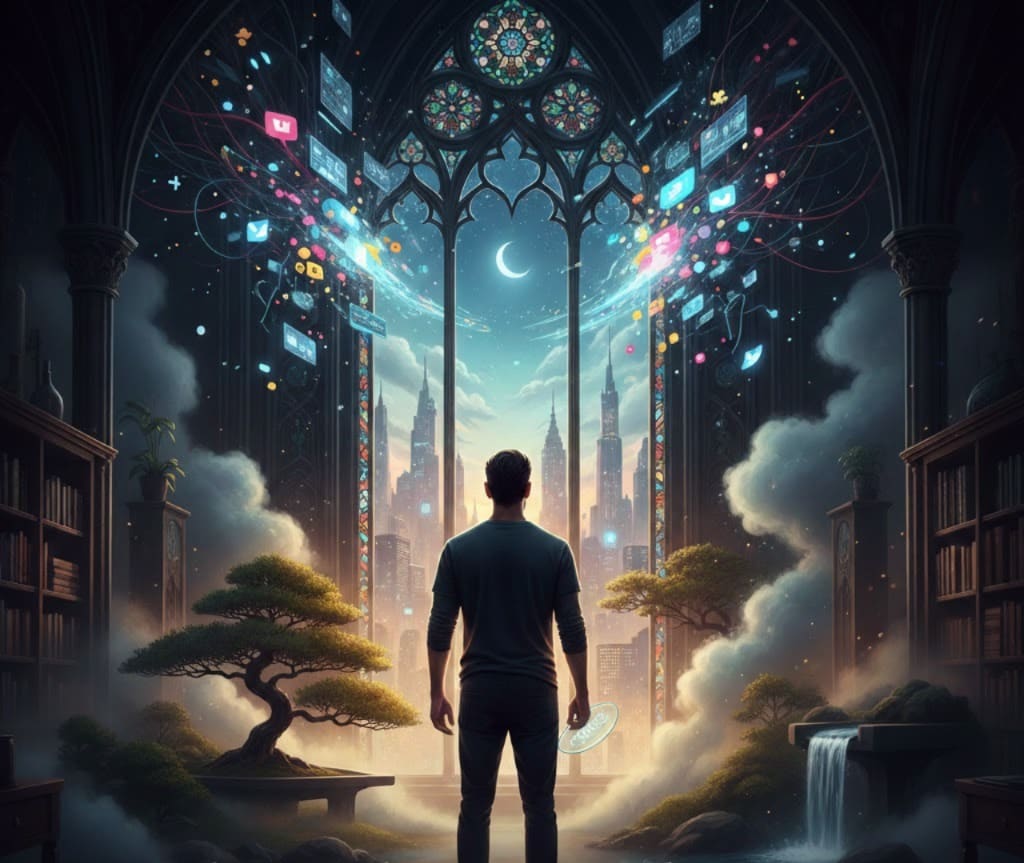
How are you doing? No, let’s strip away the social mask for a second. Beyond the "I’m fine" and the habitual nod—how is the person living inside your head actually breathing?
We spend our lives decorating the outside. We buy the clothes, we chase the titles, we curate the perfect digital galleries. But we often forget that we are the only ones who have to live inside our own minds 24/7. Your mental well-being isn't just a "buzzword" or a luxury reserved for the weekends; it is the silent architect of your entire reality. It dictates how you taste your food, how you hear music, and how you survive the hurricanes that life inevitably sends your way.
The Modern Siege on the Soul
In a post-pandemic world, the lines between "office" and "home" have blurred into a gray smear of constant connectivity. We are the first generation in history to carry a portal to every global crisis in our pockets. We spend ten hours a day staring at glowing rectangles, our brains overstimulated and our spirits underfed. This high-stress environment isn't just tiring; it’s corrosive.
When your mental health begins to fray, your body tells the story that your mouth refuses to speak. Those unexplained headaches, the tightness in your chest that feels like a ghost’s hand, the exhaustion that sleep can’t cure—these are not failures of your body. They are sirens. They are your system’s way of saying: "I am spread too thin."
The Pillars of a Resilient Mind
If we want to thrive, and not just survive, we must rebuild our internal sanctuary. Here is how we start:
1. The Power of "Not Yet"
As someone who has faced their own shadows, I’ve learned that the narrative we feed ourselves is our most potent medicine. When you face a mountain, don't tell yourself "I can't climb this." Tell yourself "I can’t climb this yet." That small, three-letter word—yet—is the bridge between despair and hope. It acknowledges the struggle while protecting the potential.
2. Radical Boundaries
We live in a culture of "Yes." Yes to more work, yes to more social obligations, yes to more screen time. But every "yes" to someone else is often a "no" to yourself. Learning to say "no" is not an act of selfishness; it is an act of survival. Setting boundaries is how you tell the world that your peace is not up for negotiation.
3. Mindfulness: The Art of Being Here
Most of us live in the "replays" of the past or the "previews" of the future. We rarely inhabit the present. Mindfulness isn't about sitting cross-legged on a mountain; it’s about noticing the steam rising from your coffee, the weight of your feet on the ground, and the rhythm of your breath. It’s about finding the "pause" button in a world that only knows "fast-forward."
4. The Chemistry of Connection and Motion
We are biological creatures. We were not meant to be sedentary spirits. Moving your body changes the chemistry of your brain. It flushes out the cortisol and invites in the dopamine. Combine that with genuine human connection—not a "like" on a photo, but a real conversation—and you begin to heal. Sharing your story, your fears, and your "ugly" truths with someone you trust is like lancing a wound. It lets the pressure out.
The Juggling Act
Life often feels like juggling glass plates. Work, family, health, finances, dreams. We try so hard to keep them all in the air that we forget we are human, not machines. Eventually, the plates will fall. The secret isn't in never dropping a plate; it’s in knowing which plates are plastic and which are glass. Your mental health is the glass plate. Everything else? Most of it is plastic. It can bounce. You can pick it up later. But once your spirit shatters, the pieces are much harder to put back together.
Acceptance: The Final Frontier
There is a profound freedom in accepting the things we cannot change. We waste so much energy fighting the weather, the past, and the choices of others. When you stop trying to control the uncontrollable, you suddenly have a massive surplus of energy to fix what you can control: your reactions, your self-care, and your kindness.
A Note from Adam Noir
I speak from the heart because I know what it’s like to feel triggered by the past, to feel spread too thin, and to wonder if the noise will ever stop. But I also know the strength that comes from surviving those days. The days when the memories don't win are the days when we realize how truly powerful we are.
You are the author of your own story, but you don't have to write every chapter in a state of exhaustion. Take the break. Drink the water. Close the screen. Look at the sky.
My name is Adam Noir. I am a writer, a seeker, and like you, a work in progress. If these words found a home in your heart today, follow my journey as we navigate the beautiful, messy complexity of being human together.
About the Creator
'Till Death We Do Art
There would be nothing divine in this world without art. Nature may surpass the divine to all intents and purposes, but like everything it absorbs and is absorbed by, it remains here, stuck on the surface of this world, ever-present, physically bound to the universe.
By Avocado Nunzella BSc (Psych) -- M.A.P about 18 hours ago in Art




Comments
There are no comments for this story
Be the first to respond and start the conversation.