
How to Find reliable sculpture supplier?
some useful tips you want to know
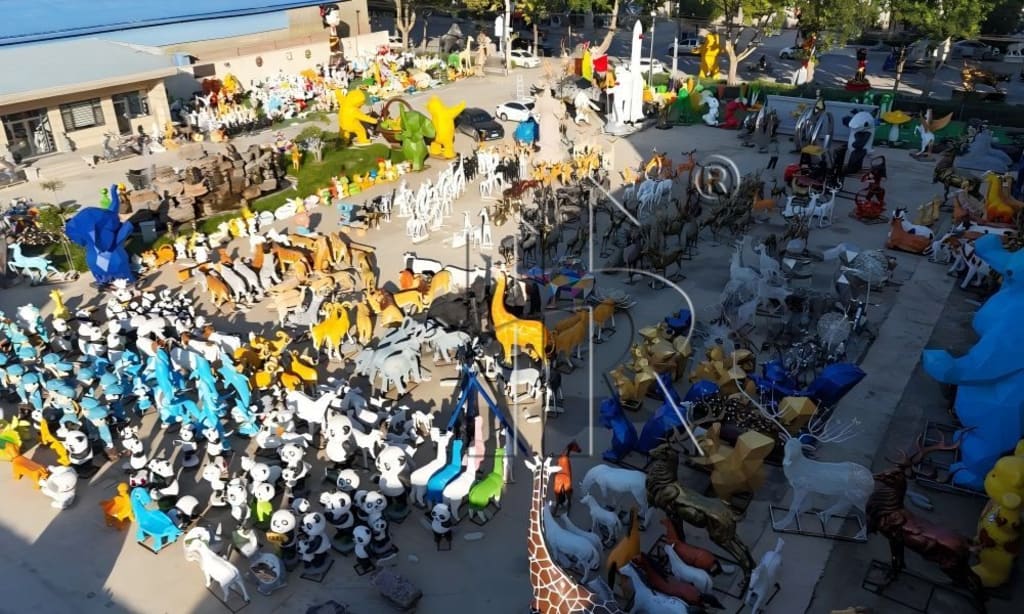
When sourcing fiberglass sculptures, buyers often discover that the term “supplier” can refer to different types of businesses. Understanding these categories helps clarify expectations regarding production capacity, quality control, and project management.
Trading companies typically offer a wide range of styles and product options. In many cases, production is outsourced to various workshops. While this model allows flexibility in sourcing, quality consistency may vary between projects, particularly when custom specifications are involved.
Small workshops are another common type of supplier. These operations may handle simple designs or limited quantities. However, they may not always maintain standardized structural systems, documented production processes, or experience with large-scale commercial and export projects. This can affect consistency in complex or outdoor installations.
Dedicated fiberglass sculpture factories generally manage multiple production stages in-house. These stages may include mold development, internal structural fabrication, fiberglass layering, surface finishing, and painting. In-house production can provide more direct control over materials, timelines, and technical coordination.
Key Factors to Consider Before Purchasing Fiberglass Sculptures
After identifying supplier types, buyers typically evaluate several technical and practical factors before making a decision.
1. Structural System
The internal framework is a critical component of any fiberglass sculpture. Steel supports, reinforcement methods, and fiberglass thickness influence durability during transportation, installation, and long-term outdoor exposure. For large or public installations, structural planning plays an important role in safety and longevity.
2. Surface Treatment and Finishing
Surface quality affects both appearance and durability. Resin selection, paint systems, and protective coatings contribute to resistance against ultraviolet exposure, moisture, and temperature fluctuations. Insufficient surface protection can result in fading, cracking, or surface degradation over time.
3. Customization and Technical Adaptation
Even when selecting an existing design, modifications are often required. Adjustments may include changes in size, color schemes, base structures, or installation methods. A supplier’s ability to interpret drawings, provide technical feedback, and accommodate revisions is an important part of the evaluation process.
How Fiberglass Sculpture Projects Are Typically Sourced
In most cases, fiberglass sculpture procurement follows a structured process rather than a single-step purchase.
The process often begins with visual references, design concepts, and preliminary budget discussions. Buyers may communicate with multiple suppliers to compare technical responses, estimated timelines, and production approaches.
During early discussions, professional suppliers generally request detailed information about:
Installation environment (indoor or outdoor)
Size limitations or transportation constraints
Intended usage (decorative, interactive, structural)
Local climate conditions
Clarifying these factors before production helps reduce misunderstandings and design adjustments later in the project.
Throughout manufacturing, project communication may include progress updates, confirmation of dimensions, and review of surface finishes. For export projects, packaging methods, container loading plans, and installation guidance are also part of the overall workflow.
Over time, some buyers establish ongoing cooperation with factories that can support repeated orders or long-term development projects. In such cases, consistency in production standards and communication processes becomes especially important.
About the Creator
Shenzhen Ruiheng Crafts
https://www.craftsornaments.com/
Keep reading
More stories from Shenzhen Ruiheng Crafts and writers in Art and other communities.
Choosing the right thickness for stainles steel sculpture
When planning stainless steel sculptures, many people initially focus on shape, surface treatment, or size, while overlooking the thickness of the stainless steel itself. In practice, thickness directly influences structural safety, visual proportion, fabrication difficulty, and long-term performance. Selecting the right thickness is not simply a matter of “the thicker, the better,” but rather a process of matching material properties to design intent and environmental conditions.
By Shenzhen Ruiheng Crafts23 days ago in Art
'Till Death We Do Art
There would be nothing divine in this world without art. Nature may surpass the divine to all intents and purposes, but like everything it absorbs and is absorbed by, it remains here, stuck on the surface of this world, ever-present, physically bound to the universe.
By Avocado Nunzella BSc (Psych) -- M.A.P 11 days ago in Art




Comments
There are no comments for this story
Be the first to respond and start the conversation.