
Top 10 MVP Software Development Examples
Explore the top 10 MVP software examples like Airbnb, Uber, and Dropbox. Learn how startups used MVPs to validate ideas and build global success stories.

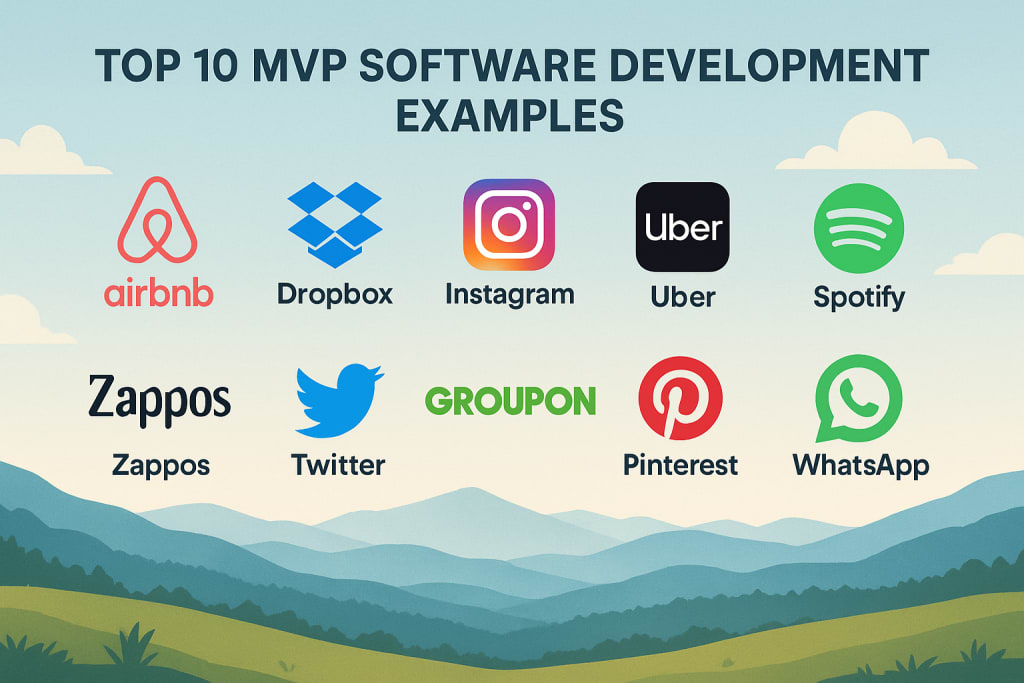
Starting a new product in today’s software world is tough. Many startups don’t fail because their ideas are bad they fail because they make the product too big too early, before knowing what users really want. That’s why the concept of an MVP in software development has become so important. It’s all about starting small, testing your idea in the real world, and learning from genuine user feedback before investing heavily.
This approach saves time, reduces costs, and helps businesses refine their vision based on data, not guesses. Some of the world’s most successful companies like Airbnb, Dropbox, and Uber followed this path, proving that big results often start from simple beginnings. In this article, we’ll explore 10 real-world MVP examples to see how each company turned a basic concept into a global success story.
1. Airbnb – From Simple Idea to Global Platform
Airbnb’s founders began with a simple hypothesis: people would be willing to pay to stay in a stranger’s home if it was convenient and affordable. Instead of building a sophisticated platform with advanced features like search filters, reviews, or secure payments, they focused on testing the core assumption: would the concept of peer-to-peer home rental work?
Key features in their MVP:
- Listings with photos and descriptions: Highlighted a few rooms in San Francisco.
- Manual booking process: Instead of automating payments, bookings were coordinated directly by the founders.
- Basic user communication: Guests and hosts exchanged emails to coordinate stays.
2. Dropbox – Testing Demand Before Building
Instead of building a full file synchronization app, Dropbox decided to gauge user interest first. Developing the platform would take months, so testing the concept upfront reduced risk.The MVP was a short video showing how Dropbox would work, walking viewers through seamless file syncing across devices. This video went viral in tech communities, generating thousands of sign-ups for the beta version.
How it shaped product development:
The massive interest confirmed that there was a real demand for the product. Dropbox could then prioritize development on the features users cared about most, such as cross-device syncing, shared folders, and reliability, rather than wasting time on unnecessary additions.
3. Instagram – Rapid Market Validation
Instagram started as Burbn, an app with multiple features, including check-ins, gaming, and photo-sharing. The founders noticed users were primarily engaging with the photo feature, so they pivoted to focus solely on photo-sharing.
Focus on simplicity and user engagement:
The MVP included essential photo features like uploading, editing, and sharing. Users could interact with photos through likes and comments, but the app avoided unnecessary complexity.
Impact on growth trajectory:
This focus allowed Instagram to gain early traction quickly. By launching a simple, highly usable product, the team could scale effectively and attract a loyal user base. Instagram’s pivot demonstrates that observing user behavior and simplifying features can be more powerful than overloading an app with functions.
4. Uber – Solving a Real Problem Quickly
Uber started as UberCab in San Francisco, testing whether people would pay for reliable rides via an app.
Testing with limited users and cities:
The MVP targeted a small geographic area with limited drivers. Pricing, routing, and communication were manually handled.
Learning from user feedback:
Feedback revealed issues like wait times, app usability, and pricing concerns.
5. Spotify – Validating Music Streaming Needs
Spotify’s initial product was simple: users could search for songs and stream music instantly. They avoided overbuilding features like social integration or offline listening initially.
Focus on core functionality for early adopters:
The MVP targeted early adopters who valued speed, accessibility, and ease of use. Features like curated playlists, recommendation algorithms, and social sharing were added based on actual user behavior.
Iteration based on feedback:
Spotify constantly collected user data, learning which features improved engagement and retention. The company expanded its platform gradually while ensuring that the core music experience remained smooth and reliable.
6. Zappos – Proving Demand Before Inventory
Zappos founder Nick Swinmurn wanted to test online demand for shoes. Instead of stocking inventory, he photographed shoes from local stores and posted them online.
Insights gained from initial customers:
When orders came in, Swinmurn bought the shoes and shipped them himself. This validated demand without significant financial risk.
Scaling strategy:
Once the concept was validated, Zappos invested in a warehouse, website improvements, and logistics. The MVP allowed them to learn customer preferences and optimize the business model before scaling.
7. Twitter – Minimal Features, Maximum Engagement
Twitter started as a side project called “twttr,” allowing users to post 140-character updates.
Lessons from user adoption:
The minimalist approach encouraged frequent posting. Users found it simple, intuitive, and engaging.
Evolution to a global platform:
Over time, Twitter added features like hashtags, retweets, and media sharing. However, the MVP’s simplicity allowed rapid adoption and viral growth.
8. Groupon – Lean MVP for Market Testing
Groupon began with manual processes. Deals were sent as PDFs to subscribers, and redemption was tracked manually.
Testing market interest before building complex systems:
The approach validated demand for daily deals without building a full platform. It also helped identify which types of deals attracted users most.
Growth from MVP insights:
Once validated, Groupon developed a platform for automated deal delivery and payment, scaling rapidly across cities and industries.
9. Pinterest – Visual Bookmarking MVP
Pinterest launched as a basic platform for pinning images to boards. Features were minimal, focusing on usability and core functionality.
Iterative feature additions based on engagement:
Following boards, search functionality, and social sharing were added gradually based on analytics and user feedback.
Scaling to full product:
Starting with a simple MVP allowed Pinterest to focus development on features that added real value. This resulted in a product that scaled effectively to millions of users.
10. WhatsApp – Messaging Simplified
WhatsApp launched as a fast, reliable messaging app, focusing only on sending text messages.
MVP launch strategy:
It targeted a small group to test reliability and usability before scaling. There were no ads or additional features initially.
Rapid adoption and network effects:
Because it solved a universal problem simply, WhatsApp spread organically. Users adopted the app quickly due to its speed, simplicity, and reliability.
Conclusion
These 10 MVP examples prove that successful products often start small, with just enough features to test an idea and gather user feedback.
By focusing on solving core problems, validating assumptions, and iterating based on real-world insights, startups can reduce risk, conserve resources, and scale effectively.
Whether it’s Airbnb testing trust in peer-to-peer rentals or Dropbox validating demand through a simple video, the lesson is clear: simplicity, focus, and learning from users are the foundations of long-term success.
About the Creator
Nico Gonzalez
Hi, I'm Nico Gonzalez! I'm passionate about technology, software development, and helping businesses grow. I love writing about the latest trends in tech, including mobile apps, AI and more.
Keep reading
More stories from Nico Gonzalez and writers in 01 and other communities.
How Airlines Benefit from Global Distribution Systems
In today’s highly competitive airline industry, reaching a wide customer base, maximizing revenue, and ensuring operational efficiency are critical for success. Airlines no longer rely solely on direct bookings through their websites or ticket counters. Instead, they increasingly depend on advanced technology platforms to manage reservations, connect with travel agents, and tap into global markets.
By Nico Gonzalez4 months ago in 01
What Tampa Startups Learn After Shipping Their First App?
Ryan Matthews remembers the launch day clearly. The app went live. Friends shared the link. Early users signed up. A few congratulatory messages came in from investors and mentors. For a brief moment, it felt like the hardest part was over.
By Mary L. Rodriquez7 days ago in 01
The State of Mobile Innovation: A Indi IT Solutions Report on the US App Economy
You know what's wild? The US app economy isn't just growing anymore. It's bloody transforming. Right in front of us. And most people reckon they understand what's happening, but the data from 2026 tells a completely different story.
By Sherry Walker4 days ago in 01
One Unchecked Box
"Republished" because it was the only way to add the embed for the newly recorded audio version of this story due to the Top Story badge. Plus it serves as a nice, informal announcement of the podcast's revival for another season (go subscribe!):
By Stephen A. Roddewig6 days ago in Fiction


Comments
There are no comments for this story
Be the first to respond and start the conversation.