
The Year the Upgrade Cycle Broke
When AI Data Centers Consume the Wafer Supply, Workstation GPUs Become Tradable Infrastructure

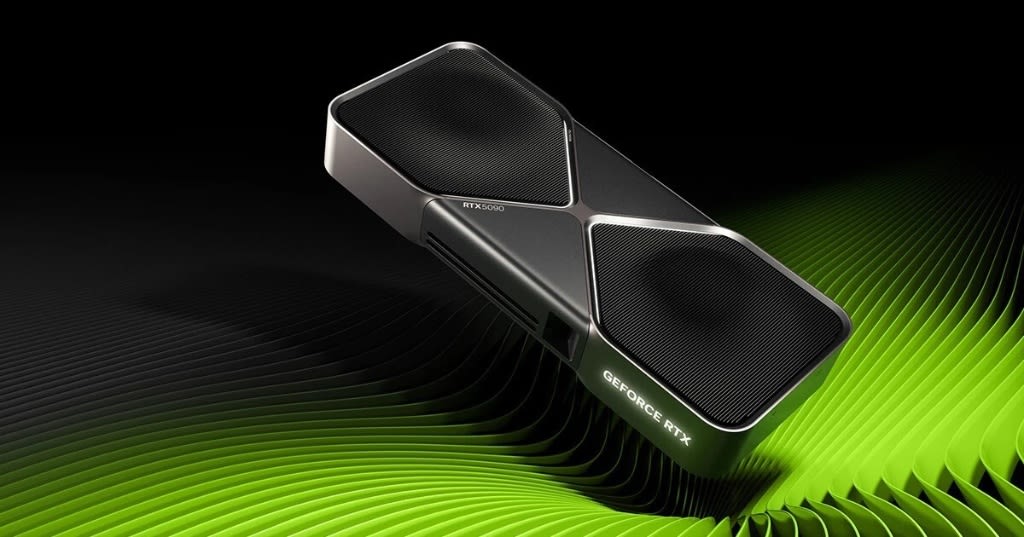
In Q1 2026, the familiar rhythm of the IT hardware market has fractured. For more than a decade, enterprises could plan around predictable two-year GPU refresh cycles. That cadence is gone. The shift did not come from a lack of silicon innovation—it came from a deliberate reprioritization.
NVIDIA, the dominant force in accelerated computing, has effectively stepped back from the consumer refresh model. Industry supply-chain data points to the cancellation of planned RTX 50-series “Super” updates and a delay of the next-generation RTX 60-series architecture to 2028. The implication is structural: gaming and mid-tier workstation GPUs are no longer the primary destination for advanced wafers.
In practical terms, the “G” in GPU now signifies general AI compute rather than graphics.
Scarcity by Design: The AI-First Allocation
The constraint is strategic, not technical. Data-center demand for AI training silicon—H100, B200, and Blackwell-class accelerators—has eclipsed the entire gaming segment in both revenue and margin. Foundry capacity, advanced packaging, and high-bandwidth memory are being routed toward those products.
A second bottleneck compounds the effect: limited availability of next-generation GDDR7. When memory supply tightens, manufacturers allocate it to the highest-return SKUs. Consumer cards lose that prioritization.
Observed market impacts include:
- Production reductions: Estimated 20–40% cuts to RTX 50-series volumes
- Roadmap contraction: Elimination of mid-cycle “Super” refreshes
- Price inflation: Flagship retail pricing exceeding MSRP by ~75% in constrained channels
Organizations that budgeted for a 2026 workstation refresh are encountering a simple outcome: constrained availability.
The Halo Effect: 4090 and A6000 as Compute Assets
Reduced next-generation supply has redirected demand toward previous-generation high-VRAM products. The RTX 4090 has transitioned from a gaming flagship to a local LLM and rendering accelerator. Secondary-market transactions frequently exceed $2,200, roughly 40% above its original MSRP.
Workstation-class boards show similar behavior. The RTX A6000 has traded in the $5,085–$6,300 range over a 90-day window, driven by enterprise demand for large memory footprints.
This is a reversal of historical depreciation curves. Instead of the typical 20–30% annual value loss, select SKUs are experiencing negative depreciation due to:
- Memory scarcity increasing replacement cost
- Extended roadmap gaps delaying next architectural jumps until 2028
- Cluster fragmentation, where SMEs assemble multi-GPU nodes from used inventory rather than purchasing full AI racks
The secondary market has effectively become the primary procurement channel for high-end compute.
AMD as a Pressure Relief Valve
AMD has re-entered the conversation as a supply stabilizer. Public disclosures at CES 2026 indicated secured VRAM supply sufficient to avoid the acute shortages affecting NVIDIA’s stack.
Cards such as the Radeon RX 9070 XT and RX 7900 XTX provide:
- 16–24 GB VRAM configurations
- Strong rasterization and media performance
- Viable acceleration for OpenCL/HIP workflows (Blender, DaVinci Resolve)
They remain constrained by software ecosystem factors—specifically CUDA dependency in many AI pipelines—and AMD’s sub-10% market share limits global impact. AMD mitigates pressure; it does not replace the NVIDIA compute stack.
Operational Strategy for 2026–2028
The planning model must shift from cyclical refresh to asset lifecycle optimization.
1. Monetize Idle Inventory
Decommissioned 30- and 40-series GPUs are at peak resale value. Liquidation generates capital to offset inflated replacement costs.
2. Segment Workloads by Framework Dependency
CUDA-agnostic pipelines can migrate to AMD hardware to reduce acquisition cost and supply risk.
3. Extend Service Life
With the next major architectural transition deferred to 2028, preventive maintenance—thermal interface replacement, fan refurbishment, firmware updates—becomes a reliability requirement rather than a best practice.
4. Reframe Procurement
Used high-VRAM GPUs should be evaluated as compute assets, not depreciating peripherals.
The Bridge to 2028
The current market is abnormal but not chaotic. Supply constraints are the logical outcome of an AI-first manufacturing strategy and limited advanced memory capacity. Those constraints will persist until the next major architecture and memory supply expansion arrive.
During this interim period, the most effective lever is asset recovery. Organizations that treat existing high-end GPUs as tradable infrastructure—rather than sunk cost—can fund incremental upgrades, maintain compute density, and avoid being locked out of a constrained primary market.
The upgrade cycle has not disappeared; it has lengthened. The organizations that adapt their lifecycle management now will enter 2028 with both capital and capacity intact.
The last, is your older hardware holding back your budget? With the old GPU at historic resale heights, now is the time to optimize your ROI. You may sell GPUs in bulk to help your business financially.
References:
Why Nvidia Cancels RTX 50 Super and Delays RTX 60 to 2028.
NVIDIA GPU Cluster Liquidation: Maximize ROI and Asset Recovery.
About the Creator
Jeff BSR
Computer Hardware Engineer
How Are Crypto Marketing Trends Reshaping Blockchain in 2026?
The blockchain and cryptocurrency ecosystem has evolved dramatically since its inception. In 2026, crypto marketing is not just about promoting a token or project; it has become a critical driver of blockchain adoption, community building, and long-term sustainability. With emerging trends, technologies, and strategies, crypto marketing is reshaping the way blockchain projects connect with users, investors, and the global audience. This blog explores how these trends are redefining blockchain growth and adoption in 2026.
By Jack santoa day ago in 01
'Till Death We Do Art
There would be nothing divine in this world without art. Nature may surpass the divine to all intents and purposes, but like everything it absorbs and is absorbed by, it remains here, stuck on the surface of this world, ever-present, physically bound to the universe.
By Avocado Nunzella BSc (Psych) -- M.A.P 5 days ago in Art




Comments
There are no comments for this story
Be the first to respond and start the conversation.