
The Developer Deficit: Why Companies Can't Find Qualified Crypto Exchange and Wallet Engineers
Exploring the Growing Talent Gap in Blockchain Technology and Its Impact on the Crypto Industry


The cryptocurrency industry faces a paradoxical crisis in 2026. Demand for blockchain infrastructure has never been higher, capital flows freely into crypto ventures, and institutional adoption continues accelerating. Yet organizations struggle desperately to hire crypto exchange developers and crypto wallet developers capable of building production-grade systems. This talent shortage represents the single greatest constraint on industry growth.
The shortage isn't simply about quantity—though that's certainly part of the problem. More fundamentally, the gap reflects a profound mismatch between the skills required for crypto exchange software development and crypto wallet app development versus what traditional software engineering programs produce. Understanding this deficit's root causes is essential for companies hoping to build or acquire the talent they desperately need.
The Unique Skill Set Nobody Teaches
Traditional computer science education prepares students to build conventional software systems. It doesn't prepare them for the unique challenges of cryptocurrency infrastructure. The skills required to hire crypto exchange developers or cryptocurrency wallet developers involve a complex intersection of disciplines that rarely overlap in traditional career paths.
Blockchain technology itself represents just one component of the required knowledge. Professional cryptocurrency wallet developers must understand multiple blockchain architectures—UTXO versus account-based models, Proof-of-Work versus Proof-of-Stake consensus, layer-1 versus layer-2 scaling solutions. Each major blockchain has unique characteristics that impact wallet implementation.
Cryptography expertise goes far deeper than what general software engineers learn. Those working in crypto wallet development services must thoroughly understand elliptic curve cryptography, hash functions, digital signatures, hierarchical deterministic key derivation, and the security implications of each implementation choice. Mistakes in cryptographic implementation can cost millions.
Financial systems knowledge is equally crucial. Engineers building crypto exchange software development solutions must understand order matching algorithms, market microstructure, liquidity provision, risk management, and regulatory compliance. These concepts typically aren't covered in software engineering programs—they're taught in finance courses that software engineers rarely take.
Security expertise specific to cryptocurrency applications represents another specialized area. Traditional cybersecurity training doesn't adequately cover attack vectors specific to blockchain systems—transaction malleability, front-running, reentrancy attacks, key extraction from memory, or social engineering targeting crypto holdings. Experienced crypto wallet development companies understand these threats intimately, but finding engineers with this knowledge is extraordinarily difficult.
The Education Gap
Universities and coding bootcamps have been remarkably slow to adapt curricula to cryptocurrency's growing importance. Most computer science programs still treat blockchain as a niche elective rather than a core competency. This educational lag directly contributes to the shortage when companies try to hire crypto wallet developers or crypto exchange developers.
A few forward-thinking universities now offer blockchain-focused programs, but these remain exceptions. Even where blockchain courses exist, they typically focus on theoretical foundations rather than practical skills needed for production systems. Students might understand how Bitcoin's consensus mechanism works without learning how to build secure wallet infrastructure.
This gap means that most qualified cryptocurrency wallet developers and cryptocurrency exchange developers are self-taught or learned through hands-on experience at crypto-native companies. This reality constrains the talent pipeline severely—there's no steady stream of graduates with relevant skills entering the job market annually.
Online education platforms have attempted to fill this void with blockchain courses and certifications. While these resources help, they cannot replace the deep expertise that comes from years of practical experience building production systems. Companies looking for senior talent to lead crypto exchange development or crypto wallet app development projects need engineers who've solved real-world problems at scale, not just completed online tutorials.
The Competition for Existing Talent
With limited talent available, competition has become fierce. Established crypto exchange development companies and cryptocurrency wallet development companies compete with well-funded startups, traditional financial institutions, and tech giants all trying to hire the same small pool of qualified engineers.
Compensation has skyrocketed accordingly. Senior engineers with crypto exchange software development company experience command total compensation packages frequently exceeding $500,000 annually. Specialists in security-critical components like wallet key management or exchange matching engines can demand even more. Mid-level engineers with just 2-3 years of relevant experience receive offers that would have been reserved for senior engineers in other domains.
Geographic arbitrage has diminished as remote work normalized. Companies can no longer simply relocate to lower-cost markets to find affordable talent. Engineers in Eastern Europe, Southeast Asia, or Latin America now command global market rates when they possess scarce blockchain expertise. The few remaining cost advantages relate to general software engineering skills, not the specialized cryptocurrency capabilities that organizations most need.
The talent shortage has also created a class of highly mobile engineers who switch jobs frequently, chasing ever-higher compensation and more interesting technical challenges. This mobility makes retention as challenging as recruitment. Companies investing heavily to hire crypto wallet developers discover these engineers leave after 12-18 months when competitors offer better terms.
Why Internal Training Programs Struggle
Faced with recruitment challenges, many organizations attempt to train existing software engineers in blockchain technologies. These initiatives rarely succeed as hoped, and understanding why reveals much about the talent shortage's depth.
Training programs can teach blockchain basics relatively quickly. Within a few months, motivated engineers can understand core concepts and build simple applications. However, developing the judgment and expertise required for production crypto exchange development services or crypto wallet development services takes much longer—typically 2-3 years of hands-on experience.
The challenge isn't just technical knowledge—it's developing intuition about security tradeoffs, understanding subtle edge cases, and learning from mistakes that only manifest in production environments. Senior cryptocurrency wallet developers and experienced crypto exchange software development company engineers possess pattern recognition built through years of debugging production issues, responding to security incidents, and optimizing performance under real-world conditions.
Additionally, training programs struggle with retention. After investing 6-12 months developing an engineer's blockchain skills, companies discover these newly trained developers become attractive to competitors. The engineer might leave before the training investment pays off, and the cycle begins again.
Successful training programs typically require a core team of experienced mentors—but finding these experienced engineers is exactly the problem companies are trying to solve. Without strong technical leadership, training initiatives produce engineers with shallow knowledge insufficient for critical infrastructure work.
The Role of Crypto Exchange and Wallet Development Companies
Specialized crypto exchange development companies and crypto wallet development companies have emerged as crucial intermediaries in the talent crisis. These firms aggregate expertise that individual companies struggle to assemble internally.
Leading cryptocurrency wallet development services maintain teams of experienced engineers who've built multiple wallet implementations. This concentrated expertise allows them to deliver solutions that would require years for internal teams to replicate. Organizations can access senior-level talent without winning bidding wars for individual engineers.
Similarly, established crypto exchange software development companies employ teams specializing in matching engines, liquidity management, and market infrastructure. They've solved problems repeatedly that in-house teams would face for the first time. This experience dramatically reduces risk and accelerates deployment.
However, even these specialized firms face talent constraints. They must continuously recruit and train engineers while delivering client projects. The best crypto wallet app development company providers invest heavily in training programs and knowledge sharing to scale their capabilities, but growth remains constrained by the same talent shortage affecting everyone else.
These companies also serve as talent development engines for the broader industry. Engineers gain experience working on multiple projects across various use cases, developing expertise more quickly than they would at single-product companies. Some eventually leave to join clients or start their own ventures, but while employed, they provide concentrated expertise that clients could not otherwise access.
Emerging Specializations Within Crypto Development
As the industry matures, we're seeing increasing specialization within crypto development. This specialization actually exacerbates the talent shortage in the short term while potentially alleviating it long term.
DeFi integration specialists represent one emerging specialty. As exchanges add decentralized finance features and wallets integrate DeFi protocols, demand grows for engineers understanding both traditional crypto infrastructure and DeFi's unique requirements. These specialists can command premiums even above general blockchain engineers.
Layer-2 scaling experts are increasingly valuable as exchanges and wallets implement Lightning Network, rollups, and other scaling solutions. These technologies require distinct expertise beyond base-layer blockchain knowledge. Companies building modern crypto wallet app development or crypto exchange development services need these specialists but find them extraordinarily scarce.
Regulatory technology specialists bridge engineering and compliance, building systems that satisfy regulatory requirements while maintaining usability and performance. As regulatory scrutiny intensifies, cryptocurrency wallet development companies and crypto exchange development companies increasingly need engineers who understand both code and compliance.
These specializations create opportunities for engineers to differentiate themselves and command higher compensation. However, they fragment the talent pool further, making it even harder for companies to find engineers with the specific expertise their projects require.
Global Talent Distribution and Immigration Challenges
Cryptocurrency talent distribution is highly uneven globally, and immigration restrictions prevent efficient allocation of available talent.
Certain regions have developed concentrations of blockchain expertise. Eastern Europe, particularly Ukraine, Russia, and Belarus, produced many early blockchain developers. Southeast Asia has growing communities in Singapore, Vietnam, and Thailand. These regions offer larger talent pools for companies willing to work with distributed teams or establish local operations.
However, immigration restrictions prevent many qualified engineers from relocating to crypto industry hubs. Visa processes are lengthy and uncertain, making international recruitment challenging. Companies trying to hire crypto wallet developers or cryptocurrency exchange developers from other countries face months-long waits and uncertain outcomes.
Remote work has partially mitigated this challenge, allowing companies to hire globally without requiring relocation. However, time zone differences, communication challenges, and regulatory complexities around cross-border employment create friction. Organizations preferring concentrated teams struggle to leverage global talent pools effectively.
The Acquisition and Acqui-hire Trend
Talent scarcity has triggered a wave of acquisitions primarily motivated by acquiring engineering teams rather than technology or market share.
Well-funded companies increasingly acquire smaller crypto exchange development companies or cryptocurrency wallet development services primarily to absorb their engineering talent. These acqui-hires cost millions but provide immediate access to teams that would take years to assemble through traditional recruitment.
The acquired technology often gets discarded or substantially rewritten, but the engineering team brings invaluable experience and expertise. An acquisition might cost $10-20 million yet deliver 15-20 experienced engineers—expensive on a per-engineer basis but potentially cheaper and faster than hiring individually in today's competitive market.
This trend creates opportunities for smaller crypto wallet app development company operations and boutique crypto exchange software development company firms. Founding teams recognize that building strong engineering teams creates acquisition value even without significant revenue or user traction.
Looking Forward: Will the Shortage Ease?
The talent shortage won't resolve quickly, but several trends suggest gradual improvement over the next 3-5 years.
Educational institutions are slowly adapting, with more universities launching blockchain programs and existing programs incorporating cryptocurrency topics. The first cohorts of students with formal blockchain education will enter the workforce over the next few years, gradually expanding the talent pool.
Developer tools and frameworks are improving, reducing the expertise barrier for blockchain development. Better abstractions allow more developers to build cryptocurrency applications without understanding every low-level detail. This democratization expands the pool of people capable of contributing to crypto wallet development or crypto exchange software development projects.
Market maturation might also help. As best practices consolidate and standards emerge, cryptocurrency development becomes more systematized and teachable. What currently requires years of experience may eventually become accessible to developers with strong fundamentals and focused training.
However, demand continues growing faster than supply. Institutional adoption, regulatory clarity, and mainstream acceptance all increase demand for qualified engineers. The shortage will likely persist throughout the 2020s, even as the situation gradually improves.
Strategies for Navigating the Shortage
Organizations must adapt their strategies to succeed despite the talent shortage.
Partner with established crypto wallet development companies or crypto exchange development services rather than building everything internally. Leveraging external expertise allows faster execution while internal capabilities develop gradually.
Invest in retention as heavily as recruitment. Losing experienced cryptocurrency wallet developers or crypto exchange developers to competitors is devastating. Competitive compensation, interesting technical challenges, clear career paths, and positive culture all matter for retention.
Build hybrid teams combining experienced blockchain engineers with strong traditional software engineers. The blockchain specialists can focus on critical security and infrastructure components while traditional engineers handle supporting systems under their guidance.
Consider strategic acquisitions of smaller development firms to instantly acquire talent and expertise. While expensive, this approach can be more effective than years of incremental hiring in extremely competitive markets.
The developer deficit represents perhaps the most significant challenge facing cryptocurrency infrastructure development in 2026. Organizations that recognize this constraint and adapt their strategies accordingly will have substantial advantages over those still treating it as a conventional hiring challenge. The talent shortage isn't temporary—it's a structural reality that will shape the industry for years to come.
About the Creator
Tarun Nagar
Tarun Nagar is the CEO of Dev Technosys, a leading blockchain development company. With a vision for innovation, he drives the company to deliver cutting-edge solutions in blockchain and decentralized technologies.
Keep reading
More stories from Tarun Nagar and writers in 01 and other communities.
White Label vs Custom Build: The $500K Decision Every Crypto Startup Must Face
Every cryptocurrency startup eventually confronts a defining strategic decision: should we build a custom wallet from scratch or implement a white label solution? This choice typically represents a financial commitment exceeding $500,000 and fundamentally shapes the company's technical capabilities, competitive positioning, and long-term flexibility.
By Tarun Nagara day ago in 01
Plastindia 2026 Showcases Advertising robot Odigo For Plastics convention
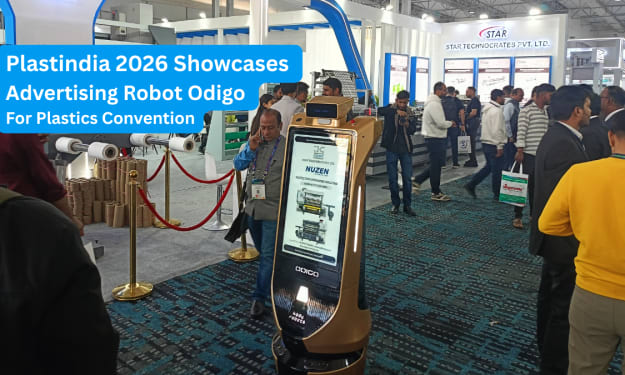
New Delhi, India, February 2026 - Plastindia Foundation presented an advanced engagement initiative during Plastindia 2026 with the introduction of Odigo, an AI-Powered advertising robot created by Kody Robots a leading robotics company in India. The deployment marked a prominent example of an advertising robot for plastics convention, operating live within one of the sector’s largest global plastics industry gatherings. Odigo made a high-impact appearance at PlastIndia 2026, demonstrating how an Advertising Robot, Odigo for Plastics Convention environments can transform visitor engagement at large industry gatherings.
By Mila Violet6 days ago in 01
Apple’s 12-Inch MacBook Is Back: 10 Huge Leaks, Price, Specs, and Release Date
Get ready, because the iconic 12-inch MacBook is officially on the road to revival. According to one of the most trusted voices in the Apple leak world, this long-lost laptop isn’t years away—it’s just months from launch. And yes, it’s staying true to its roots with a 12-inch display, but this time, Apple is fixing everything that went wrong the first time.
By Info Post Gatea day ago in 01
Unofficial Challenge: What would you do if you were rich?
I love the kind of work I get to do in my career, but as I job search and browse apartments again due to another understaffed and unsustainable work environment that I did not intend to get into, my daydreams of better days consistently lean into the same question: What would I do if I didn't have to worry about my basic needs being met?
By Kay Husnick2 days ago in Writers



Comments
There are no comments for this story
Be the first to respond and start the conversation.