
Los Angeles EV Owners Face a New Reality: Infrastructure Struggles to Keep Pace
As EV adoption surges across the city, charging access is becoming the next major hurdle.

Los Angeles has become a national leader in electric vehicle adoption. But as more drivers make the switch to electric, the city’s charging infrastructure is feeling the pressure.
With more than 300,000 electric vehicles now on Los Angeles roads — a 52% increase from last year — public charging stations are experiencing unprecedented demand. While the city has invested heavily in expanding charging access, many drivers report long wait times, malfunctioning equipment, and limited availability in certain neighborhoods.
The outcome is a growing tension: the city with one of the highest concentrations of electric vehicles in the United States is also home to some of its most frustrated EV drivers.
The Growing Charging Challenge
Despite having more public charging stations than most major U.S. cities, Los Angeles faces a utilization problem. During peak hours, wait times at fast-charging stations can exceed 45 minutes. According to data from the California Energy Commission, approximately 23% of public chargers may be non-functional at any given time.
Geography plays a significant role. Spanning roughly 500 square miles, Los Angeles includes dense urban districts, sprawling suburbs, and neighborhoods with limited private parking. In areas such as the San Fernando Valley and South Bay, so-called "charging deserts" leave residents with few convenient options.
For drivers who live in apartment complexes without dedicated parking or home charging access, the challenge becomes more than a minor inconvenience. Ride-share drivers, delivery workers, and commuters who rely on their vehicles daily may lose valuable time — and income — waiting for an available charger.
Why Infrastructure Is Struggling
Electric vehicle adoption in California has accelerated rapidly in recent years, driven by environmental policies, manufacturer incentives, and consumer interest in reducing fuel costs. However, building charging infrastructure requires significant coordination.
Installing new stations often involves permitting processes, electrical upgrades, grid capacity planning, and real estate availability. In dense urban areas, finding space for high-speed charging hubs can be particularly complex.
While Los Angeles has added thousands of chargers in recent years, the pace of EV adoption has, in some areas, outstripped expansion efforts.
The Rise of Mobile Charging Services
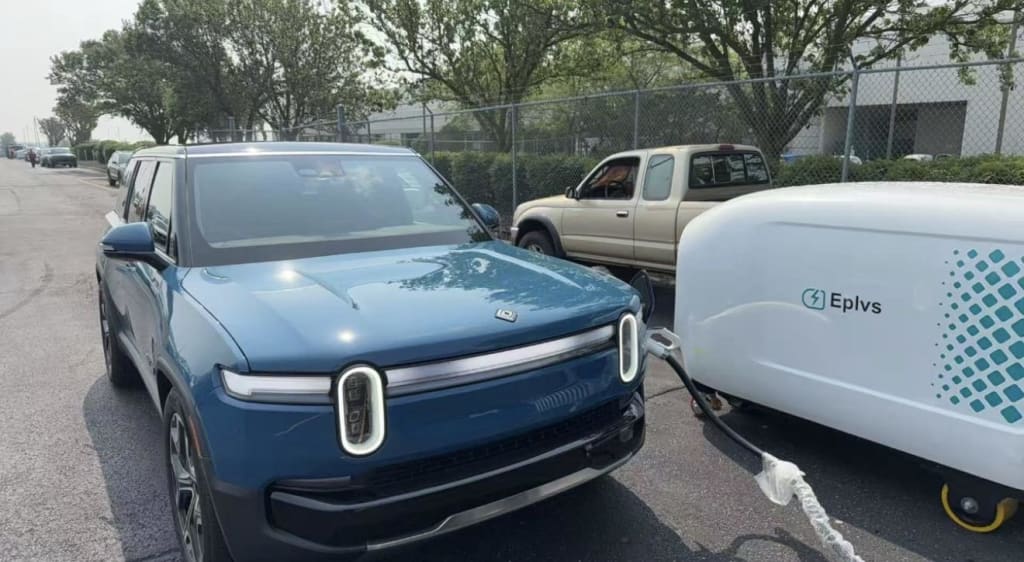
In response to these infrastructure gaps, a growing number of mobile charging providers have entered the market. Instead of relying solely on fixed charging stations, these services deploy vehicles equipped with high-capacity battery packs to deliver power directly to EV owners.
Drivers can request service to their location — whether stranded roadside, parked in a structure, or at home without charging access. Mobile charging does not replace public infrastructure but offers a supplemental safety net when traditional options are unavailable.
This approach is particularly appealing in a city as geographically expansive as Los Angeles, where distances between neighborhoods and traffic congestion can complicate charging logistics.
A Shift Toward Membership Models
Some mobile charging companies are experimenting with annual membership structures rather than monthly subscriptions. Under this model, drivers pay a single annual fee for access to service at fixed member rates, without recurring monthly billing.
The appeal lies in flexibility. Many EV owners do not require emergency charging frequently enough to justify a monthly subscription, yet they value having access when needed. An annual model provides access without ongoing charges stacking alongside other vehicle-related expenses.
For service providers, memberships create predictable demand while allowing fleet resources to be deployed based on real-time needs.
Looking Ahead
Mobile charging solutions are unlikely to replace the need for expanded fixed infrastructure. As California moves toward its 2035 goal of phasing out new gasoline vehicle sales, the number of EVs on the road will continue to grow.
To support that growth, cities like Los Angeles will need a layered approach: more public charging stations, improved maintenance and reliability, expanded residential charging access, and flexible alternatives such as mobile services.
For now, Los Angeles drivers are navigating a transitional period. EV adoption is surging, but infrastructure development is still catching up. The coming years will determine whether the city can align its ambitious sustainability goals with the practical realities of keeping hundreds of thousands of vehicles charged and ready for the road.
About the Creator
Keep reading
More stories from charliesamuel and writers in 01 and other communities.
What is a Golden Birthday? | How to Calculate It?
A Golden Birthday is one of those rare, "once-in-a-lifetime" milestones that feels like a cosmic alignment of your age and the calendar. It’s the ultimate excuse to go big on celebrations and frankly, who doesn't love a bit of chronological synchronicity?
By charliesamuela day ago in 01
Critical Update
Apple’s software updates often arrive quietly, but every now and then, one lands with unusual importance. iOS 26.3 is shaping up to be exactly that kind of release. While it may look like a routine point update on paper, industry watchers, including Bloomberg’s Mark Gurman, suggest this version carries far more weight than its number implies.
By Active USA 2 days ago in 01
📢 Raise Your Voice Thread: 02/05/2026
Our “Raise Your Voice Threads” are hosted most alternating Thursdays at 12PM ET to offer creators more avenues to uncover exceptional stories on Vocal. As we are continuously searching for fresh creators and inspiring stories, this thread provides an opportunity to exchange and discuss the stories that have moved and motivated us on Vocal.
By Raise Your Voice by Vocal7 days ago in Resources




Comments
There are no comments for this story
Be the first to respond and start the conversation.