
How to Integrate Decentralized Identity (DID) with a Crypto Wallet?
A Step-by-Step Guide to Implementing DID Methods and Verifiable Credentials (VCs) in Your Wallet

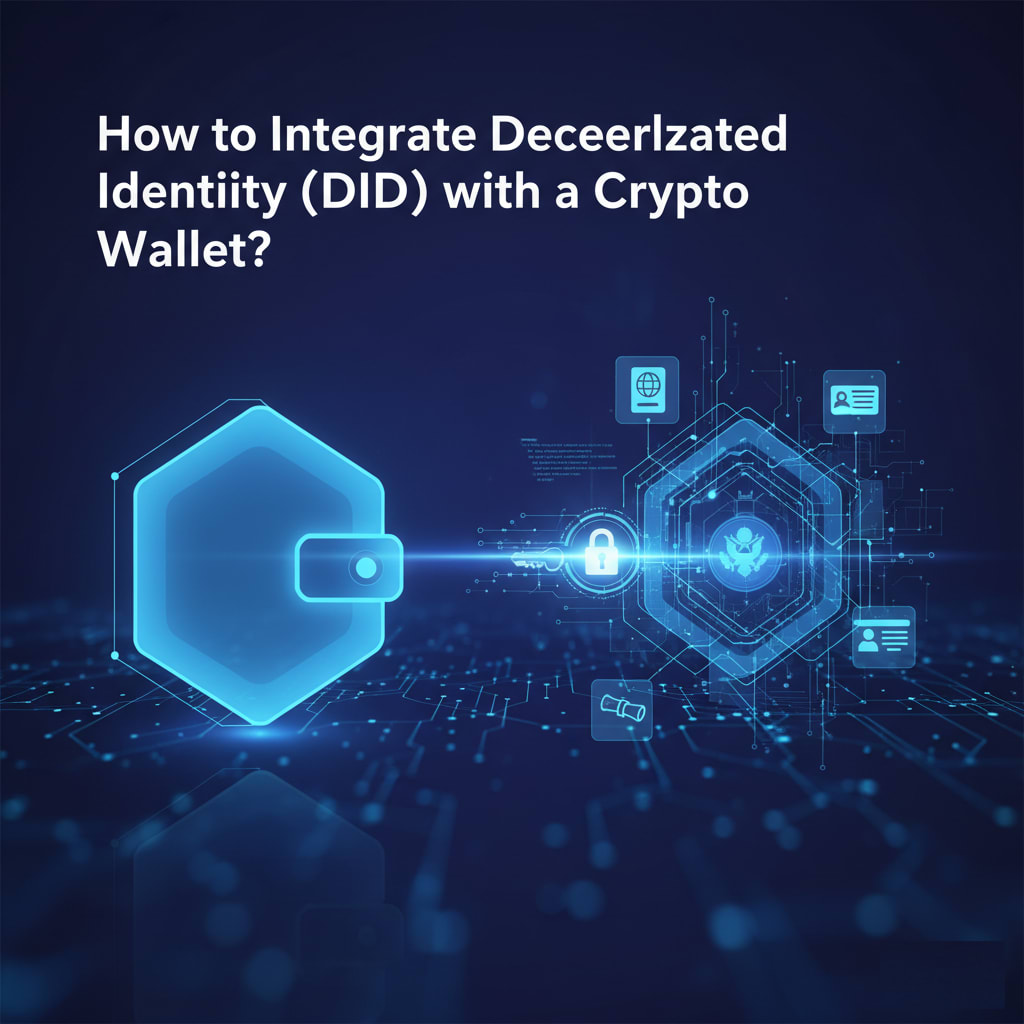
In the rapidly evolving landscape of Web3, the convergence of decentralized identity (DID) and crypto wallets is not just a technological advancement but a fundamental shift towards a more secure, private, and user-centric digital experience.
As the digital economy increasingly relies on blockchain technology, the need for robust identity solutions becomes paramount. This blog explores the intricacies of integrating DID with crypto wallets, outlining the benefits, challenges, and practical steps involved, especially for a crypto wallet development company looking to stay ahead in the market.
The Foundation: Understanding Decentralized Identity (DID)
At its core, decentralized identity refers to a self-sovereign identity system where users have complete control over their personal data and how it's shared. Unlike traditional centralized identity systems (think usernames and passwords managed by a single entity), DIDs are anchored on decentralized ledgers, typically blockchains. This provides several key advantages:
- Self-Sovereignty: Individuals own and manage their identity, not third-party organizations.
- Privacy: Users selectively disclose only the necessary information, enhancing privacy.
- Security: Cryptographic proofs and blockchain immutability make DIDs highly secure and tamper-proof.
- Interoperability: DIDs are designed to be globally resolvable and usable across different platforms and services.
The architecture of DID typically involves three main components:
- Decentralized Identifiers (DIDs): Unique, persistent identifiers that are not tied to any centralized registry.
- DID Documents: JSON-LD documents associated with DIDs, containing cryptographic material, service endpoints, and other relevant information.
- Verifiable Credentials (VCs): Digital credentials that cryptographically prove a claim (e.g., age, educational qualification) issued by an authorized entity (issuer) and presented by the user (holder) to a verifier.
Why Integrate DID with Crypto Wallets?
Crypto wallets are no longer just tools for managing digital assets; they are evolving into comprehensive interfaces for interacting with the decentralized web. Integrating DID capabilities transforms a standard crypto wallet development into a powerful identity hub, unlocking a new realm of possibilities:
1. Enhanced Security:
- Stronger Authentication: Beyond seed phrases and private keys, DIDs can enable multi-factor authentication (MFA) using verifiable credentials tied to biometric data or government-issued IDs.
- Reduced Phishing Risks: By cryptographically verifying the identity of counterparties or service providers, users can better protect themselves from phishing attacks and scams.
- Account Recovery: DIDs can facilitate more secure and decentralized account recovery mechanisms, reducing reliance on centralized services that are vulnerable to single points of failure.
2. Improved User Experience:
- Seamless KYC/AML: Instead of repeatedly submitting personal documents to various decentralized applications (dApps), users can present verifiable credentials once, streamlining the KYC/AML process across multiple platforms.
- Login with DID: A universal "Login with DID" feature can replace traditional username/password logins, offering a more private and secure way to access dApps and Web3 services.
- Personalized Interactions: With controlled data sharing, dApps can offer more personalized experiences without compromising user privacy.
3. Expanded Functionality:
- Reputation Systems: Wallets can leverage DIDs to build on-chain reputation systems, enabling users to establish trust within decentralized communities.
- Decentralized Social Graphs: DIDs can form the basis of decentralized social networks, allowing users to own their social connections and content.
- Supply Chain Transparency: For enterprises, DIDs can be used to track product origins and verify authenticity within supply chains, accessible through specialized wallets.
The Technical Landscape: How Does It Work?
Integrating DID with a crypto wallet involves several technical considerations and architectural decisions. For a crypto wallet development company, this means understanding the underlying protocols and frameworks:
1. DID Method Selection:
- DIDs are defined by "DID methods," which specify how a DID is created, resolved, updated, and deactivated on a particular distributed ledger. Common methods include did:ethr (Ethereum), did:ion (ION/Bitcoin), did:peer, and others.
- The choice of DID method often depends on the blockchain infrastructure the wallet already supports or intends to support.
2. DID Document Management:
- The wallet needs to be able to generate, store, and manage DID documents. This typically involves storing the cryptographic keys associated with the DID securely within the wallet's secure enclave or encrypted storage.
- The wallet also needs mechanisms to update the DID document when keys change or new service endpoints are added.
3. Verifiable Credentials (VC) Handling:
- VC Storage: The wallet must securely store verifiable credentials issued to the user. This often involves encrypting the VCs and storing them locally or on a decentralized storage network.
- VC Presentation: The wallet needs a mechanism to allow users to select specific VCs and present them cryptographically to a verifier, proving ownership and validity without revealing unnecessary information.
- VC Issuance: The wallet can also facilitate the issuance of VCs, allowing users to request credentials from trusted issuers and add them to their identity wallet.
4. Interaction Protocols:
- DIDComm: This is a set of secure, private, and decentralized messaging protocols specifically designed for DIDs and VCs. Wallets use DIDComm to communicate securely with issuers and verifiers, exchanging VCs and DID documents.
- OpenID for Verifiable Credentials (OID4VC): This standard provides a framework for integrating VC interactions into existing OpenID Connect flows, making it easier for traditional applications to adopt DIDs.
5. User Interface (UI) and User Experience (UX):
- A critical aspect for any crypto wallet development company is designing an intuitive UI/UX that makes DID management accessible to everyday users. This includes:
- Clear visualization of owned DIDs and VCs.
- Easy consent mechanisms for sharing credentials.
- Simplified processes for requesting and receiving VCs.
- A robust DID resolver to fetch DID documents from the network.
Practical Steps for Integration
For a crypto wallet development company embarking on DID integration, here’s a generalized roadmap:
1. Research and Select DID Methods:
Identify the most suitable DID methods based on target blockchains, security requirements, and community adoption. Many DIDs can be anchored to existing crypto wallets, meaning your users can leverage their existing keys.
2. Choose a DID SDK/Framework:
Leverage existing open-source SDKs and libraries (e.g., from projects like Aries, Indy, Sidetree, or specific blockchain foundations) to accelerate development. These frameworks often provide pre-built functionalities for DID document management, VC handling, and DIDComm.
3. Implement Key Management for DIDs:
Integrate secure key generation and storage within the wallet, ideally using hardware-backed security modules (HSMs) or secure enclaves for maximum protection of private keys associated with DIDs.
4. Develop VC Storage and Management:
Create a secure and user-friendly system for storing, indexing, and retrieving VCs. Consider client-side encryption and potentially decentralized storage solutions for added privacy and resilience.
5. Integrate DIDComm or OID4VC:
Implement the chosen interaction protocols to enable secure communication with issuers and verifiers. This is crucial for requesting, receiving, and presenting VCs.
6. Design User Flows for DID Interactions:
Map out intuitive user journeys for:
- Creating a new DID.
- Requesting and accepting VCs.
- Presenting VCs to dApps or services.
- Linking existing wallet addresses to DIDs.
7. Build a DID Resolver:
Implement a mechanism within the wallet to resolve DIDs, fetching their corresponding DID documents from the blockchain or decentralized storage networks.
8. Security Audits and Testing:
Conduct rigorous security audits and extensive testing to ensure the integrity and robustness of the DID integration, especially concerning key management and VC handling.
9. Iterate on UI/UX:
Continuously refine the user interface and experience based on user feedback to ensure seamless adoption and ease of use.
Challenges and Considerations
While the benefits are significant, crypto wallet development in the DID space comes with its own set of challenges:
- Interoperability: Ensuring DIDs and VCs are truly interoperable across different ecosystems and blockchain networks remains an ongoing challenge. Standards like the W3C DID Specification and Verifiable Credentials Data Model are crucial here.
- User Adoption: Educating users about the benefits and mechanics of DIDs is essential for widespread adoption. The UX must be frictionless.
- Regulatory Landscape: The evolving regulatory environment around digital identity, data privacy (e.g., GDPR), and blockchain technology can pose complexities.
- Revocation: Managing the revocation of DIDs and VCs in a decentralized manner without relying on centralized authorities is a complex design problem.
- Scalability: The underlying blockchain infrastructure must be scalable enough to handle the potential volume of DID and VC transactions.
The Future of Crypto Wallets with DID
The integration of decentralized identity is not just an optional feature; it's a strategic imperative for any crypto wallet development company aiming to build the next generation of Web3 infrastructure.
As the digital world demands more privacy, security, and user control, wallets empowered with DID capabilities will become the central hub for individuals to manage their digital lives – from financial transactions and asset ownership to personal data and online interactions.
The vision of a self-sovereign individual, fully empowered by their digital identity and securely interacting with the decentralized web, is becoming a reality. Crypto wallets, fortified with DID technology, are paving the way for this exciting and transformative future.
By focusing on robust crypto wallet development with a strong emphasis on DID integration, companies can position themselves at the forefront of this revolution, delivering solutions that are not only secure and functional but also fundamentally reshape how we perceive and interact with our digital selves.
About the Creator
Tarun Nagar
Tarun Nagar is the CEO of Dev Technosys, a leading blockchain development company. With a vision for innovation, he drives the company to deliver cutting-edge solutions in blockchain and decentralized technologies.
Keep reading
More stories from Tarun Nagar and writers in 01 and other communities.
Why No-Code Platforms Are the Future of Blockchain in Web3
In the rapidly evolving world of blockchain technology, Web3 is emerging as the next frontier. Web3, or the decentralized web, promises to shift the power from centralized corporations back into the hands of users, offering unprecedented opportunities for decentralization, privacy, and security. However, the complex nature of blockchain development has historically created significant barriers for individuals and businesses that want to build decentralized applications (dApps) or integrate blockchain technology into their products.
By Tarun Nagar3 months ago in 01
Enterprise Web Design Is Not “Just More UX”
If you’ve ever worked on enterprise or AI-driven corporate platforms, you already know that applying standard web design practices to them is a category error. Designing at this level isn’t about polishing interfaces; it’s about building systems that people can safely rely on every day. That’s why teams moving into this space often discover—sometimes painfully—that the rules change the moment a product becomes operationally critical.
By Valeriia Shulga2 days ago in 01
Understanding Quality and Comfort in Modern Streetwear
Streetwear has evolved beyond flashy logos and limited drops. Today's consumers increasingly prioritize comfort, durability, and versatility over hype-driven purchases. This shift reflects a maturing market where people want clothing that actually performs well in daily life rather than pieces that look good only in photos.
By Madhuri Janvi6 days ago in 01



Comments
There are no comments for this story
Be the first to respond and start the conversation.