
How Blockchain Infrastructure Makes Asset Tokenization Possible
Exploring the core blockchain layers, smart contracts, and decentralized frameworks that transform real-world assets into secure, transparent, and tradable digital tokens.

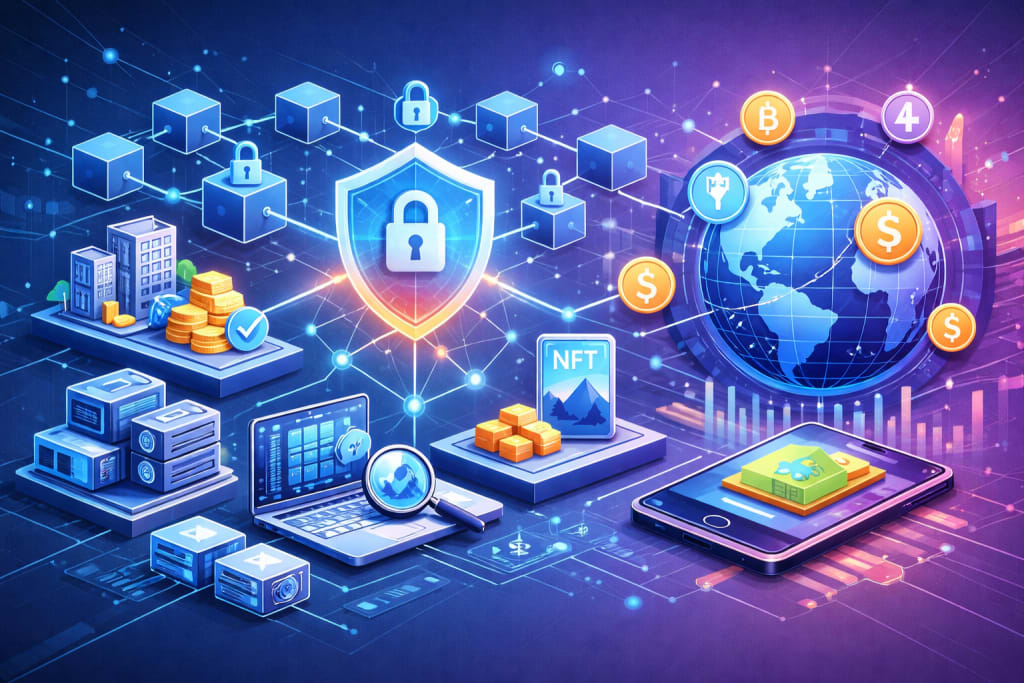
Asset tokenization has rapidly moved from a theoretical concept to a transformative financial innovation reshaping capital markets, real estate, commodities, and private equity. At its core, asset tokenization is the process of representing ownership rights of real-world assets as digital tokens on a blockchain. These tokens can represent fractional ownership, income rights, governance rights, or a combination of financial entitlements.
However, tokenization is not possible without blockchain infrastructure. Blockchain provides the technical backbone that ensures security, transparency, immutability, programmability, and trustless transactions. Without this infrastructure layer, digital ownership of physical or off-chain assets would remain unreliable and inefficient.
This article explores how blockchain infrastructure enables asset tokenization at scale. It breaks down the technical components, architectural layers, compliance mechanisms, smart contract frameworks, custody models, and interoperability standards that collectively make tokenized ecosystems viable.
Understanding Asset Tokenization at a Structural Level
Before exploring infrastructure, it is important to understand what asset tokenization requires from a systems perspective.
Tokenization involves converting ownership of tangible or intangible assets into digital tokens recorded on a distributed ledger. These assets can include real estate, bonds, equities, funds, commodities, intellectual property, and even revenue streams. In real estate markets, Real Estate Tokenization has emerged as one of the fastest-growing segments because property assets are traditionally illiquid and capital-intensive.
For tokenization to function properly, several technical conditions must be met. There must be a secure ledger to record ownership, a programmable logic system to enforce rules, a transparent audit trail, mechanisms for regulatory compliance, digital identity validation, custody frameworks, and secure settlement infrastructure. Blockchain infrastructure fulfills all of these requirements.
The Distributed Ledger Layer: The Core of Tokenization
At the heart of blockchain infrastructure is the distributed ledger. A distributed ledger is a decentralized database maintained by multiple nodes across a network. Each node maintains a synchronized copy of transaction records.
In asset tokenization, the distributed ledger records token issuance, transfers, ownership changes, and transaction histories. Because blockchain records are immutable, once ownership is recorded, it cannot be altered without network consensus. This immutability is essential in preventing fraud, double-spending, or ownership disputes.
Public blockchains such as Ethereum provide open participation, while permissioned blockchains are often used by financial institutions to maintain regulatory control. In the context of Real Estate Tokenization Platform Development, many enterprises adopt hybrid models that combine public transparency with permissioned compliance layers.
The distributed ledger ensures that every tokenized asset has a verifiable ownership trail, which significantly reduces operational risk compared to traditional paper-based registries.
Smart Contracts: Programmability That Enables Automation
Smart contracts are self-executing pieces of code deployed on a blockchain. They define the rules governing token issuance, transfers, dividend distributions, voting rights, and compliance checks.
Smart contracts eliminate the need for manual intermediaries by automating contractual obligations. For example, rental income from a tokenized property can be automatically distributed to token holders based on predefined ownership percentages. This is especially relevant for platforms offering Real Estate Tokenization Services, where recurring income flows must be accurately distributed.
Smart contracts also enforce regulatory restrictions. If a token is only allowed to be transferred between verified investors, the smart contract can prevent unauthorized transfers. This programmability transforms traditional legal agreements into enforceable digital protocols.
In real estate tokenization development projects, smart contracts often encode compliance rules related to investor accreditation, geographic restrictions, holding periods, and capital limits.
Token Standards and Asset Representation
Blockchain infrastructure relies on token standards to define how tokens behave. On Ethereum, standards such as ERC 20, ERC 721, and ERC 1400 enable fungible and non-fungible token models.
For financial securities and real estate assets, security token standards are typically used because they support regulatory compliance features such as transfer restrictions and identity controls. These token standards allow assets to be represented digitally while retaining regulatory attributes.
A Real Estate Tokenization Platform must select the appropriate token standard based on whether assets are fractionalized, individually represented, or structured as security instruments. The token standard ensures interoperability across wallets, exchanges, and custodians.
Standardization is critical because it allows tokenized assets to function seamlessly across decentralized and institutional platforms.
Consensus Mechanisms: Securing the Network
Consensus mechanisms are protocols that allow decentralized networks to agree on the validity of transactions. They ensure that no single party can manipulate ownership records.
Proof of Stake and Proof of Work are common consensus models. Proof of Stake has gained popularity because it offers energy efficiency and faster transaction throughput, making it suitable for financial applications.
In tokenized ecosystems, consensus mechanisms guarantee that ownership transfers are verified and irreversible once confirmed. This is fundamental to building investor trust. Without a reliable consensus, asset tokenization would lack credibility.
For enterprises engaging in real estate tokenization development, choosing a blockchain with robust consensus security is a foundational decision that impacts scalability and long-term viability.
Digital Identity and Compliance Infrastructure
Tokenized assets, especially those classified as securities, must comply with regulatory frameworks. Blockchain infrastructure integrates digital identity verification systems to enforce compliance.
Know Your Customer and Anti Money Laundering protocols are embedded into onboarding processes. Identity verification solutions connect off-chain compliance checks with on-chain smart contract permissions.
A Real Estate Tokenization Development company must integrate identity management systems that ensure only verified investors can participate. These compliance layers are often implemented through whitelisting mechanisms coded into smart contracts.
This infrastructure allows regulators to audit transactions while maintaining privacy controls. It bridges the gap between decentralized technology and traditional legal frameworks.
Custody and Asset Backing Mechanisms
Tokenization requires a clear linkage between digital tokens and underlying physical assets. Blockchain infrastructure supports custody models that verify asset backing.
For real estate, this typically involves legal entities such as special-purpose vehicles that hold property titles. The tokens represent ownership in the entity rather than the physical asset directly. Blockchain records track token ownership while legal agreements connect tokens to property rights.
Custodians may also manage private keys securely to prevent loss or theft. Institutional custody solutions are essential for attracting large investors.
Companies providing Real Estate Tokenization Development Services often work with legal advisors and custodians to ensure that digital representations align with enforceable ownership rights.
Interoperability and Cross-Chain Integration
As tokenization expands, assets may exist across multiple blockchain networks. Interoperability protocols enable tokens to move between chains or interact with decentralized finance platforms.
Cross-chain bridges and messaging protocols facilitate liquidity expansion and broader investor access. This infrastructure enhances the usability of tokenized assets.
For a Real Estate Tokenization Platform, interoperability can allow tokenized properties to be listed on multiple marketplaces, increasing liquidity and investor reach.
Blockchain infrastructure must therefore support scalability, cross-chain compatibility, and standardized communication protocols.
Decentralized Finance Integration
Blockchain infrastructure allows tokenized assets to integrate with decentralized finance ecosystems. Tokenized real estate, for instance, can be used as collateral for loans, yield generation strategies, or liquidity pools.
This programmable financial layer unlocks new capital efficiency models. Instead of waiting months to refinance property investments, token holders can access liquidity through decentralized lending protocols.
Real Estate Tokenization companies increasingly design platforms that connect tokenized assets with decentralized finance services, enabling dynamic asset utilization.
The synergy between tokenization and decentralized finance is made possible by blockchain composability, where smart contracts can interact seamlessly.
Security Infrastructure and Risk Mitigation
Security is paramount in blockchain-based systems. Infrastructure includes encryption protocols, multi-signature wallets, hardware security modules, and auditing frameworks.
Smart contracts undergo code audits to identify vulnerabilities. Networks implement monitoring systems to detect suspicious activity.
For real estate tokenization development, security considerations extend beyond digital assets to include legal compliance and custody frameworks. A breach in smart contract logic could compromise ownership rights.
Therefore, a Real Estate Tokenization Development company must adopt layered security approaches that combine blockchain-level safeguards with institutional-grade risk management practices.
Scalability and Performance Considerations
Scalability is essential for mass adoption. High transaction fees and network congestion can limit tokenization efficiency.
Layer two scaling solutions and sidechains enhance throughput while maintaining security guarantees. These technologies reduce costs and improve transaction speed.
A Real Estate Tokenization Platform must handle investor onboarding, secondary trading, income distribution, and governance functions without bottlenecks.
Blockchain infrastructure evolves continuously to address scalability challenges, ensuring that tokenized ecosystems can handle institutional demand.
Transparency and Auditability
One of the most powerful aspects of blockchain infrastructure is transparency. Every transaction is recorded on a public or permissioned ledger, creating a permanent audit trail.
Investors can verify ownership records independently. Regulators can access transparent transaction histories. Auditors can track fund flows efficiently.
In Real Estate Tokenization Services, transparency builds investor confidence by eliminating opaque ownership structures and manual reconciliation errors.
Blockchain infrastructure transforms trust from a reliance on intermediaries into a mathematically verifiable system.
Governance Mechanisms and Token Holder Rights
Governance frameworks are often embedded within tokenized ecosystems. Token holders may vote on asset management decisions, refinancing strategies, or platform upgrades.
Smart contracts manage voting processes and execute outcomes automatically. This digital governance structure enhances participation and operational efficiency.
In real estate tokenization development, governance rights can be structured to reflect shareholder agreements while maintaining regulatory compliance.
Blockchain infrastructure ensures that governance decisions are transparent, tamper-resistant, and enforceable.
The Role of Enterprise Platforms in Tokenization
While blockchain provides the foundational layer, enterprise platforms build user interfaces, compliance dashboards, investor portals, and reporting systems on top of blockchain networks.
A Real Estate Tokenization company typically develops full-stack solutions that include wallet integration, payment gateways, investor management modules, and regulatory reporting tools.
These platforms translate complex blockchain functionality into accessible interfaces for property owners and investors.
Real Estate Tokenization Platform Development combines blockchain engineering, legal structuring, compliance integration, and user experience design into a cohesive infrastructure.
Conclusion: Infrastructure as the Catalyst of Asset Digitization
Blockchain infrastructure is not merely a technological enhancement. It is the structural foundation that makes asset tokenization secure, scalable, transparent, and programmable.
Distributed ledgers ensure immutable ownership records. Smart contracts automate financial logic. Consensus mechanisms secure transaction validation. Identity systems enforce compliance. Custody frameworks connect digital tokens with physical assets. Interoperability expands liquidity. Security protocols protect investors. Governance modules empower participation.
Together, these infrastructure components transform illiquid assets into digitally native financial instruments.
As institutional adoption accelerates, the demand for robust Real Estate Tokenization Development Services will continue to rise. Platforms built on strong blockchain infrastructure will shape the future of asset ownership, democratizing access while preserving regulatory integrity.
About the Creator
Ethan hunt
Ethan is a blockchain and Web3 specialist focused on building decentralized ecosystems that enhance transparency, security, and global accessibility.
Keep reading
More stories from Ethan hunt and writers in 01 and other communities.
How Fintech Startups Are Building Scalable Real World Asset Tokenization Models
The global financial ecosystem is undergoing a structural transformation driven by blockchain, distributed ledger systems, and programmable finance. At the center of this transformation lies Real World Asset Tokenization, a model that converts tangible and intangible assets into blockchain-based digital tokens. From real estate and private equity to commodities, invoices, and carbon credits, assets that were once illiquid and geographically restricted are now entering digital marketplaces.
By Ethan hunt2 days ago in 01
Is Our Health at Risk from 5G, 6G, and Other Technologies?
Is Our Health at Risk from 5G, 6G, and Other Technologies? The world is moving faster than ever. High-speed connectivity has become a part of everyday life, from streaming 4K videos in a matter of seconds to controlling smart homes with voice commands. One question keeps coming up despite the fact that 6G is already in development and 5G is spreading globally.
By Farida Kabir3 days ago in 01
What Every Internet User Needs to Know About the New AI Laws and Updates to Digital Privacy in 2026
What Every Internet User Needs to Know About the New AI Laws and Updates to Digital Privacy in 2026 In comparison to just a few years ago, the digital landscape in 2026 looks very different. Artificial intelligence is no longer a new or experimental tool; rather, it is now an essential component of everyday life.
By Farida Kabir5 days ago in 01



Comments
There are no comments for this story
Be the first to respond and start the conversation.