
How AI Is Really Created
Not magic, not sci-fi — just systems, data, and decisions

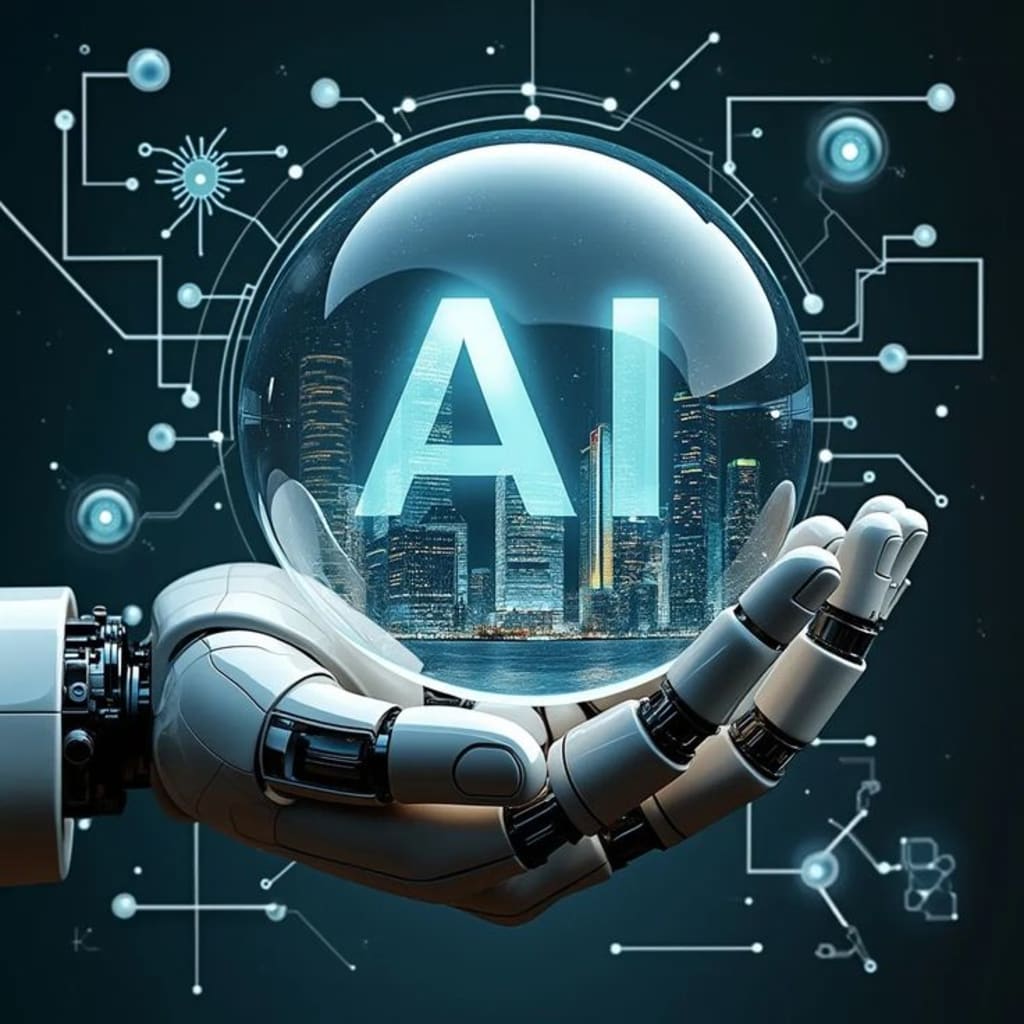
Artificial intelligence often feels mysterious. People imagine sentient machines, self-aware systems, or technology that suddenly “wakes up.” In reality, AI isn’t magic, and it isn’t alive. It’s built — carefully, intentionally, and step by step. Understanding how AI is created removes the fear and replaces it with clarity.
At its core, AI is about pattern recognition. Humans learn by observing, repeating, and correcting mistakes. AI does the same thing — just faster, and with far more data. Creating AI starts with a goal: deciding what you want the system to do. That goal shapes everything that follows.
The first step in creating AI is defining the problem. You don’t “build an AI” in general. You build an AI to do something specific: recognize images, understand text, predict outcomes, recommend content, or automate decisions. Without a clear purpose, the system has no direction.
Once the goal is defined, data becomes the foundation. AI learns from examples. If you want an AI to recognize faces, it needs images. If you want it to understand language, it needs text. If you want it to predict behavior, it needs historical patterns. The quality of the AI depends heavily on the quality of the data. Biased, incomplete, or messy data produces unreliable results.
After collecting data, the next step is choosing a model. A model is a mathematical structure designed to learn patterns from data. Different problems require different models. Some are simple, others extremely complex. Modern AI systems often rely on neural networks — systems inspired loosely by how the human brain processes information.
Training the AI is where learning happens. During training, the system processes data, makes predictions, compares those predictions to correct answers, and adjusts itself. This process repeats thousands or millions of times. Each adjustment improves accuracy. Over time, the AI becomes better at recognizing patterns and making decisions.
Training requires computing power. Powerful hardware allows models to process massive amounts of data efficiently. This is why large AI systems are often developed by organizations with access to strong infrastructure. However, smaller AI systems can still be created with limited resources if the scope is focused.
After training comes testing. An AI that performs well on training data may fail in real-world situations. Testing ensures the system can generalize — meaning it can handle new, unseen data. This phase reveals weaknesses, biases, and errors that need correction.
Refinement is continuous. AI is never truly “finished.” Developers adjust data, tweak models, and retrain systems based on performance. This cycle continues as long as the AI exists. Improvement is incremental, not sudden.
One important part people often ignore is human oversight. AI doesn’t make decisions in isolation. Humans design objectives, select data, interpret results, and decide how the AI is used. Ethics, responsibility, and intent matter. AI reflects the values and limitations of its creators.
Another key factor is limitation. AI does not understand meaning the way humans do. It processes patterns, not consciousness. It doesn’t have awareness, emotion, or intent. It doesn’t “think” — it calculates. Confusing intelligence with awareness leads to unrealistic expectations and fear.
Creating AI also involves risk management. Poorly designed systems can reinforce bias, invade privacy, or make harmful decisions. Responsible development includes transparency, testing for fairness, and setting boundaries on usage.
AI creation isn’t about replacing humans — it’s about augmenting capabilities. The best systems assist rather than dominate. They handle repetitive tasks, analyze complex data, and support decision-making, while humans provide judgment, creativity, and moral direction.
What makes AI powerful is scale. Humans learn slowly but deeply. AI learns quickly but narrowly. It excels in specific domains but lacks general understanding. This distinction matters when designing systems and setting expectations.
The future of AI will depend less on technology and more on intention. How we choose to build, deploy, and regulate AI determines its impact. Tools themselves are neutral — outcomes depend on usage.
Creating AI is not reserved for geniuses or massive corporations. It’s a process that begins with curiosity, clarity, and discipline. The real challenge isn’t making machines smarter — it’s making sure humans remain thoughtful, responsible, and aware of what they’re creating.
AI is a reflection of us. Our data. Our decisions. Our values.
And understanding how it’s built gives us power — not fear — over the future we’re shaping.




Comments
There are no comments for this story
Be the first to respond and start the conversation.